If you’ve ever spent time around industrial equipment, automotive assemblies, or even household appliances with moving parts, you’ve probably heard the terms “V Ring Seal” and “rotary shaft seal” tossed around. As a V Ring Seal supplier who’s worked with both OEM engineers and maintenance technicians for years, I’ve seen how often these two seals get mixed up—and it’s a mistake that can lead to everything from minor leaks to costly equipment downtime. Let’s break down the key differences, how each performs, and when you should reach for one vs. the other. V Ring Seal
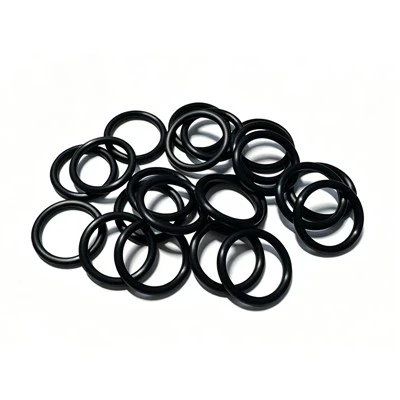
First, let’s start with what each seal is at their core. A rotary shaft seal (sometimes called a lip seal or oil seal) is a standard component most people are familiar with: it’s a ring of elastomer (usually rubber or polyurethane) bonded to a metal casing, with a fine spring inside the lip to press tightly against the rotating shaft. These seals are designed for continuous, high-speed rotation, and they’re the go-to for applications like car wheel hubs, gearboxes, and hydraulic pumps where pressure is steady and motion is smooth.
A V Ring Seal, on the other hand, is a simpler, one-piece elastomer seal—no metal core, no spring. It’s shaped like a “V” when viewed from the side, with a wider outer diameter that presses against the housing bore and a narrower inner lip that grips the shaft. The name comes right from that V-shaped profile, which creates a slight interference fit on both sides to keep contaminants in and out.
Now, let’s dive into the practical differences that matter most for anyone selecting a seal. First, installation ease. If you’ve ever worked with a rotary shaft seal, you know the drill: you need to align the metal casing perfectly with the housing bore, use a seal driver to tap it in evenly (a crooked installation will cause leaks in days), and make sure the spring is seated correctly—miss that spring, and the lip won’t have enough tension. V Ring Seals? They’re almost tool-free. You just slide them onto the shaft before installation, no special alignment, no drivers, no risk of damaging the metal case. That’s a huge win for field maintenance, where technicians might not have a full shop’s worth of tools. I’ve had a customer in the agricultural equipment space tell me they switched to V Rings for their on-field repairs because they could swap a seal in 2 minutes instead of 20, without worrying about ruining a custom seal driver.
Next, pressure and speed limits. Rotary shaft seals shine at high speeds—most can handle up to 10,000 RPM or more, depending on the material. They’re also designed for positive pressure; if you have a gearbox with 50 PSI of internal oil pressure, a standard lip seal will hold that pressure reliably. V Ring Seals, by contrast, have a lower speed ceiling—usually top out around 3,000 RPM, and they’re best for low to moderate pressure, typically under 10 PSI. That’s not to say they’re weak, but they’re not built for the heavy-duty, high-rotation applications where rotary seals excel. Where V Rings really outperform is in static contamination control, too. Because their V shape creates a larger contact area with the housing, they’re better at keeping dust, dirt, and water out even when the equipment is stationary for long periods—think of a farm tractor sitting in a field during off-seasons, or a construction machine parked outside. A rotary seal, with its spring-loaded lip, is less effective at static sealing; if the machine sits for a month, you might see corrosion start on the shaft right where the lip rested during downtime.
Then there’s shaft tolerance and wear resistance. Rotary shaft seals require very precise shaft and housing dimensions. If your shaft has even a slight ridge from wear, or the housing bore is out of round by a fraction of a millimeter, the lip seal can leak. The metal core also means it’s rigid, so it won’t conform to minor irregularities in the mating surfaces. V Ring Seals, though? Their elastomer material is flexible, so it can compensate for small shaft wear and housing imperfections. We regularly supply V Rings for applications where the shaft has minor scuffs that would render a rotary seal useless—no need to machine the shaft or bore to factory specs if you’re using a V Ring. That cuts down on maintenance costs a lot.
Wait, but what about applications where both could work? Let’s take a conveyor roller, for example. It rotates at a slow speed (maybe 500 RPM), needs to keep grease inside and dust outside, and the shaft might have a little wear over time. A V Ring would be perfect here—easy to install, tolerant of minor imperfections, better at static sealing. A rotary seal would work too, but it’s overkill, and you’d spend more on the seal itself and installation time. On the flip side, a high-speed electric motor shaft in a factory machine—rotary seal is the only choice there, because it’s designed for that consistent high RPM, and the internal pressure from the motor’s lubrication system is too high for a V Ring.
Another common mix-up: people think V Rings are only for light-duty use, but they have their own heavy-duty niche. V Rings are often used in off-road equipment, mining machinery, and even agriculture because they’re resistant to harsh environments. The elastomer can be made from nitrile, EPDM, or polyurethane, just like rotary seals, so we can make V Rings that handle oil, chemicals, and extreme temperatures (-40°F to 250°F, depending on the material). They’re also cheaper than comparable rotary seals, which is a big plus for high-volume applications where you need to replace seals regularly.
So why do people still use rotary seals then? It all comes down to the specific demands of the application. If your equipment runs at high speed, has consistent internal pressure, and you need long-term, precise lubricant retention, a rotary shaft seal is the right pick. If you need something easy to install, tolerant of wear, good at keeping out contaminants when the machine is idle, and for low-to-moderate speed use, a V Ring Seal is the better choice.
As a V Ring Seal supplier, I’ve seen customers make the wrong choice more times than I can count. One client, a small engine repair shop, kept using rotary seals on their lawnmower crankshafts, and they were leaking constantly—turns out, the lawnmower’s crankshaft rotates at about 3,000 RPM max, and the minor shaft wear from regular use made the rotary seal’s lip ride unevenly. We switched them to V Rings, and their leak rate dropped to almost zero. Another customer, a hydraulic manufacturer, tried V Rings for their pump shafts and ended up with internal pressure leaks because the V Ring couldn’t handle the 60 PSI load—they went back to rotary seals, which solved the problem.
The key takeaway isn’t that one seal is better than the other—it’s that understanding their differences is critical for reliable equipment performance. Rotary shaft seals are workhorses for high-speed, pressure-bearing applications, while V Ring Seals are the go-to for ease of installation, static contamination control, and tolerance of imperfect mating surfaces.

If you’re not sure which seal is right for your application—whether you’re working on farm equipment, conveyor systems, automotive parts, or something else entirely—don’t guess. I’ve helped hundreds of engineers and maintenance teams navigate this choice, and I’d be happy to walk through your specific needs, discuss material options, and help you find the best seal for your project.
Rubber Plugs References
- “Seal Selection Guide: Rotary Shaft Seals vs. V-Ring Seals.” Fluid Power Journal, 2022.
- Elastomeric Sealing Components: Design, Application, and Performance. Society of Tribologists and Lubrication Engineers, 2019.
- Agricultural Equipment Maintenance Handbook: Seal Selection and Installation. American Society of Agricultural and Biological Engineers, 2021.
- “V-Ring Seal Technology: Advantages for Field Repairs.” Industrial Maintenance Magazine, 2020.
Haining Chaoyue Seals Co., Ltd.
As one of the most professional v ring seal manufacturers and suppliers in China, we offer a wide range of products with superior quality. Please feel free to wholesale high quality v ring seal made in China here from our factory. Also, custom service is available.
Address: Building 9, 158 Lianhong Road, Yuanhua Town, Jiaxing, Zhejiang, China.
E-mail: chaoyue@cyseals.com
WebSite: https://www.hncyseal.com/
