If you’ve ever traveled to the U.S. or set up a home office with devices that originated abroad, you’ve probably stared at a loose, mismatched power connection and wondered: do I need a plug adapter or a power strip? As a U.S. plug adapter supplier who’s worked with small businesses, frequent travelers, and remote workers for nearly a decade, I’ve heard this question more times than I can count. It sounds simple at first, but mix-ups between the two can lead to dead devices, blown outlets, or even safety risks—so it’s worth breaking down exactly what each does, who needs them, and when to pick one over the other. US Plug Adapter

First, let’s start with the basics of U.S. electrical standards, because that’s where the confusion often begins. U.S. outlets follow the NEMA 5-15 standard: two flat parallel prongs, plus a round grounding pin in the center for 15-amp, 120-volt AC power. A lot of people think every plug from another country will just slide into this outlet, but that’s rarely true. European plugs have round prongs, UK plugs are bulky three-pin units, and Australian plugs have angled flat prongs—none of which fit a U.S. outlet without an adapter.
Here’s where a plug adapter comes in. Its only job is physical and electrical compatibility: it’s a small, lightweight device with one side that matches the shape of your foreign plug, and the other that locks into a U.S. wall outlet. The adapter doesn’t change voltage or increase power capacity; it just lets you plug a device made for another country into a U.S. socket without damaging either. For example, if you’re bringing a 110-volt laptop charger from Japan to visit family in Texas, a Japan-to-U.S. plug adapter works here because your laptop’s charger already has a built-in voltage converter (most modern electronics do—look for a “100-240V” label on the brick). Without that adapter, you can jam a foreign plug into a U.S. outlet, but it’ll wiggle loose, risk arcing (sparks that can cause fires), or break the prongs off inside the wall socket. That’s a key point: adapters are solely for matching plug shapes, not for extending power or adding outlets.
Now, power strips are a whole different product, and even their name can be misleading. A standard U.S. power strip (sometimes called a “surge protector” though that’s a separate, more specialized version) is a long or square device with multiple NEMA 5-15 outlets built in, plus a cord that plugs into a single wall outlet. Its main purpose is to let you power multiple devices from one wall socket. A basic power strip might have 4, 6, or 8 outlets, while heavy-duty ones can handle tools or large appliances that draw more power. The mistake here is that a lot of people use a power strip and an adapter interchangeably, but that’s a problem because power strips don’t fix plug compatibility issues. If you bring a UK three-pin printer to the U.S., plugging that UK plug into a power strip won’t work—you still need a plug adapter between the printer and the power strip, or between the power strip and the wall.
Another big difference is power capacity. Let’s get specific, because this is where safety comes in. U.S. wall outlets deliver 15 amps of power total. A basic power strip usually has a 15-amp rating, which means you can plug in devices whose total amperage adds up to 15 amps max (or 1800 watts, since watts = amps x volts). Plug a 10-amp space heater, a 2-amp microwave, and a 3-amp laptop into that power strip, and you’re right at the limit—overloading it will trip a circuit breaker or, in worst cases, melt the cord and cause a fire. Plug adapters, on the other hand, almost never have a high amperage rating because they don’t carry power through multiple devices; they just carry the power of one foreign device through a single plug to a U.S. outlet. A good U.S. plug adapter will have a 15-amp rating, same as a wall outlet, so it’s safe for most small electronics.
Wait, but what about travel adapters vs. adapters for permanent use? That’s another common mix-up. A travel plug adapter is small, lightweight, and often compact enough to toss in a carry-on. It’s designed for occasional use: if you’re a teacher from Brazil visiting a U.S. school for a conference, you’ll use a Brazil-to-U.S. travel adapter for your laptop and presentation clicker. But if you’re a small business owner importing German-made POS systems to set up a store in Florida, a travel adapter won’t hold up to daily 8-hour use. German plugs have thicker, more rigid prongs, so a heavy-duty U.S. plug adapter made for commercial use has thicker plastic housing, brass pins that don’t bend, and a 15-amp rating tested for long-term plugging and unplugging. That’s a big part of what we do as a plug adapter supplier: we don’t just make generic travel adapters—we design options for both short-term travelers and long-term commercial use cases, because one size doesn’t fit all.
Power strips also have different variants that people often mix up with adapters. A surge protector power strip is not the same as a basic power strip. It has built-in circuitry that absorbs small voltage spikes from storms or faulty wiring, which can protect sensitive devices like laptops or TVs. But even a surge protector can’t replace a plug adapter. I’ve had customers come to me after trying to plug their German camera into a surge protector power strip and getting an error message, because the camera’s plug was too wide for the U.S. outlet slots on the power strip. The adapter solves that physical gap.
Let’s break down common scenarios to make this concrete, because that’s how most people decide what to buy. Scenario 1: You’re a college student from France studying in New York, and you’re bringing a French hairdryer (120V, same as U.S. voltage, so no need for a converter). The hairdryer has two round prongs that won’t fit a U.S. wall outlet. What do you need? A U.S. plug adapter for French plugs. A power strip here is useless because it doesn’t fix the prong shape. Scenario 2: You work from home in Chicago, and your desk only has one wall outlet near your monitor. You need to plug in your laptop, phone charger, desk lamp, and external hard drive. What do you need? A 6-outlet power strip. A plug adapter won’t help here because your devices already have U.S. plugs, so you just need more sockets. Scenario 3: You’re a photographer from Japan relocating to Los Angeles, and you have 12 camera lenses with chargers that use Japanese two-prong plugs. You don’t just need a power strip—you need a Japan-to-U.S. plug adapter for each charger, plus a power strip to hold all four adapters. That’s a common combo, and I see it a lot from our commercial clients.
I’ve seen a lot of mistakes here, too. Last year, a customer in Miami emailed us saying their power strip melted after they plugged a UK washing machine into it without an adapter. The washing machine’s plug was only compatible with UK outlets, so they forced it into the power strip’s U.S. slots, causing a short. That’s why clear labeling matters: power strips aren’t plug adapters, and you can’t use them to force foreign plugs into U.S. sockets. Another customer, a frequent traveler, once bought a cheap plug adapter from a big-box store that had thin plastic; after two weeks of using it for her European phone charger, the prongs bent and got stuck in her wall outlet, requiring an electrician to fix it. That’s why as a plug adapter supplier, we emphasize quality: our adapters use UL-listed materials, brass pins that won’t bend, and rigid plastic housing, so they meet U.S. safety standards for both travel and long-term use.
There’s also a myth that plug adapters change voltage. Let’s bust that right now. Voltage conversion is a separate product entirely—called a step-up or step-down converter. If your device says “110V only” on the charger, and you’re bringing it from a 220V country, you need a converter, not just an adapter. A lot of overseas brands will sell combo units that are both adapter and converter, but that’s not the same as a standard plug adapter. A power strip also doesn’t do voltage conversion, so that’s another layer of confusion. If you’re not sure which you need, check your device’s label: if it says “100-240V 50/60Hz,” it’s dual-voltage, so all you need is a plug adapter. If it only lists one voltage, you’ll need a converter.
So to wrap up the core differences: a U.S. plug adapter is a small, single-purpose device that fixes mismatched plug shapes, has a low power capacity (for one device), and is often lightweight for travel. A power strip is a multi-outlet device that extends a single wall outlet to power multiple devices, can handle higher total power (if rated correctly), and does nothing to fix foreign plug compatibility.
Now, when should you reach out for a plug adapter, and when for a power strip? If you’re traveling, relocating, or importing devices with non-U.S. plugs, you need a plug adapter—we have options for every country: UK, EU, AU, JP, and more, both travel-sized and heavy-duty for commercial use. If you just need more sockets for your already-U.S.-compatible devices, a power strip is the right call. And if you’re combining both, like powering multiple foreign devices in one space, you’ll need adapters for each device, plus a power strip to hold them all.
I’ve been in this industry long enough to know that the key is clarity. A lot of customers come in confused because they see “adapter” and “power strip” used interchangeably online, but the two serve completely different functions. For our part, as a U.S. plug adapter supplier, we make sure our product pages are clear about what each adapter does: no false claims of voltage conversion, no mixing up its purpose with power strips, just straightforward specs and safety testing.
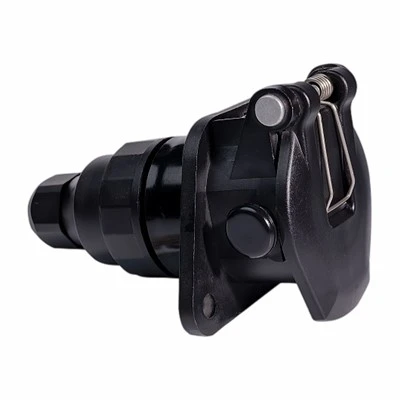
If you’re not sure which product you need, or you’re looking for bulk adapters for your business, travel kits for your team, or heavy-duty adapters for commercial equipment, feel free to connect with us to walk through your specific needs. We’ll help you pick the right product that fits your devices, your use case, and U.S. safety standards. Don’t make the same mistakes I’ve seen customers make—don’t risk a short, a dead device, or a fire by mixing up adapters and power strips. Reach out today to learn more.
Australia Standard Extension Cord References
- National Electrical Manufacturers Association (NEMA). NEMA Standard for Plugs, Receptacles, and Couplers for Household and Similar General Use.
- Underwriters Laboratories (UL). Standard for Safety for Plugs, Receptacles, and Plug-Associated Connectors.
- U.S. Consumer Product Safety Commission (CPSC). Electrical Outlet and Cord Safety for Consumers.
- International Electrotechnical Commission (IEC). Guide for Electrical Compatibility for Cross-Border Devices.
Yuyao Mideal Electric Co., Ltd.
Yuyao Mideal Electric Co., Ltd. is one of the most professional us plug adapter manufacturers and suppliers in China, also supports customized service. With abundant experience, we warmly welcome you to wholesale cheap us plug adapter in stock here from our factory. For price consultation, contact us.
Address: No.28, Lujiafan Road, Langxia Street, Yuyao City, Zhejiang Province, China
E-mail: manager@nbmideal.com
WebSite: https://www.midealcord.com/
