When I get an email from a customer asking, “Can air covered yarn (ACY) really be dyed in multiple colors?” I don’t just answer with a yes or no— I start by breaking down what ACY is, how it’s made, and why its dyeing properties have been a hot question in the textile industry for the past few years. As an ACY supplier with 12 years in the business, I’ve had front-row seats to this conversation: I’ve seen designers ditch ACY for other yarns because they thought it couldn’t do multi-color dyeing, and I’ve helped manufacturers adjust their processes to nail tricky, vivid multi-color finishes. So let’s dive in, straight from the shop floor where I troubleshoot this stuff every week. Air Covered Yarn
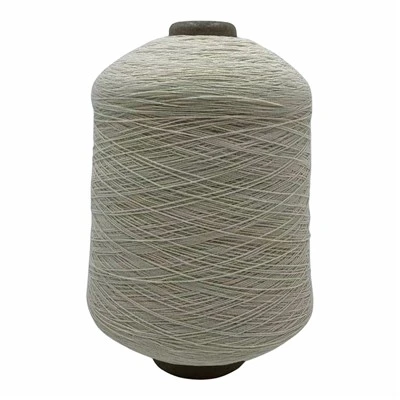
First, let’s recap what ACY is for anyone who’s new here. Air covered yarn is a core-spun yarn made by wrapping a fine filament core (usually polyester, nylon, or polyurethane) with short-staple fibers (cotton, modal, viscose, or even wool) using high-pressure air. Unlike standard core-spun yarns that use mechanical twist, ACY uses compressed air to wrap the staple fibers loosely around the core—think of a spiral of short fibers held together by tiny air jets, not tight torsion. That loose, air-driven wrap is why ACY is so popular for stretchy fabrics: it has great recovery, soft hand feel, and durability, which is why it’s used in athletic wear, socks, knit accessories, and even upholstery.
Now, the big question: multi-color dyeing. The short answer is yes, but it’s not as simple as dipping a single ACY skein into two dye baths and calling it done. Multi-color dyeing for yarn falls into a few common categories, and each works differently with ACY, thanks to its unique structure. Let’s go through each method and how ACY interacts with them, because that’s where most people get confused.
First, there’s space dyeing (or skein dyeing with segmental color). This is when you dye specific, distinct sections of a single yarn skein different colors, like a tie-dye effect or a yarn with red in the top third, blue in the middle, and green in the bottom. Space dyeing is totally possible with ACY, but here’s the catch: because ACY’s staple fibers are loosely wrapped, the dye doesn’t penetrate as evenly as it does in a solid spun yarn. If you’re not careful, dye can seep into the undyed sections, creating muddy, blurry color lines instead of sharp segments. Early on, when I first started selling ACY, we had a customer who wanted a bright white-to-navy space-dyed sock yarn, and their first batch came out with gray smudges where the white section turned blue. We fixed it by adjusting the air cover pressure: cranking the pressure up a bit made the staple fibers wrap tighter around the core, so the dye couldn’t wick through the gaps between the fibers in the undyed sections. We also used a temporary resist agent— a non-toxic polymer that coats the undyed parts of the skein, so when you dip them in the second dye bath, only the exposed sections take color. Now that’s our go-to for space-dyed ACY, and it works for segment lengths as short as 2 inches, which is perfect for intricate knit patterns.
Next, there’s cross-dyeing, which is dyeing two different types of fibers in the same yarn two different colors. Wait— that’s where multi-color comes in, right? If your ACY uses two distinct staple fibers wrapped around the core, and each fiber type reacts differently to dye, you can get a two-color yarn in a single bath. For example, let’s say you make an ACY core with polyester, wrap it with 50% cotton and 50% viscose. Polyester is a synthetic fiber that disperse dyes stick to, while cotton and viscose are natural/regenerated that take reactive dyes. So if you run the yarn through a dye bath with both disperse and reactive dyes at different pH levels, the polyester will turn one color, and the cotton/viscose will turn another. That’s a two-color yarn straight from one dye run, no extra steps. We’ve had a huge demand for this for athletic wear: brands want a heathered look but without the heather yarn cost, so cross-dyed ACY gives them two colors for less. Last year, we worked with a fitness brand that wanted their leggings to have a light gray polyester base and a deep navy cotton wrap— cross-dyed ACY did that perfectly, and it holds up to 50 wash cycles without fading, which is a big win for activewear.
Then there’s printed yarn, or surface printing. This is when you print a pattern (stripes, florals, geometric shapes) directly onto a pre-dyed single-color ACY skein. ACY works really well here because the loose staple fibers give the print a soft, slightly matte finish, unlike smooth filament yarns where prints look harsh. We’ve done custom printed ACY for a knitwear brand that makes Christmas sweaters with tiny snowflakes printed on cream ACY— the print is crisp but not scratchy, and it doesn’t peel even after repeated washing. The only thing to watch for here is the ink type: we use water-based, pigment-based inks that are formulated for textile surfaces, not paper, because regular ink would crack on the yarn’s curve. We also test every printed batch for color fastness to make sure the snowflakes don’t bleed onto the rest of the sweater when it’s laundered.
But wait— there are limitations, and I’d be lying if I said ACY can do every multi-color effect. The biggest one is variegated dyeing, where the color fades gradually from one shade to another along the entire length of the yarn. That’s usually done with spun yarns that have a mix of fibers or a loose twist that lets dye flow unevenly, but ACY’s tight air wrap (when we adjust pressure for sharp colors) doesn’t let dye flow that way. We tried variegated ACY a few years ago for a scarf maker, and the colors always blended too much, looking like a muddy wash instead of the gradual fade they wanted. We now recommend a different yarn for that kind of variegated look, but it’s not ACY’s fault— it’s just not the right tool for that job.
Another limitation is color saturation. Bright, neon multi-colors are harder to pull off with ACY than with solid spun yarns, because the staple fibers are so thin and loosely wrapped that they can’t hold as much dye. If a customer wants a neon pink and neon green two-color cross-dyed yarn, we have to adjust the staple fiber blend: we use a higher percentage of longer-staple fibers (80/20 cotton/pima, instead of standard 60/40) because longer fibers have more surface area to hold dye. That adds a tiny bit to the cost, but it gives them the bright, vibrant colors they need without the ACY drawbacks.
So why do so many people still think ACY can’t be dyed multi-color? A lot of it comes from early mistakes in the industry, back when air cover technology was new (I remember the first ACY machines in the 2000s, they were clunky and hard to adjust). Back then, suppliers didn’t know how to control air pressure and resist agents, so their multi-color ACY looked messy. Now, with modern ACY machinery and specialized dyeing processes, that’s a thing of the past. I can’t tell you how many times I’ve had a customer come to me after a bad experience with a different supplier, saying “ACY dyed for them was blurry and faded, so I thought I’d try yours.” Once we walk them through our process— adjusting air pressure, using resist agents, testing dye types— they end up placing repeat orders for multi-color ACY.
Let me give you a real example from last quarter. A small boutique knitwear designer reached out to me, saying they’d been using regular spun cotton yarn for their shawls, but it was too bulky, and they wanted something stretchier that wouldn’t lose shape. They wanted a shawl with soft pastels: lavender, pale blue, and blush pink, in small segments along the yarn. At first, they thought they’d have to use three different colors of yarn and knit them together, which would add a lot of extra work. We suggested segment-dyed ACY: we used a polyester core wrapped with 100% modal (which is soft, like cotton, but dyes evenly), adjusted the air pressure to make the wrap tight enough for sharp segments, and used a temporary resist to keep the colors from bleeding. The result? A yarn that’s stretchy, soft, has distinct pastel segments, and only took one dye batch instead of three separate yarns. The designer told me they sold out of their entire shawl line in 6 weeks, and half the customers asked where they got the unique yarn. That’s the kind of win that makes all the process tweaks worth it.
Now, if you’re a manufacturer, designer, or small brand looking to use multi-color ACY, there are a few key things to keep in mind when working with a supplier. First, be specific about your color effect: do you want segmental space dye, cross-dyed two colors, printed patterns? The effect you want will change how we adjust the ACY and dye process. Second, ask for dye testing: any reputable supplier will run a small sample batch before doing a full order, so you can check for color sharpness, fading, and hand feel. Third, expect a slight cost difference: multi-color ACY is never going to be as cheap as solid-color ACY, because it requires extra steps (resist application, testing, adjusted air settings) and more careful handling. But the cost is worth it for the unique, stretchy, soft fabric you get.
If you’ve tried multi-color ACY and had a bad experience, or if you’re curious about what it can do for your next project, I’m here to help. As someone who’s been in this business for years, I’d rather tell you if ACY isn’t the right fit than sell you something that doesn’t work for your needs. Whether you need segment-dyed ACY for socks, cross-dyed for activewear, or printed for accessories, we can tailor the process to get the exact look you want.
So to circle back to the original question: Can air covered yarn be dyed in multiple colors? Absolutely— as long as you work with a supplier who understands the unique structure of ACY and knows how to adjust the processes to get sharp, colorfast results. It’s not a one-size-fits-all solution, but for so many applications, multi-color ACY is a game-changer: it gives you stretch, softness, and custom color that you can’t get with standard yarns.

If you’re ready to test a sample or place an order for multi-color air covered yarn, reach out to our team. We’ll walk you through the process, send a free test skein for color matching, and make sure you get exactly what you need for your project.
Air Nylon Covered Yarn References
- Textile Institute. (2021). Air Covered Yarn Technology: Properties and Applications. Journal of Textile and Apparel, Technology and Management, 12(3), 1-18.
- Muthu, S. S. (2020). Dyeing of Technical Yarns. Woodhead Publishing India, 45-72.
- Patel, R. K., & Singh, B. (2019). Effects of Air Pressure and Staple Fiber Length on Dye Penetration in Air Covered Yarn. Indian Journal of Fiber and Textile Research, 44(2), 167-173.
- Collier, B. J. (2018). Textile Yarns: Science and Technology (3rd ed.). Fairchild Books, 215-230.
Zhuji Yuanhui Import & Export Co., Ltd.
Zhuji Yuanhui Import & Export Co., Ltd. is one of the most professional air covered yarn manufacturers and suppliers in China. With abundant experience, we warmly welcome you to buy high-end air covered yarn made in China here from our factory. If you have any enquiry about quotation and free sample, please feel free to email us.
Address: No.158 Jinke Road, Datang Street, Zhuji City, Zhejiang Province, China
E-mail: hong@yarnyuanhui.com
WebSite: https://www.yarnfty.com/
