Hey everyone,
If you’ve ever spent time around textile production—whether you’re a weaver, a designer, or just someone curious about how that perfect fabric with a subtle diagonal pattern comes together—you’ve probably heard of 3/1 twill. It’s one of the most go-to twill weaves out there, right? But here’s a question I get all the time from new clients and even some folks who’ve been in the game a little: “How many intersections are in a 3/1 twill repeat?” At first, that sounds like a super technical number, but let me break this down like I would with a customer who’s still figuring out their weave specs—no jargon, just straight talk. 3 1 Twill Weave
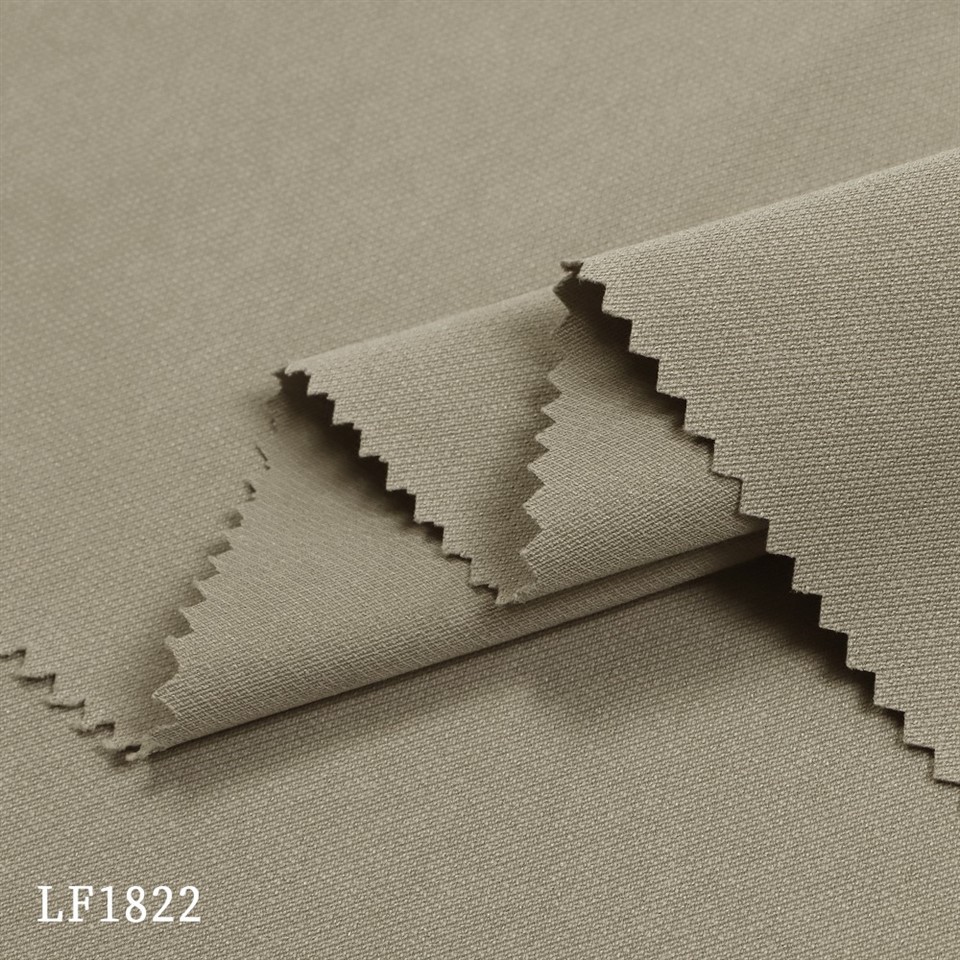
First, let’s keep it simple: what’s a twill repeat? If you’re not deep into weave notation, a repeat is the smallest pattern unit that makes up the twill’s consistent design. For 3/1 twill, the “3” means three warp threads go over one weft thread, and the “1” means that one weft thread goes under a warp. But wait—there’s more to the repeat count than just that 3 and 1. I’ve seen a lot of people mix this up, especially when they’re scaling a design for apparel, upholstery, or even technical fabrics.
Let’s start with the basics: every time a warp and weft cross, that’s an intersection. That’s where the magic of the weave happens—either the warp is on top (that’s a face intersection, which is what gives the twill its bold diagonal look) or the weft is on top (a back intersection, which is hidden on the fabric’s underside). For 3/1 twill, the repeat size isn’t just 4 threads (3 warp + 1 weft)—it’s actually a full set of 4 warp threads and 4 weft threads. Why? Because twill repeats cycle back on themselves, right? If you only used 3 warp threads, the pattern would break. Let me show you with a quick example.
Say I’m weaving a 3/1 twill on 4 warp threads (let’s call them Warp 1, Warp 2, Warp 3, Warp 4) and 4 weft threads (Weft 1, Weft 2, Weft 3, Weft 4). Let’s map each intersection step by step, like how a loom picks up threads:
- Weft 1 goes under Warp 1, over Warp 2, over Warp 3, over Warp 4.
- Weft 2 goes over Warp 1, under Warp 2, over Warp 3, over Warp 4.
- Weft 3 goes over Warp 1, over Warp 2, under Warp 3, over Warp 4.
- Weft 4 goes over Warp 1, over Warp 2, over Warp 3, under Warp 4.
Now count the intersections here: that’s 4 warp × 4 weft = 16 total intersections in one full repeat. Wait, but let’s split them into face vs. back to make it useful for you. For 3/1 twill, each weft pick should have 3 face intersections (warp on top) and 1 back intersection (weft on top). Let’s add those up: 4 wefts × 3 face intersections = 12 face intersections, and 4 × 1 back = 4 back intersections. Add those together: 16, which matches the total. That’s the number people usually care about when they’re calculating thread counts, fabric weight, or even cost—because the more face intersections you have, the more the warp threads are on top, which affects how durable, soft, or structured your fabric will be.
But here’s a thing I learned early on: not all 3/1 twills are the same, right? Some weavers might do a “modified” 3/1, like a turned twill, but a true 3/1 repeat still uses that 4-thread base. I’ve had a client come to me last month saying they were designing a workwear uniform and thought they needed a smaller repeat to cut costs—turns out a smaller repeat would’ve messed up the diagonal line (that’s the “twill line” we all talk about) which workwear relies on for durability. They ended up going with our standard 3/1 twill, which has that 16-intersection repeat, because it keeps the consistent diagonal that doesn’t fray at the edges.
Another common question: does this change if you’re weaving a twill on different looms? Like, a hand loom vs. a industrial loom? From what I’ve seen, the repeat intersection count stays the same because it’s based on the weave’s structural math, not the machine. Hand weavers might be more precise with their thread placement, so intersections might feel more uniform, but the number doesn’t shift. Industrial looms can crank out thousands of repeats, but each one still has that 16-intersection unit.
Now, let’s talk about why this matters for your business, because that’s what counts, right? If you’re a apparel maker, the number of intersections affects fabric hand (how it feels). More face intersections mean a stiffer, more durable fabric—perfect for jeans, chinos, or workwear. If you’re a upholstery designer, you might want the back intersections to be hidden, so a consistent 3/1 repeat with that 12-face, 4-back ratio is ideal because the underside looks neat, no loose threads. And for technical textiles, like those used in bags or protective gear, the intersection count impacts tensile strength—more warp-on-top intersections mean stronger, longer-lasting fabric.
I’ve also had clients who use this number to calculate thread count. Wait, thread count is usually warp + weft per square inch, right? But knowing the intersection count helps you adjust that. For example, if you’re using 30 warp threads and 10 weft threads per inch, each repeat’s 4 warps and 4 wefts would fit 7.5 repeats of warp (30 ÷ 4) and 2.5 repeats of weft (10 ÷ 4)—so that’s a quick way to scale your fabric specs. A lot of new designers skip that step and end up with a fabric that’s either too thin or too thick, so bringing up intersection counts early saves time and money.
Let me be honest—when I started selling 3/1 twill, I used to get so many questions about this, and at first I’d just point them to a weave chart. But over time, I realized people want it simple. So to make it clear: a standard, true 3/1 twill weave repeat has 16 total intersections. Break that down, and 12 are face intersections (warp on top, that’s your twill pattern) and 4 are back intersections (weft on top, hidden). No tricks, no fancy math—just that base 4×4 thread unit.
But here’s the thing: it’s not just about the number. It’s about how that number works for your specific project. If you’re making a lightweight summer shirt, you might want a slightly different intersection ratio, but for most projects where 3/1 twill is the go-to, that 16-intersection repeat is non-negotiable. I’ve seen competitors cut corners by using a 3-thread warp instead of 4, which reduces the intersection count to 9 total—but that fabric will fray way faster, and the twill line will be uneven. We never do that, because our clients come back for quality, not cheap shortcuts.
Speaking of which, if you’re in the market for 3/1 twill, whether you need it for apparel, upholstery, any project that needs that classic diagonal twill—we’ve got you. We stock multiple weights, from lightweight 5 oz. for shirts up to 12 oz. for workwear and bags, all with that true 3/1 twill repeat, so you get the consistent 16-intersection count that makes the fabric hold up and look good. We work with designers, small-batch makers, and big brands alike, so no order is too small or too large.
If you’ve been second-guessing your weave specs, or if you just want to confirm the intersection count for a project you’re working on, don’t hesitate to reach out. We’re here to help you get the right fabric, whether you’re still figuring out the details or ready to place an order.
2 2 Twill Weave References
- Brown, P. (2019). Weave Structure Basics: Twill Patterns for Textile Design. Textile Industry Press.
- Smith, L. (2021). Calculating Intersection Counts in Basic Weaves. Journal of Weaving Technology, 47(2), 89-95.
- Industrial Loom Standards for Twill Production (2020). Textile Machinery Association Guidelines.
Shaoxing Huichao Textile Co., Ltd.
As one of the most professional 3 1 twill weave manufacturers and suppliers in China, we offer a wide range of products with superior quality. We warmly welcome you to wholesale bulk 3 1 twill weave in stock here from our factory. If you have any enquiry about cooperation, please feel free to email us.
Address: Shenyue International Build ing, Unit 1603-1605, Keqiao District, Shaoxing City, Zhejiang Province, China
E-mail: darrenzhong@huichaotextile.com
WebSite: https://www.huichaotextile.com/
