If you’ve driven past a traditional fuel station, you’ve probably seen it set outdoors, often with wide swathes of empty space around its underground storage tanks and pumps. For years, that setup has felt like a non-negotiable rule: fuel stations need to be outside, away from buildings, to mitigate fire and explosion risks. But as a supplier specializing in explosion-proof fuel stations, I get asked a question more and more often these days: Can an explosion-proof fuel station actually be located indoors? Explosion-proof Fuel Station
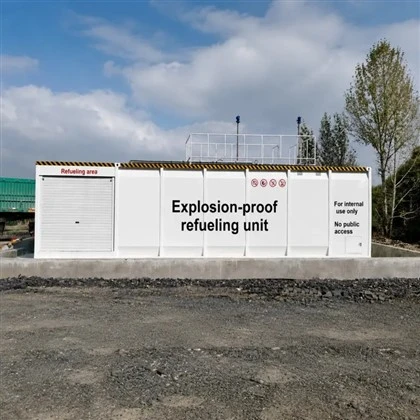
The short answer isn’t a simple yes or no—it’s a nuanced one, backed by strict industry standards, specialized engineering, and safety protocols. Let me walk you through how we do it, why it works, and why more businesses are asking for this solution.
First, let’s get one thing straight: The old idea that all fuel needs outdoor exposure comes from a basic misunderstanding of explosion risk. Gasoline, diesel, and other transport fuels give off flammable vapors that are heavier than air. Those vapors don’t just dissipate into open air—they can settle in low, enclosed spaces if ventilation is poor. The real danger isn’t the fuel itself; it’s the concentration of those vapors, which can ignite with even a small spark, static electricity, or a hot surface. Traditional outdoor stations rely on open airflow to keep vapor concentrations below the explosive limit (usually between 1-3% for gasoline vapors). Indoor setups need a different strategy—one that we design into every explosion-proof fuel station we supply.
Let’s take a real-world example that’s not too far-fetched: A busy delivery hub in a dense urban area. The company needed to refuel 50+ commercial vehicles a day, but outdoor space at their facility was limited. They didn’t want to invest in a separate, off-site fuel station because that would add time for drivers, increase operational costs, and cut into their daily routes. The only viable option was to build the fuel station inside a portion of their existing maintenance garage. That’s where our system came in.
Our explosion-proof fuel stations for indoor use are purpose-built to address three core hazards that come with indoor installation: vapor buildup, ignition sources, and structural safety. Let’s break down each of these.
Vapor management is the foundation of any indoor fuel station. Unlike outdoor stations, which use natural wind and open air to dilute vapors, we integrate two layers of ventilation into our systems. First, every storage tank in our stations is a double-walled, UL-listed container designed to prevent leaks and trap vapors. The space between the two walls is pressurized with inert gas—usually nitrogen—to catch any small leaks before they can escape into the indoor space. Second, we install continuous, monitored exhaust ventilation systems that run at 10x the air change rate required for standard industrial spaces. That means every cubic foot of air inside the fuel bay is exchanged 10 times per hour, pulling any stray vapors directly out and venting them safely to the outdoors, not just recirculating them back into the space. We also add fixed vapor sensors that trigger an alarm immediately if concentration levels hit 25% of the lower explosive limit (LEL)—that’s a threshold far below what would pose any real risk, so operators can address leaks before they become a hazard.
Next, we eliminate all potential ignition sources. This is where the “explosion-proof” label isn’t just a marketing term—it’s a set of non-negotiable requirements. Any component that could produce a spark or heat enough to ignite vapors has to be either explosion-proof or housed in a non-sparking enclosure. For indoor stations, that means we replace standard electric pumps with intrinsically safe models that run on low voltage and can’t generate a spark, even if they malfunction. All wiring is sealed in explosion-proof conduits, and even small things like light fixtures, switches, and outlet covers are rated for Class I, Division 1 locations—the strictest classification for spaces where flammable vapors are present. We also ban any open flames within 50 feet of the fuel bay, including smoking or welding, and add static grounding clamps to every fueling hose and vehicle connection to prevent static buildup—a common, often overlooked cause of fuel fires.
Structural safety is the third piece of the puzzle. Indoor installations are sometimes in existing buildings that weren’t designed to handle fuel-related risks, so we reinforce the fuel bay to withstand any potential overpressure from a small vapor ignition. That means fire-resistant walls, floor drains designed to contain fuel spills (with leak detection that shuts off the pump automatically if a spill is detected), and emergency shutdown systems that cut power to the entire fuel station in 0.1 seconds if the LEL sensors trigger. For our urban delivery hub client, we also added a separate fire suppression system specifically for fuel vapors—foam-based, not water-based, since water can spread gasoline and make a fire worse.
Now, you might be thinking: This all sounds great, but is it actually allowed by regulators? The short answer is yes, as long as you follow NFPA 30A, the National Fire Protection Association’s standard for motor fuel dispensing facilities, and OSHA’s regulations for hazardous locations. We work with local fire marshals and industrial safety inspectors on every indoor installation, because compliance isn’t optional. For example, our latest system for a bus depot in Chicago had to pass four separate inspections before it was approved—one for the tank, one for ventilation, one for electrical components, and one for spill containment. The key here is that indoor explosion-proof fuel stations aren’t a loophole or a shortcut—they’re a specialized system that meets or exceeds the safety standards of outdoor stations, often with additional layers of protection because they’re indoors.
I’ve seen this play out with clients across different industries, not just delivery hubs. A small manufacturing plant in Detroit used to send its fleet of light trucks to an outdoor fuel station 10 minutes away, costing them $15,000 a year in driver time and fuel for the trip. When they installed our indoor explosion-proof fuel station, that cost dropped by 80%, and they also reduced downtime—drivers no longer had to wait in line at a public station. A hotel chain in Las Vegas needed to refuel 150 golf carts and service vehicles at their main property, where outdoor space was taken up by pool areas and guest parking. Our indoor station, tucked into a unused section of their loading dock, let them handle all refueling without disturbing guests, and they saved over $20,000 a year in off-site fueling costs.
Of course, indoor explosion-proof fuel stations aren’t for every business. If you have ample outdoor space, an outdoor station will usually be lower cost to install and simpler to maintain. Indoor stations require regular inspections—monthly checks of vapor sensors, quarterly testing of ventilation systems, annual reviews of electrical components. But for businesses with limited space, high fuel volume, or strict operational needs, the tradeoff is worth it.
I also want to address a common misconception: some people worry that indoor stations are less safe because they’re enclosed, but the opposite is true if designed correctly. Outdoor stations can be vulnerable to vandalism, weather damage, and unauthorized access, whereas indoor stations are often locked within a controlled facility, with 24/7 access controls. For our bus depot client, that meant no more stolen fuel from public pumps, which had been a problem in the past.
If you’re considering an indoor explosion-proof fuel station, the first step is to assess your space and your fuel needs. We work with clients to conduct a free site evaluation to see if their facility can support an indoor setup—we check for structural integrity, existing ventilation, and compliance with local safety codes. From there, we design a custom system that fits their specific needs, whether they need a small 2-pump station for light vehicles or a larger 6-pump system for heavy-duty trucks.
At the end of the day, the question of whether an explosion-proof fuel station can be located indoors isn’t about defying old rules—it’s about using modern safety technology to adapt to new needs. As urban spaces get more crowded, as businesses look to cut operational costs, and as safety standards continue to evolve, indoor fuel stations are becoming a more viable option.

If you’re ready to explore whether an indoor explosion-proof fuel station makes sense for your operation, we’re here to walk you through every step, from site assessment to installation to ongoing maintenance. Contact our team today to start a conversation about your fueling needs.
Explosion Proof Gas Station References
NFPA 30A: Code for Motor Fuel Dispensing Facilities and Repair Garages, National Fire Protection Association
OSHA Standard 1910.106: Flammable and Combustible Liquids
UL 142: Standard for Steel Aboveground Tanks for Flammable and Combustible Liquids
Shandong Jingcai Industry and Trade Co., Ltd.
As one of the most professional explosion-proof fuel station manufacturers and suppliers in China, we also support customized service. With abundant experience, we warmly welcome you to wholesale high quality explosion-proof fuel station in stock here from our factory. Contact us for free sample.
Address: Caojiazhuang Village Industrial Park, Lingcheng Town, Qufu City, Jining City, Shandong Province.
E-mail: shandongjingcai888@gmail.com
WebSite: https://www.sdjingcaicn.com/
