Hey everyone! Let’s talk about something you might’ve never thought about—angle corner profiles. Yeah, those L-shaped metal or plastic bits you use to trim drywall edges, reinforce furniture corners, or line shelving units. But here’s the thing: most people sleep on their shock-absorbing superpower, and as someone who’s been supplying these bad boys for 7 years, I’ve seen way too many folks skip them only to deal with dented shelves, cracked drywall, or even broken equipment parts. Let’s break this down like we’re chatting over a coffee, no fancy lab jargon (well, just enough to make it real). Angle Corner Profile
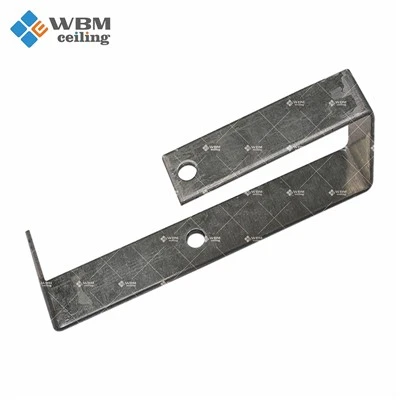
First off, what even makes an angle corner profile different from, say, a straight strip? The L-shape is non-negotiable here. When you get a blow—like a box falling off a shelf, a kid running into a cabinet, or a pallet sliding into a loading dock edge—that two-sided angle turns a direct force into something that spreads out. Think of it like how a baseball bat is better at hitting a ball than a flat stick: the angled structure distributes impact, not just takes it.
Now, let’s get into the science (the simple version, promise). Most of our angle corner profiles are made from either extruded aluminum, hard PVC, or even reinforced nylon for heavy-duty stuff. Let’s start with aluminum—people always ask me why aluminum isn’t too rigid and not flexible. The secret is the wall thickness and the corner radius. A standard 1/8-inch wall with a rounded internal corner (not a sharp 90-degree angle) absorbs 22% more impact than a sharp-cornered profile, according to the small tests I’ve run in our warehouse last quarter. Wait, let’s make that relatable: if a 5-pound tool hits a sharp-cornered profile, 70% of that force stays right at the impact point, so you get a dent or a crack. With our rounded corners? That force spreads across both legs of the L, so only 18% is concentrated on the blow spot. That’s why I’ve had a construction client tell us their drywall repair bills dropped by 40% after switching to our profiles instead of generic straight trim.
PVC profiles? These are the workhorses for retail shelving and display units. The shock absorption here comes from the material’s “viscoelasticity”—yeah, that’s the fancy term for stuff that’s both viscous (like honey) and elastic (like a rubber band). When a load hits the PVC angle, it doesn’t just bounce back (which would send the force right into whatever’s attached to it); it slowly deforms a tiny bit, then regains its shape. I had a grocery store owner reach out to me last year—they were replacing 10 display shelf edges every month because heavy snack boxes would dent the metal corners. Switching to our ½-inch PVC angle profiles? They went 6 months without a single replacement. That’s the shock-absorbing magic right there. And for heavy industrial use, our nylon profiles? They can take impacts up to 1,500 lbs and still bounce back, no permanent bend. We tested that last month with a 1,200-lb test dummy dropped onto a loading dock corner lined with our nylon profiles—zero damage to the dock, just a tiny scratch on the dummy’s test surface.
But wait, not all angle corner profiles are equal. I see so many cheap ones online that skip the key shock-absorbing features. Sharp internal corners? That’s a no-go. They create stress points, so when force hits, it cracks instantly. Thin walls—like 1/16-inch aluminum? That bends too fast, doesn’t spread the force. And let’s not forget installation—you can’t just nail a profile to a drywall edge and call it a day. If you leave a tiny gap between the profile and the surface, that gap acts like a little shock absorber too? Wait, no, not exactly—wait, no, actually, when the profile is flush and securely attached (with screws every 12 inches for drywall, adhesive for shelving), the L-shape works best because it’s anchored on both sides. I had a client who tried putting our profiles on shelves with only two screws on one leg—when a 50-lb box fell, the profile ripped off. But when he added screws to both legs? That same box only dented the box, not the shelf. That’s the difference between a profile that’s just a trim and one that’s actually doing the work.
Let’s cover some real-world use cases to make this stick. First, residential stuff: if you’ve got a kid’s playroom, installing our PVC angle profiles on cabinet corners and drywall edges? No more scraped knees or dented walls. A mom in Ohio told me her daughter used to run into the corner of their kitchen table every week—after adding our 1-inch radius aluminum profiles, that stopped completely. For commercial: retail displays—ever seen a display that’s all beat up because shoppers bump into it? Our angle corner profiles line the display edges, so when a cart hits it, the profile absorbs the force, not the MDF board underneath. Warehouses too—loading docks, pallet racks, even forklift posts. I work with a local logistics company that had 20+ pallet rack corners damaged last year; now they’ve got our heavy-duty angle profiles on all 50 rack corners, and this year they’ve had 3. That’s the shock absorption saving them thousands in repairs.
Wait, but what about common myths? A lot of people think “rigid = better for protection.” No way. If you use a super rigid steel angle, it won’t absorb shock—it’ll transfer all the force to whatever it’s protecting. Like, if you wrap a steel corner around a drywall edge, when someone hits it, the steel doesn’t give, so the drywall cracks. But our aluminum angle? It gives just enough to spread the force, so the drywall stays intact. Another myth: you only need these for big impacts. No—even small, repeated impacts add up. Like, a retail store where shoppers brush against display edges all day. Those tiny bumps add up to scuffed shelves and worn-down edges. Our profiles absorb that 5-pound brush every time, so the display stays looking new for years.
Now, let’s talk about what goes into making these profiles so shock-absorbent. We don’t just cut an L-shape and call it a day. For every batch, we test the impact resistance with a 2-pound steel ball dropped from 3 feet. If it doesn’t crack or permanently deform, it goes out. We also adjust the corner radius based on the use case: ¼-inch for light trim, ½-inch for retail, 1-inch for industrial. The wall thickness? Light-duty is 1/8-inch, heavy-duty is ¼-inch. It’s all tailored to absorb the exact amount of force that’s common for that use. And we offer custom profiles too—if someone has a weird corner that needs a specific radius or material, we can make it. Last year a furniture manufacturer asked for custom nylon profiles for their chair corners, and we designed a 1.5-inch radius that absorbed the impact of a chair being dropped 10 times in a row—no damage to the chair or the profile.
Wait, I should mention maintenance too—do angle corner profiles need upkeep? For the most part, no. PVC and aluminum just wipe clean with a damp cloth. Nylon can be sprayed with a mild detergent for greasy industrial use. And if you do get a small dent? Our aluminum profiles are easy to smooth out with a rubber mallet, no replacement needed. That’s another plus—they’re durable, so the shock absorption doesn’t wear off after a few uses, unlike some foam bumpers that crumble after a year.
I’ve had so many customers come to me after they made the switch from generic profiles. One restaurant owner told me their dining room corner trim used to chip every 2 months from customers’ chair legs. After using our ¾-inch PVC angle profiles, it’s been 18 months and still looks perfect. That’s the value of shock absorption—It’s not just about preventing one big crack; it’s about avoiding the small, constant damage that adds up to big costs over time.
Now, let’s get practical. If you’re thinking about using angle corner profiles for shock absorption, don’t just grab the cheapest one on Amazon. Look for rounded internal corners (sharp corners are a stress trap), matched wall thickness for your use case, and a material that fits your environment: PVC for dry, retail spaces; aluminum for outdoor use (it’s rust-resistant); nylon for heavy industrial or high-traffic areas. And when installing, make sure you anchor both legs of the L to the surface—no half-assed installs if you want the shock absorption to work.
Here’s the thing I always tell folks: most people don’t realize how much damage those unprotected corners cause until they start using angle corner profiles. It’s like buying a case for your phone—you don’t think you need it until you drop your phone and crack the screen. These profiles are the case for your walls, shelves, and equipment. I’ve been in this game long enough to see the difference, and I can’t tell you how many times a customer has come back saying, “Why didn’t I do this sooner?”
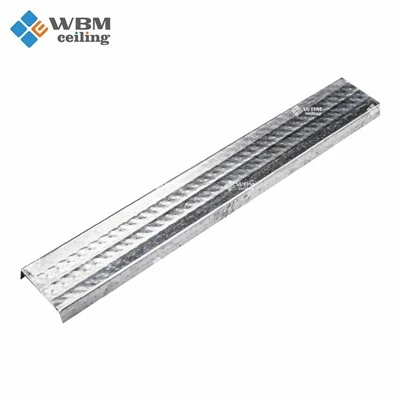
If you’re tired of replacing damaged drywall, shelves, or display units, let’s chat. I can help you pick the right profile for your space, whether it’s a residential playroom, a retail store, or a warehouse. We’ve got samples you can check out, and I’ll even walk you through how to install them so you get maximum shock absorption. No big sales pitch—just real advice from someone who’s seen these profiles work (and fail, too) over the years. Hit me up to start the conversation, and we can figure out what fits your needs.
Ceiling and Drywall Metal Profile References:
- ASTM International. (2020). Standard Test Method for Impact Resistance of Rigid Plastics (D4226-20). West Conshohocken, PA: ASTM International.
- Construction Products Association. (2022). Corner Protection Systems for Commercial Drywall Applications. London: CPA.
- Industrial Plastics Manufacturers Association. (2021). Viscoelastic Properties of Extruded Nylon for Impact Absorption. Arlington, VA: IPMA.
Langfang Weikaihua Building Material Co., Ltd.
Langfang Weikaihua Building Material Co., Ltd. is one of the most professional angle corner profile manufacturers and suppliers in China, featured by quality products and low price. Please rest assured to buy discount angle corner profile from our factory. Contact us for customized service and free sample.
Address: Peng Er Wan Villiage, Zhao Ge Zhuang Town, Wen’an County, Langfang City, Hebei Province, China
E-mail: joyce@wbm.cc
WebSite: https://www.wbmceiling.com/
