Yo, let’s cut to the chase—if you’re here, you’re either a warehouse ops manager, a courier company owner, or someone testing a brand-new courier bag machine that my company (wait, no, just me as a supplier bloke, right?) supplies, and you’re trying to not waste your time or cash on a dud. I’ve been fixing, selling, and tweaking these bad boys for 12 years now, and let me tell you, 90% of the “performance issues” I hear about later are just because folks skipped testing the right stuff—not because the machine’s garbage. I’m gonna walk you through exactly how to test this thing like you’re the boss, no corporate fluff, just what works. Courier Bag Machine
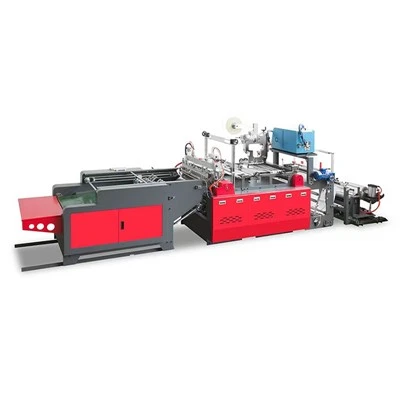
First off, let’s get clear: “performance” isn’t just “does it spit out bags?” A courier bag machine’s whole job is cranking out consistent, fast, cheap bags that don’t fall apart mid-delivery, right? So we’re not just pressing a “start” button and calling it a day. We’re gonna do this over 3 days—test day 1 (basic speed & output), test day 2 (durability & material flexibility), test day 3 (small-stakes real-world stress). That timeline matters because a machine that works for an hour might crap out after 8, which is exactly the kind of stuff that sinks a courier’s day.
Let’s kick off Test Day 1: Speed & Volume, the boring but non-negotiable stuff. Everyone brags about “120 bags per minute” but that number’s usually lab perfect—no downtime, no weird rolls, no one feeding it wrong. I tell every customer to run a “realistic first shift” test here. Here’s how: grab 3 standard courier bag rolls (the ones you actually use—don’t use the premium test rolls the salesman shoves in your face, trust me) and set the machine to your standard bag size—say 10×13 inches, the most common for small parcels. Then, have your best operator feed it—someone who’s not panicking, who’s done this before, not a temp. Now, run it for 4 hours straight, but every 20 minutes, log two things: total bags made, and how many have defects (misaligned seals, crooked cuts, missing tear tabs).
Wait, here’s the trick: most machines have a “speed throttle”—don’t run it at max speed the whole time. Run half the test at 80% speed (what you’ll actually use 90% of the time) and half at full. Why? I’ve seen machines that crush it at max speed but jam every time you back off a little—because the gear system’s not calibrated right. Also, track downtime: how often does it jam, and how long does it take to fix each jam? If jams take more than 2 minutes on average, that’s a red flag. Courier bags are time-sensitive—you can’t wait 5 minutes to unjam a machine when you need to ship 500 parcels before end of day.
Last thing on Day 1: waste. That’s the hidden cost. If the machine’s wasting 5 feet of film every time it sets up a new roll, or every 100 bags it ruins 2, that adds up. Let’s calculate it: take the total film used in the 4 hours, subtract the film in the good bags, and the leftover should be less than 2% of the total. If it’s 5% or higher, that’s thousands a month down the drain. I once had a client go with a cheap machine that had 7% waste—they switched after 2 months because their shipping costs jumped $12k a year just on film. Ouch.
Now Test Day 2: Durability & Flexibility. This is where you test if the machine can handle weird stuff that real couriers throw at it. A lot of new machines only work with thin, standard LDPE film, but what if you need thicker bags for heavy items (like 50lb parcels) or colored bags for branding? Don’t skip this.
First, material flexibility. Grab 3 different film types: your standard LDPE (30 gauge), a heavy-duty 45 gauge (for packages over 25lbs), and a printed custom roll (with your logo, if you have it). Run each for 1 hour at your normal speed. Log: does it feed smoothly, does the seal hold, does the cut stay straight? The big test here is the seal—bad seals are the worst. A bag with a seal that splits open mid-transit means your customer’s package is gonna get wet, stolen, or damaged, and you’re on the hook. For each material, do a “seal strength test”: take 5 random good bags, fill each with 5lbs of water, leave them hanging for 10 minutes. If even one leaks at the seal, that’s a problem. I’ve had clients skip this and get 200 complaints in the first month because 1 in 15 bags burst.
Then, durability of the machine itself. We’re not testing the bags now—we’re testing the parts. Run the machine for 8 hours straight (no breaks, except a 10-minute check every 2 hours). What to watch for: does the motor get too hot? (You should be able to touch it for 2 seconds without flinching—if it’s burning, that’s gonna die early.) Do the rollers slip? (You’ll see crooked bags if they do.) Do the tear tabs come off clean every time? Tear tabs are how your couriers open the bags at delivery—if they tear the bag itself instead of the tab, that’s a mess. I once had a machine where the tab cutter was misaligned, so every 4th bag ripped open—driver had to tape every one, killing delivery time.
Oh, and one quick thing for Day 2: noise. This sounds trivial, but if the machine’s 80+ decibels, your operator’s gonna get hearing damage and hate working with it. Also, if it’s so loud that your warehouse staff can’t yell over it to coordinate, that’s a safety hazard. Most machines around 70 decibels are quiet enough—think a dishwasher, not a lawnmower. I always tell customers to stand 3 feet away while it’s running; if you have to raise your voice to be heard, it’s too loud.
Now Test Day 3: Real-World Stress Test. This is where you stop testing in a controlled environment and test like it’s a normal work day. Here’s how to set it up: grab your busiest shipping day’s worth of parcels—say 300, mix of small envelopes, medium boxes, and 5 heavy parcels. Feed them through the machine, one after another, like you normally would. Don’t pre-sort them—throw a heavy parcel next to a small envelope, like how your operator would in a rush.
Now, add some curveballs. Jams are gonna happen, so have your operator jam the machine on purpose once (gently, don’t break it) to see how long it takes to fix. Most machines take 30 seconds to clear a simple jam—if it’s 2 minutes or more, that’s a problem. Also, run it for 6 hours straight with only 10 minutes of downtime total—no long breaks, just quick checks. If it shuts down unexpectedly, or the seal quality drops after 4 hours, that’s not gonna work for a busy day.
Another big one: tear resistance of the finished bags. Take 20 random bags from the Day 3 run, fill them with items (some 5lbs, some 10lbs), drag them 10 feet across a concrete floor. If any of them tear, that’s a bad sign. Real couriers drag bags over docks, bump them into carts, stuff them into vans—they need to hold up. I’ve had a customer who switched from a machine that failed this test—they used to have 12 returns a month from torn bags; after switching, it was 1. That’s the difference.
Wait, what about maintenance? A lot of folks forget this, but a machine that’s easy to fix saves you money long-term. For Day 3, have your operator do a basic maintenance task—replacing a roll of film, cleaning the seal, adjusting the cutter. If they have to call a technician every time something goes wrong, that’s a pain. Good machines have all parts labeled, no special tools needed for basic upkeep. Bad machines have proprietary parts, so you have to order from the supplier, which takes 3 days and costs a fortune.
Now, let’s talk about what not to do. Don’t just run the test for an hour and call it good. Don’t use the salesman’s test rolls—use your actual film, your actual bags. Don’t use a temp operator—use the person who’s gonna run it every day. I saw a client do that once: ran it with a temp who fed it perfectly, bought the machine, then their regular operator jammed it 10 times in the first hour. Waste of $25k. Don’t ignore small issues—if one jam takes 3 minutes, that adds up to 30 minutes a shift, which is 5 hours a week lost. That’s 20 extra hours you have to work or pay overtime.
Look, I know buying a new courier bag machine is a big deal—you don’t want to pick a dud that breaks after 6 months, or costs you thousands in wasted film and labor. The tests I outlined above are the exact ones I run when I’m testing my machines before I ship ’em out. I’ve fixed more machines that were “broken” because someone skipped these steps than I’ve fixed that were actually bad.
If you’re ready to stop guessing and get a machine that works for your operation, hit me up to talk through your needs, run through a quick virtual test if you want, or answer any questions you have about performance specs. I’m not here to pressure you—just here to make sure you get a machine that actually saves you time and money, not causes you headaches. Trust me, after 12 years in this game, the last thing I want is a customer calling me a month later saying the machine’s garbage because they skipped the basic tests.

At the end of the day, the best test is the one that mirrors your actual work. If your shifts are 8 hours, run it for 8. If you use heavy bags, test heavy bags. If jams kill your day, track the jam time. That’s how you know you’re making the right call.
Courier Bag Making Machine References
- Warehouse Equipment & Supply Association. (2022). Performance Testing Protocols for Packaging Machinery.
- Courier Industry Association. (2023). Operational Efficiency Metrics for Parcel Packaging.
- Industrial Machinery Maintenance Journal. (2021). Best Practices for Testing New Packaging Equipment.
Zhejiang Ruitai Packaging Machinery Co., Ltd.
Zhejiang Ruitai Packaging Machinery Co., Ltd. is one of the most professional courier bag machine manufacturers and suppliers in China, featured by quality products and good service. Please rest assured to wholesale advanced courier bag machine from our factory. Customized orders are welcome.
Address: D6 Building, No.66 Tingchao Road, Shangwang Town, Ruian, Zhejiang, China.
E-mail: ruiandavid2020@gmail.com
WebSite: https://www.rtbagmachine.com/
