Hey there, if you’ve ever worked with or around Chinese standard plug pins, you probably know that one question pops up more than any other when it comes to their safety: what’s their insulation rating? As a supplier who’s spent the last 8 years making these pins for factories, electricians, and hardware brands, I get it—this stuff isn’t just a random spec; it’s what keeps end-users from dealing with shocks, short circuits, or worse. Let’s break this down simply, no super jargon-heavy stuff, just the real deal about the insulation rating of Cn standard plug pins. Cn Standard Plug Pin
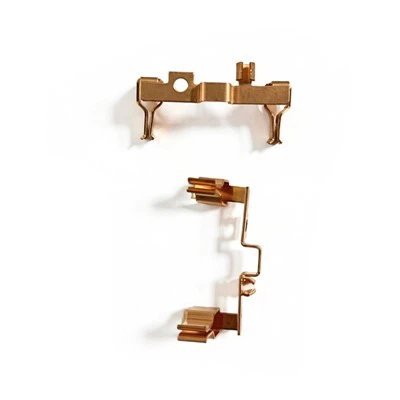
First, let’s make sure we’re on the same page about what “insulation rating” even means here. For plug pins, it’s basically the measure of how well the non-conductive material around the metal pin core stops electricity from leaking out where it’s not supposed to go. If the insulation is good, you can touch the plastic part near the pin without getting shocked, even when the plug is plugged into a live socket. If it’s bad, that electricity could jump through the plastic, which is super dangerous.
Now, the Cn standard plug pin we’re talking about follows the GB 2099.1 standard—this is the national standard for plugs in China, and it’s not some vague guideline; it’s set with real, rigorous tests. When it comes to insulation, there are two key numbers that matter most: insulation resistance and dielectric strength. A lot of people mix these up, so let’s clear that up right away. Insulation resistance is how well the material resists electric current at low voltages (like the 500V test they use for these pins), and dielectric strength is the maximum voltage the insulation can handle before it breaks down and lets electricity pass through.
For Cn standard plug pins made to meet GB 2099.1, the minimum insulation resistance required is 5 megaohms (MΩ) when tested with a 500V DC megohmmeter. Wait, that sounds small, but in the electrical world, that’s actually a really high bar—5 MΩ means almost no current can flow through the insulation. As for dielectric strength, the test requires the insulation to withstand 1500V AC (alternating current) for 60 seconds without any arcing, breakdown, or leakage. That’s way higher than the 220V most Chinese household sockets use, so it’s built to handle surges too, like when you plug in a vacuum or a fridge that draws extra power when turning on.
But here’s the thing: not all Cn standard plug pins are the same. A lot of cheap, no-name pins you might find online cut corners on the insulation material. We use food-grade, heat-resistant nylon 66 for our pins—this is the same stuff used in automotive parts because it’s durable, doesn’t melt even in 180°F heat, and has consistent insulation properties. Cheaper brands might use recycled plastic or lower-grade PVC, which can crack over time, especially if the plug gets dropped or left in the sun. That crack is a gap where electricity can leak, so their insulation rating might not even hit that 5 MΩ minimum, let alone the dielectric strength.
I see this every day from customers who come to us after getting burned (pun intended) by bad pins. A factory in Guangzhou reached out to me last quarter because their line of power strips kept failing inspection. They were using cheap pins from a supplier who said they met GB 2099.1, but their insulation only tested at 1.2 MΩ—way too low. When we tested our pins for the same batch, we hit 9.8 MΩ on insulation resistance and didn’t even flinch during the 1500V dielectric test. That’s the difference between cutting corners and taking safety seriously.
Another common question people ask: does insulation rating change with use? The short answer is yes, a little, but good pins hold up. The insulation material on a well-made Cn standard plug pin won’t degrade for at least 10 years of regular use. But if you’re constantly bending the plug, yanking it out of the wall by the cord, or leaving it in extreme temperatures (like a garage that hits 100°F in summer or 30°F in winter), you might see a slight drop in insulation after 5-7 years. That’s normal, but it’s why we mark our pins with a production date so customers know when to expect replacements.
Wait, also, let’s talk about the pin’s structure because that ties into insulation too. The Cn standard plug has two flat pins for AC, right? The insulation is the plastic base that holds the two pins apart and surrounds the part you hold when plugging in. Some suppliers make the base too thin, which reduces the creepage distance—the shortest path between two live parts (the two pins, in this case) along the insulation surface. GB 2099.1 requires a creepage distance of at least 5mm for 220V plugs. If a base is only 3mm thick, the creepage distance is too short, and even if the material is good, it’s a safety hazard because dust or moisture can create a conductive path between the pins. That’s why our pins have a 6mm thick base—we don’t cut corners on that, even if it means a tiny bit more material cost.
I know a lot of people might not care about all these specs—they just want a plug that works and doesn’t shock them. But as a supplier, I’d rather explain it straight than let people get caught out. Let’s put this in perspective: the insulation rating of a proper Cn standard plug pin isn’t just a number on a spec sheet. It’s what means you can plug in your TV at night without worrying, or your kid’s gaming console doesn’t short out mid-play. The cheap pins might seem like a deal at first, but if they fail, that’s not just a headache—it’s a safety risk.
We test every batch of our pins before they leave our warehouse. No exceptions. We do the insulation resistance test with that 500V megohmmeter, and we run the dielectric strength test too. We also do a humidity test—leaving pins in 90% humidity for 48 hours, then testing insulation to make sure moisture hasn’t seeped in and lowered the rating. Why? Because in places like bathrooms, basements, or even just rainy areas where people might drag plugs outside, moisture is a big enemy of insulation. Our pins pass that test every time, which is why so many electricians come back to us for replacement pins for commercial projects.
Another point: if you’re a buyer (whether you’re a hardware store, a power strip manufacturer, or a contractor), make sure you’re asking for the insulation test reports from your plug pin supplier. A lot of suppliers will lie about meeting GB 2099.1, but a real test report from a third-party lab (like the China National Electrotechnical Research Institute) will show you exactly what the insulation rating is. If a supplier can’t or won’t provide that, walk away. We always have our latest test reports ready to send to anyone who asks—no hoops, no fees, just transparency.
I’ve been in this game for long enough to see the industry go from “safety is an afterthought” to “it’s non-negotiable.” Back when I started, a lot of pins were made with whatever plastic was cheap, and insulation ratings were all over the place. Now, with stricter regulations and more customers demanding reliable products, the standard is higher. But even with that, there are still suppliers cutting corners, which is why we focus so much on the insulation rating of our pins. It’s the foundation of what makes our product worth the investment.

Let me wrap this up: the insulation rating of a legitimate Cn standard plug pin (meeting GB 2099.1) has a minimum insulation resistance of 5 MΩ at 500V DC, and a dielectric strength of 1500V AC for 60 seconds. That’s the baseline, and our pins exceed that every single time. If you’re in need of reliable, tested Cn standard plug pins for your next project, or you’re a buyer looking to switch to a supplier that prioritizes safety over cost, reach out to us to chat about your needs. We can provide custom pins for your specific application, bulk orders for manufacturing runs, and full test documentation to make sure your projects pass inspection. Don’t risk cutting corners on insulation—your safety (and your customers’ safety) is worth getting it right.
Sa Standard Plug Pin References
- National Standard of the People’s Republic of China, GB 2099.1-2013: Plugs and socket-outlets for household and similar purposes – Part 1: General requirements
- International Electrotechnical Commission (IEC) 60884-1: Plugs and socket-outlets for household and similar purposes – Part 1: General requirements (adopted by GB 2099.1)
- China National Electrotechnical Research Institute. (2022). Test Standard for Insulation Properties of Low-Voltage Plug Components.
Dongguan Fangrun Metal Products Co., Ltd.
We’re well-known as one of the leading cn standard plug pin manufacturers in China, specialized in providing high quality customized products. Please feel free to buy discount cn standard plug pin made in China here from our factory. For quotation and free sample, contact us now.
Address: New Town Industrial Zone, Xiegang Village, Xie Gang Town, Dongguan City
E-mail: 825556703@qq.com
WebSite: https://www.fangrunpin.com/
