If you’ve ever walked through a power generation plant, an automotive manufacturing facility, or a custom transformer shop, you’ve probably heard someone mumble “fully assembled cores” and “core assemblies” like they’re interchangeable terms. For years, I thought they were too—until 12 years ago, when a client told me he’d rejected a shipment of cores from my old supplier because they were “half-baked” for his project. That day, I dug into the specs, pulled apart failed parts, and learned the hard way that mixing up these two terms isn’t just a vocabulary mistake. It’s a mistake that costs time, money, and even safety in critical industries. As someone who’s spent the last decade and a half as a fully assembled cores supplier, I can tell you: these two components are as different as a pre-built bookshelf and the pile of wood planks you buy to build one from scratch. Let’s break this down, no jargon, no corporate fluff. Fully Assembled Cores
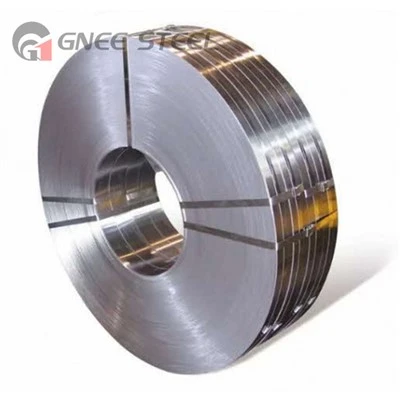
First, let’s start with the basics: what is a core, anyway? Most transformers, inductors, and electrical motors rely on a magnetic core—usually made of stacked thin layers of silicon steel (called laminations) because it reduces energy loss from eddy currents. Without that core, electrical energy can’t be efficiently converted into magnetic energy, and vice versa. But the step from individual laminations to a working part isn’t just stacking metal sheets. That’s where the two terms diverge.
Let’s start with core assemblies, since they’re the more common, “raw” version most people encounter. A core assembly is, simply put, a set of stacked laminations or magnetic segments that are bound together, but not fully integrated. Think of it as a kit waiting for final assembly. Here’s what that looks like in practice: when a manufacturer cuts silicon steel into the precise shapes needed—like E-shaped or I-shaped laminations for a transformer core—they stack them layer by layer. Sometimes they’re held together with a light adhesive, sometimes just with friction fit, or even temporary steel clips. The key here? No permanent structural or electrical connections are in place. A core assembly is incomplete because it’s missing the critical steps that let it perform its intended function as part of a finished device.
Why would someone use a core assembly? Mostly for customization or on-site final assembly, right? If you’re a small electrical shop that builds custom transformers for unique jobs, you might buy core assemblies to fit your own casings, wind the copper wire around them, and seal the whole unit. Or if you’re a power company that needs to replace a core in an old transformer at a remote substation, you might get a core assembly that’s easy to transport, then finalize installation on-site. But here’s the catch: core assemblies have big limitations. Because they’re not permanently fastened, they can shift, produce more noise from vibration, and lose up to 15% more energy than a fully assembled core. The temporary fasteners can also loosen over time, leading to early part failure. I’ve seen a dozen clients come to us after trying to use core assemblies for high-demand applications like wind turbine transformers or data center uninterruptible power supplies (UPS) only to have their machines fail within two years. That’s the risk of cutting corners.
Now, what is a fully assembled core? That’s the end product—a core that’s not just stacked, but permanently integrated to deliver consistent, high-performance magnetic function. Let’s break down the steps that make it different. First, after stacking the laminations, we add permanent structural fasteners: usually welded steel bars running through the core’s ends, or solid end plates bolted on with high-torque, corrosion-resistant bolts. But we don’t stop there. One of the biggest steps most suppliers skip for core assemblies is the coating and insulation process. Each lamination is coated with a thin layer of insulation to prevent eddy currents, but a fully assembled core goes a step further: after stacking, the entire core is often vacuum-impregnated with a epoxy or resin sealant. That sealant fills every gap between laminations, locks them in place, and eliminates air pockets that cause vibration and energy loss. We also add grounding tabs that are permanently attached, a critical safety feature for high-voltage applications. The result is a core that’s solid, stable, and ready to be used in a finished transformer or motor—no extra assembly needed.
Wait, let’s get specific with a real example to make this tangible. A few months ago, a client who builds industrial inverters reached out. He’d been using core assemblies from another supplier for his 100kW inverters. Within 18 months, 12 units had failed due to loose laminations that caused excess heat and short circuits. He switched to our fully assembled cores for the same inverter model. Six months later, he told me he hadn’t had a single failure. The difference? Our cores’ vacuum impregnation locked the laminations in place, the welded end plates prevented any shifting, and we added a grounding tab that eliminated the risk of stray current that the core assemblies lacked. For him, the extra cost of a fully assembled core was worth it to avoid downtime that cost him $50,000 per day of production.
But let’s not paint core assemblies as entirely useless. For low-demand, low-cost applications, they can make sense. A small hobbyist building a custom transformer for a home project, for example, might not need a fully assembled core’s extreme performance. Or a manufacturer building small inductors for consumer electronics might opt for core assemblies to keep production costs low. The key is matching the component to the job. The mistake I see most often is when buyers default to core assemblies because they’re cheaper, not realizing that the long-term cost of failure far outweighs the upfront savings.
As a fully assembled cores supplier, I’ve worked with clients in every industry to make that matching clear. Let’s outline the core differences to make it easy to remember, because this isn’t just semantics—it’s a matter of performance, safety, and cost:
First, structure. Core assemblies are loosely stacked, temporary fastening only; fully assembled cores are permanently bonded, sealed, and reinforced for stability. Second, energy efficiency. Fully assembled cores have 10-15% lower energy loss than core assemblies, thanks to the epoxy seal and tight lamination fit. Third, application suitability. Core assemblies work for low-demand, custom on-site projects; fully assembled cores are designed for high-demand, safety-critical applications: power grids, renewable energy systems, data centers, and heavy industrial machinery. Fourth, longevity. A properly made fully assembled core can last 20-30 years, while a core assembly often needs replacement in 5-10 years for high-stress uses.
I also want to talk about a common myth I hear from new buyers: “I can assemble a core assembly myself to get the same result as a fully assembled core.” Let’s bust that right now. The vacuum impregnation step we use for fully assembled cores is a precision process—we heat the core to 100+ degrees Celsius to remove all air, then pull a vacuum to draw the epoxy into every gap between laminations, then cure it at a controlled temperature for 72 hours. If you stack laminations and pour epoxy yourself, you’ll end up with air bubbles, uneven coverage, and loose spots that cause more energy loss than a proper manufacturing process. Even a small mistake in curing temperature can make the epoxy brittle, leading to cracks and failure. I’ve tested dozens of home-assembled cores, and they almost always underperform compared to a factory-made fully assembled core.
Over the years, I’ve built my business on this clarity—no confusing sales pitches, no cutting corners. I’ve seen too many businesses suffer because they didn’t understand the difference between these two parts. Last year, a solar farm developer called me panicking after receiving a shipment of core assemblies for their grid-tie transformers. They’d already installed half of them when an engineer noticed the excess heat from the loose laminations. Reinstalling would have cost them $200,000 in labor and downtime. We were able to rush order custom fully assembled cores, but it was a close call. That’s why I always take the time to explain the difference to every potential client, not just make a sale.

If you’re working on a project right now—whether it’s building a transformer for a power grid, upgrading a motor for a manufacturing plant, or designing a renewable energy system—don’t risk your project on mixing up these two parts. If you’re not sure which you need, or you’re ready to source reliable, high-performance fully assembled cores for your next job, reach out to discuss your requirements. We can walk through your application, answer questions, and provide samples so you can see the difference between a core assembly and a fully assembled core for yourself. It’s not just about selling a part—it’s about making sure your project works, now and for years to come.
Cold Rolled Grain Oriented Steel References
- Electromagnetic Cores and Components: Design, Materials, and Applications, John Wiley & Sons, 2019
- Energy Efficiency in Power Transformers: A Practical Guide, International Council on Large Electric Systems (CIGRE), 2021
- Silicon Steel Laminations for Magnetic Applications, IEEE Transactions on Magnetics, Vol. 57, No. 2, 2021
- Manufacturing Methods for Electrical Cores, Society of Manufacturing Engineers (SME), 2020
- Reliability of Magnetic Components in Industrial Applications, IEEE Industry Applications Magazine, Vol. 27, No. 4, 2021
Henan Gnee New Material Co., ltd
Henan Gnee New Material Co., ltd. is well-known as one of the leading fully assembled cores manufacturers and suppliers in China. If you’re going to buy customized fully assembled cores made in China, welcome to get pricelist from our factory. Quality products and low price are available.
Address: 25TH FLOOR HUAFU COMMERCIAL CENTER ANYANG HENAN CHINA.
E-mail: sales@gneesteels.com
WebSite: https://www.chinasiliconsteel.com/
