Hey there, if you’ve ever messed around with lighters that spark when you squeeze ’em, or felt your phone screen vibrate when you type, you’ve used piezoelectric ceramics without even knowing it. I’ve been supplying these little powerhouses for years, and one of the most common questions I get is: “What even are these things made of? It’s not like they’re magic rocks, right?” Let’s break it down real—no jargon overload, I promise. Piezoelectric Ceramics

First off, let’s get one thing straight: not all ceramics here are the same. You’ve got your classic clay mugs, but these are specialized, engineered to flex and make electricity (and vice versa). The original stuff dates back way early—like the 1880s, when scientists found quartz did the piezo thing, but quartz is garbage for mass production. It’s too expensive, too weak, and doesn’t give a strong enough electric charge. So we moved to other materials, and that’s where the real players come in.
The big dog these days is PZT. Yeah, you’ve probably heard that acronym thrown around. PZT stands for Lead Zirconate Titanate, and it’s the workhorse of our industry. Let me keep it simple: it’s a mix of three basic ingredients that get cooked up in a specific way. First, lead oxide—don’t side-eye it, it’s what gives PZT that awesome piezoelectric punch. Without lead, you don’t get the strong, consistent charge these parts need for everything from medical ultrasound to industrial sensors. Then you add zirconium oxide and titanium oxide, right in just the right ratio. Tweak that ratio a tiny bit, and you can make PZT that’s better for high vibrations, or super sensitive to tiny pressure changes, or even stable at super hot temps. I tell my clients all the time: PZT is like a recipe. Mess up the ratios during manufacturing, and your piezo part’s as useless as a flat tire.
But wait—we can’t ignore the elephant in the room, which is lead. A lot of customers, especially those making consumer electronics or medical devices, come to me worried about lead content. Fair call. Lead’s toxic, so there’s been a push for lead-free piezoelectric ceramics lately. And honestly? We’ve got solid alternatives now, even if they can’t quite match PZT’s performance… yet. The main lead-free stuff I supply is based on bismuth sodium titanate (BNT for short) or potassium sodium niobate (KNN). These don’t have lead, so they’re great for stuff where strict environmental rules apply—like EU RoHS compliance, or medical implants that might end up in landfills. Yeah, their piezo effect is a bit weaker than PZT, and they’re a bit trickier to work with (I’ve had to troubleshoot more with lead-free batches early on), but we’ve refined the process so much now that they’re totally usable for most non-heavy-duty apps. I’ve got a client making portable air quality sensors that swears by our KNN-based piezos—they don’t need the super high output of PZT, so the lead-free stuff is perfect for their green brand.
There’s also some other niche materials you’ll run into, depending on the application. For example, if you need a piezo that works at crazy high temps—like 500°C or more—we supply materials like barium titanate (BaTiO3) modified with other metals, or even things like lithium niobate. Barium titanate’s been around longer than PZT, actually, but it wasn’t always as consistent. We add small amounts of strontium or calcium to it now to boost its performance for high-heat jobs, like oil and gas sensors that go down deep in wells where it’s hot as hell. Lithium niobate’s more for optical stuff, like modulators in fiber optics, where you need a piezo that can respond super fast—like nanoseconds fast. That’s a whole different ballgame from the PZT parts I sell for kitchen lighters, but it’s still piezo ceramic, just tailored for a specific need.
Let me also talk about the manufacturing side, because that’s half the reason these materials work. You can’t just mix powders, press ’em, and call it a day. Once we’ve got the raw materials—whether that’s lead oxide, zirconium, titanium, or whatever—we mill them into super fine powders, mix ’em exactly, then press them into the shape you need (could be a tiny disk for a speaker, a thin strip for a sensor, whatever). Then we fire them in a kiln at like 1200°C—hot enough to turn the powders into a dense, solid ceramic. That’s where the magic really happens. When the ceramic’s hot, we apply a really strong electric field across it (this is called poling) and cool it down while that field’s on. That aligns all the tiny crystal domains inside the ceramic, so when you squeeze it or bend it, those aligned domains generate electricity. Without poling? It’s just a rock—no piezo effect at all.
I get it, a lot of people in the biz overcomplicate this. They’ll throw out terms like “perovskite crystal structure” like it’s some secret code. Yeah, PZT has a perovskite structure—meaning each lead atom is surrounded by oxygen, and the zirconium/titanium is in the center—so the crystals can shift when you apply pressure or voltage. But you don’t need a PhD to use piezo ceramics, right? My job is to know which material works for which project, not recite textbook definitions. If you’re making a medical ultrasound probe, I’m gonna steer you toward our high-sensitivity PZT. If you’re making a kids’ toy that needs to pass strict safety tests, lead-free BNT is the way to go. If you’re working on a space project where temps swing from -100°C to 200°C? We’ve got modified barium titanate that can handle that.
Wait, let’s address another common misconception: piezo ceramics aren’t just one thing. Every batch I make is tuned for a specific use. Like, some PZT is “hard” (high mechanical strength, good for vibrating motors), some is “soft” (super sensitive, great for sensors that pick up tiny sounds or pressure changes). That’s all from tweaking the raw material ratios and the poling process. I tell new clients to tell me their exact specs—temperature range, desired output size, application—and I’ll pick the right material, not just sell them the cheapest stuff in stock. That’s how I’ve stayed in this game for so long. I don’t do one-size-fits-all, because this stuff doesn’t work that way.
Also, let’s not forget about quality control. I’ve had a few bad clients come to me with cheap piezo parts from overseas, and they fail way too often. Why? Because those guys cut corners on raw materials—use impure lead oxide, or skip the poling step entirely. Our materials are tested every step of the way: we check the powder purity, test the fired ceramic’s density, and every finished part gets a piezo efficiency test. If it doesn’t meet our standards, it gets recycled, no questions asked. That’s why a lot of big names in aerospace, medical devices, and consumer electronics keep coming back to me. They know I’m not gonna sell them garbage that’ll cause a recall.
So to wrap this up: the main piezo ceramics you’ll run into are PZT (the high-performance workhorse), lead-free options like KNN and BNT (for compliance and green needs), and niche materials like modified barium titanate or lithium niobate for extreme conditions or super fast apps. The raw materials might sound simple, but it’s all about how you mix, fire, and pole ’em to get the piezo effect.
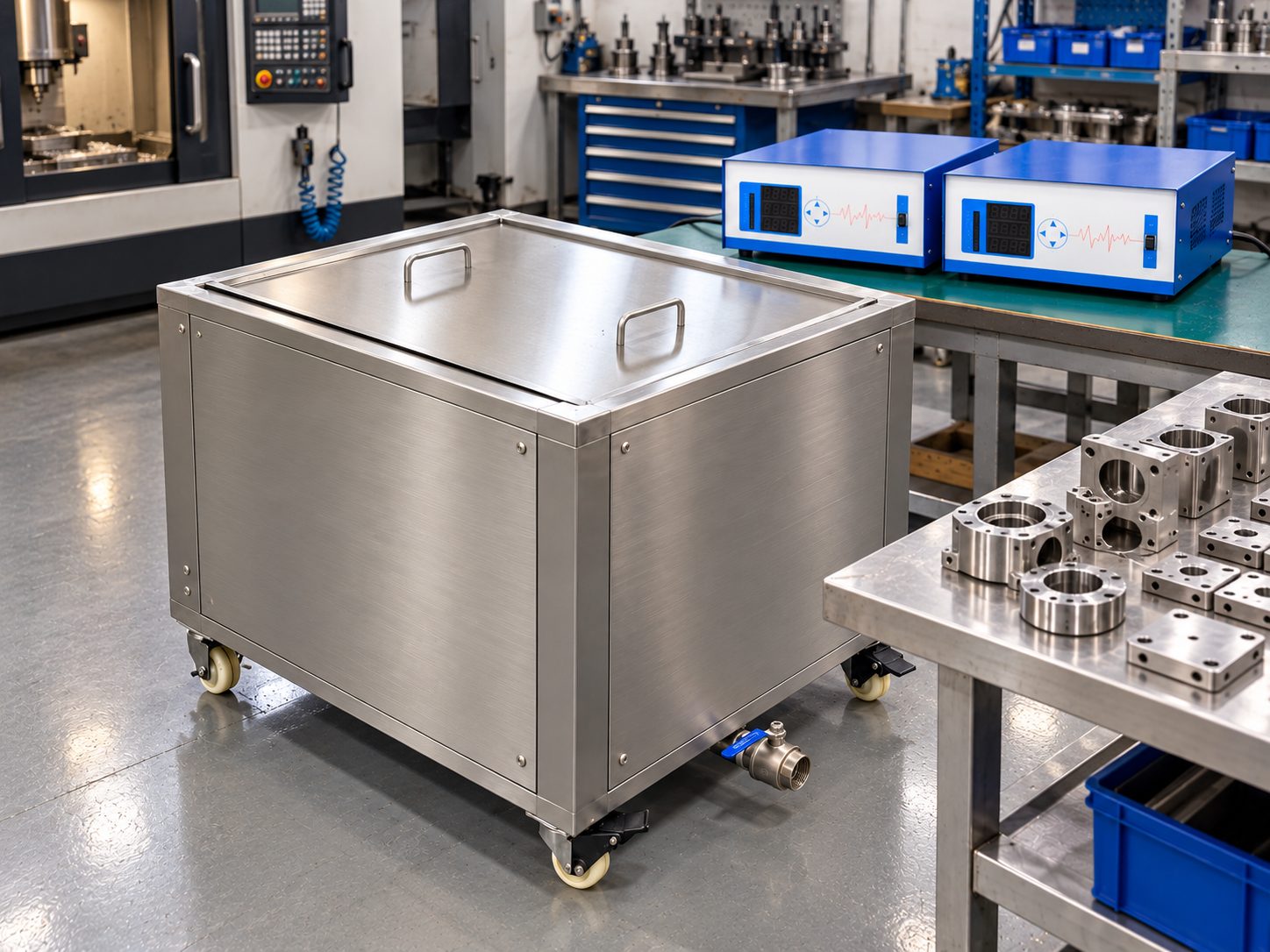
If you’re working on a project and wondering which material’s right for you—whether you need a small batch for a prototype or a large order for mass production—hit me up. I don’t do pushy sales stuff, just honest advice based on years of experience with these materials. Don’t waste time with parts that’ll break or underperform—let’s talk through your needs and find the perfect piezo ceramic for your application.
Benchtop Ultrasonic Cleaner References:
- Jaffe, B., Cook, W. R., & Jaffe, H. (1971). Piezoelectric Ceramics. Academic Press.
- Zhang, S., Yu, F., & Rowley, C. (2018). Lead-free piezoelectric ceramics: Progress, challenges, and opportunities. Journal of the European Ceramic Society, 38(1), 1-22.
- Uchino, K. (2017). Piezoelectric Actuators and Ultrasonic Motors. Springer.
- RoHS 2 Directive 2011/65/EU of the European Parliament and of the Council.
- Shrout, T. R., & Zhang, S. J. (2007). Lead-free piezoelectric ceramics: Alternatives for PZT. Journal of Electroceramics, 19(1), 111-124.
Shenzhen Soner Technology Co., Ltd.
Shenzhen Soner Technology Co., Ltd. is one of the most professional piezoelectric ceramics manufacturers and suppliers in China, specialized in providing high quality customized service. Please feel free to wholesale piezoelectric ceramics for sale here from our factory.
Address: Room 1510, Hubei Baofeng Bldg., No.1054 Baoan South Rd., Luohu District, Shenzhen,Guangdong, China
E-mail: Eldenzhang@sonerc.com
WebSite: https://www.sonerc.com/
