If you’ve ever walked past a busy warehouse storage bay or a loading dock crammed with pallets waiting to move, chances are you’ve seen a reach forklift in action. These versatile machines are the unsung heroes of narrow-aisle operations, designed to slide into tight spaces, lift pallets 30+ feet high, and keep distribution centers running around the clock. But here’s a question I get from new customers, warehouse managers, and even entry-level forklift operators all the time: Do reach forklifts have brakes? Reach Forklift
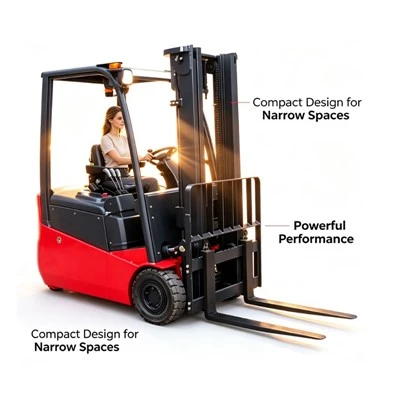
As a reach forklift supplier who’s worked with dozens of warehouse teams over the past 12 years, I’ve learned that this question isn’t just a trivial technical detail—it’s a critical part of safety, equipment longevity, and smooth daily operations. A lot of people mix up reach forklifts with sit-down counterbalance trucks, which have been around for decades with familiar brake systems, or even pallet jacks, which are simpler tools with basic stopping mechanisms. Reach forklifts have unique design constraints that shape how their brakes work, and I’m here to break that down honestly, no corporate jargon or marketing fluff.
First, let’s get clear on what a reach forklift is, because that’s key to understanding its brakes. Unlike counterbalance forklifts, which use a heavy weight at the rear to lift loads out in front, reach forklifts have a telescoping mast that extends forward to retrieve pallets from very narrow aisles—sometimes as small as 6 feet wide. That compact design means they’re lighter, more maneuverable, and built for precision rather than brute force lifting. But that compact build also means their brake systems aren’t one-size-fits-all, and they’re tailored specifically to how these trucks operate.
So, do reach forklifts have brakes? The short answer is yes, every single model—from entry-level electric reach trucks for small warehouses to heavy-duty models for high-volume distribution centers—has a complete, purpose-built braking system. The long answer is that these brakes work a little differently than what you might be used to if you only drive counterbalance forklifts, and they’re designed to address the unique risks that come with reaching high and navigating tight spaces.
Let’s start with the core braking components, because that’s where the real differences show up. Most reach forklifts are electric, right? Gas-powered models are rare these days, mostly reserved for very large outdoor warehouses, so I’ll focus on electric ones, which make up 90% of the units my team sells. Electric reach forklifts typically have three types of brakes working together: regenerative brakes, static hold brakes, and service brakes.
Regenerative brakes are the first line of defense, and they’re actually a feature that most electric equipment uses to save energy and reduce wear on other parts. Here’s how it works: when a reach forklift operator lifts their foot off the acceleration pedal, the motor reverses its function, turning into a generator. That generator converts the forklift’s forward momentum back into electricity, which is sent to the battery to top it off a little. But along the way, that same reverse motion slows the truck down naturally. For most routine, low-speed movements around the warehouse—like moving a pallet from a stack to a conveyor belt—regenerative brakes are enough to stop the truck smoothly and safely. That’s not a quirk; it’s intentional. Because reach forklifts move at lower speeds (usually 3-6 mph, vs. 8 mph+ for counterbalance trucks) in tight aisles, regenerative braking prevents the jerky stops that could knock a pallet off a rack or cause a collision with a co-worker.
Next up, static hold brakes—these are non-negotiable for reach forklifts, especially when they’re lifting heavy loads high up. Let’s be honest: a forklift sitting on a 15-degree incline with a 2,500-pound pallet 20 feet in the air can’t rely on regenerative brakes alone to stay in place. That’s where the static hold brake comes in, also called a parking brake. For electric reach forklifts, this is usually an electromagnetic brake: when the operator’s foot is on the acceleration pedal, a small electric current holds the brake release; if the operator lets go of the pedal, turns off the key, or loses power entirely, the brake engages automatically. That’s a huge safety feature. I’ve had customers come to me after a near-miss where a counterbalance truck rolled back on an incline, but with reach forklifts, that risk is eliminated because the hold brake never disengages accidentally. No more worrying about a parked truck sliding into a stack of pallets or a person.
Then there’s the service brake, the third component, which is the one that’s most similar to the brakes on a car or counterbalance forklift, but even smaller and more precise. The service brake is a hydraulic (for larger models) or electric (for smaller, compact models) disc brake that’s used for faster stops, like when an operator needs to avoid a falling pallet or a sudden person stepping into the aisle. A lot of new customers are surprised to learn that reach forklifts don’t have big drum brakes like old trucks, and that’s by design. The service brake on a reach forklift is sized for its lower weight (most reach trucks are 5,000-10,000 lbs, vs. 12,000+ lbs for counterbalance) and lower operating speed, so it’s not as powerful, but it’s far more responsive. I always tell new operators to test the service brake during their initial training, because it stops the truck in less than a foot—critical when you’re navigating a narrow aisle where there’s no room to miss.
Now, let’s clear up a common misconception that I hear all the time: some people think reach forklifts don’t need brakes because they’re electric and slow. That’s simply not true. I once had a customer in a small e-commerce warehouse try to skip regular brake maintenance because he thought his 3,000-lb reach truck was too small to have braking issues. Within six months, the service brake wore down completely, and the truck almost ran into a worker who stepped out from behind a stack of boxes. That mistake cost him $2,000 in repairs, plus 3 days of downtime. Brakes on reach forklifts aren’t an afterthought; they’re a safety-critical component, and proper maintenance is just as important as it is for any other forklift.
What are the signs that a reach forklift’s brakes need attention? I tell my customers to watch for a few easy-to-spot red flags. First, if the truck doesn’t stop as smoothly as it used to—if it lurches forward when the operator takes their foot off the accelerator, or if the service brake feels “spongy” instead of responsive—that’s a sign the regenerative or service brake needs a check. Second, if the truck doesn’t hold its position on an incline without rolling back or forward, that’s almost always a problem with the static hold brake. Third, any unusual noises—grinding when braking, or a clicking sound when the hold brake engages—are early warning signs, not just minor annoyances. I make sure every customer I work with knows that if they spot any of these, they should reach out to our service team right away; we can do a quick brake inspection in 15 minutes most of the time, and it’s way cheaper than fixing a crash or replacing a whole brake system.
Another point that’s important for warehouse managers to know: reach forklift brake systems are designed to work seamlessly with the rest of the machine’s controls. That means if a reach forklift is lifting a pallet high, the brake system automatically adjusts to be more sensitive, so you don’t have to worry about the momentum of a heavy load making the truck harder to stop. It’s a feature that we engineer into every model we sell, because safety isn’t something we cut corners on as a supplier. We test every brake system before it leaves our warehouse, and we also provide training for our customers’ operators to make sure they know how to use the brakes properly—like not slamming on the service brake unless it’s an emergency, to extend the life of the brake pads.
Let’s also talk about why the design of reach forklifts’ brakes is different from other types of forklifts. Reach forklifts are built for aisle widths as narrow as 5.5 feet, which is half the width of a standard counterbalance forklift’s operating space. That compactness means we can’t have the big, heavy brake systems that counterbalance trucks use. Instead, we use smaller, more precise components that fit within the narrow chassis of the reach truck, while still maintaining the stopping power needed for safe operation. It’s a balance between size, weight, and safety that we’ve refined over years of designing and supplying reach forklifts for warehouses across the country.
I’ve seen firsthand what happens when brake systems on reach forklifts fail. A few years back, a customer in a grocery distribution center had a reach forklift’s hold brake give out because they skipped maintenance. The truck was sitting on a loading dock ramp, and it rolled into a stack of 12 pallets of canned goods, causing $8,000 in damage and closing down that part of the warehouse for two days. That’s a preventable mistake, and it’s one that we work hard to help our customers avoid by offering flexible maintenance plans and 24/7 service support.
Now, if you’re a warehouse manager, operations director, or someone in the market for a new reach forklift, you might be wondering how brake systems factor into your purchasing decision. When we talk to potential customers, we don’t just list the brake components as a bullet point on a spec sheet—we explain how the brakes will work in their specific space. For example, a warehouse that’s mostly operating on flat, smooth concrete might prioritize regenerative brake efficiency, while a warehouse with a lot of loading docks and ramps needs a stronger static hold brake. We tailor our recommendations based on their needs, because every operation is different.
I should also mention that not all reach forklifts are the same. There are stand-up reach forklifts, double-reach trucks that can extend twice as far, and very narrow-aisle (VNA) reach trucks that are designed for even tighter spaces. All of these have brake systems, but the exact type and strength might vary. For example, VNA reach trucks, which move even slower and require more precision, have a more sensitive service brake, while double-reach trucks that handle heavier loads have a more robust static hold brake. That’s why it’s important to work with a supplier who knows the differences, not just a one-size-fits-all sales team.
At the end of the day, the question “Do reach forklifts have brakes?” might seem simple, but it’s a window into how these machines are designed for safety and efficiency. They’re not just tiny counterbalance trucks that squeeze into aisles; they’re specialized equipment with braking systems engineered for the unique demands of narrow-aisle, high-stacking operations. Brakes aren’t an afterthought—they’re one of the most critical components, protecting your workers, your inventory, and your bottom line.
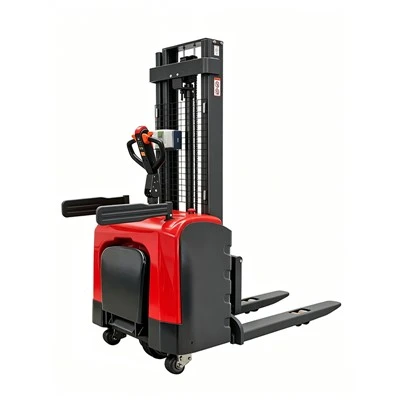
If you’re in the market for a new reach forklift, or if you’re looking to upgrade your current fleet to ensure your brake systems are up to safety standards, I’m here to help. Our team has over a decade of experience supplying reach forklifts to warehouses of all sizes, and we can walk you through the best options for your space, provide maintenance plans to keep your brakes in top shape, and answer any other questions you have about how these machines work. Reach out to our team to connect for procurement and technical consultations.
Reach Forklift References
- Occupational Safety and Health Administration (OSHA). "Forklift Operator Safety Standards." 2023.
- Material Handling Industry (MHI). "Reach Truck Design and Safety Specifications." 2022.
- Toyota Material Handling. "Electric Forklift Brake Systems: Design and Maintenance." 2021.
Huazheng Heavy Industry Machinery Equipment Co., Ltd.
With abundant experience, we are one of the most professional reach forklift manufacturers and suppliers in China. Please feel free to buy high quality reach forklift for sale here from our factory. We also accept customized orders.
Address: Room 423-101, Building C-4, Electronics Valley Technology Center, No.3088 Lekai North Street, Gaokai District, Baoding City, Hebei Province, China
E-mail: sales02@hzheavy.com
WebSite: https://www.hzheavy.com/
