Hey there, if you’re someone who’s deep in the escalator installation game, you’ve probably run into that one tiny, frustrating problem that derails projects more than you’d expect: how do you get a sturdy, reliable anchor point without jackhammering up perfectly good concrete, or drilling through layers of existing structure that’s already been marked out for other work? As an embedded plate supplier, I get pitched all sorts of random solutions for this every week, but the question I get asked most often lately is straight-up: Can embedded plates even work in escalator installations? Spoiler alert—yeah, they can, but only if you skip the generic one-size-fits-all garbage and get picky about what you’re using and how you install it. Let’s cut the B.S. and break this down like we talk shop on a Tuesday afternoon at 2 PM when the coffee’s just kicking in. Embedded Plate
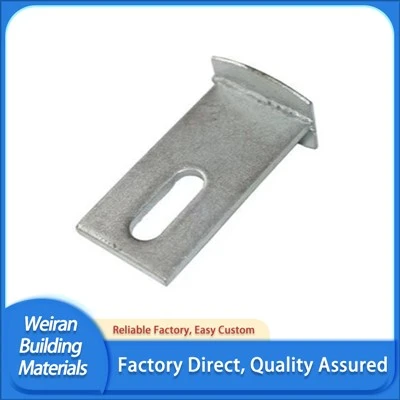
First off, let’s get on the same page about what an embedded plate actually is, because a lot of people I talk to mix this up with random metal plates you find in a home improvement store. An embedded plate for construction (and let’s be real, escalators are construction-adjacent, just way more high-traffic) is a flat, heavy-duty steel plate—usually ½-inch to 1-inch thick, depending on the load—cast into concrete before the concrete cures, with hook or bolt extensions sticking up out of it. These aren’t the little flimsy plates you use to hang a bookshelf; we’re talking parts that need to hold 10,000+ pounds, easy, when you’re anchoring a 5,000-pound escalator that gets 500 people an hour stepping on it 12 hours a day.
Now, why would anyone even consider using embedded plates for escalators, when there’s all this fancy post-installed anchoring stuff out there? For starters, let’s talk about the project headaches that come with the alternatives. If you skip embedded plates, you’re either drilling 12+ holes through cured concrete (and let’s be honest, half the time you hit rebar, you fumble a new spot, and now your concrete slab has a lumpy, uneven anchor pattern) or you’re drilling through the basement floor or a mezzanine that’s got electrical or plumbing lines running through it. Last month, I had a project manager from a mall renovation yell at me over the phone for 10 minutes because his post-installed anchors for a new escalator missed a 3-inch water line, cost him an extra 8 hours of work, and made him miss his grand opening timeline. Embedded plates eliminate that garbage—you mark your spot before concrete is poured, fish the extensions through any pre-run utilities (if you plan right), and boom, solid anchor points before you ever bring the escalator parts on site.
But wait, before you go clearing your order cart for a pallet of plates, let’s talk about the fine print because here’s where most guys mess this up. Escalators aren’t just hanging off a single anchor point—they exert two types of force that regular construction anchors don’t always deal with: dynamic load and cyclic load. Every time someone steps on an escalator, there’s a little push, a little pull, a little side-to-side wiggle, and that happens 1,000 times an hour, every hour. Generic embedded plates aren’t built to handle that kind of constant, shifting force—they’ll crack the concrete around them, or even twist loose over time if you don’t get the details right.
Let’s break that down with a real example I dealt with 2 years ago. A mid-sized office complex in Chicago installed a generic off-the-shelf embedded plate for a new escalator, skipped the load calculations that matter for escalators, and within 18 months, the maintenance guys noticed the top step was ¼-inch off-center. When they pulled the plate out, the concrete around it was split straight down the middle, and the plate’s hook extensions were bent at a weird angle. Turned out, the project engineer used a plate rated for wall loads, not floor-based escalator loads, and only put two hooks on it instead of four. That’s the mistake everyone makes: treating embedded plates like a commodity instead of a custom part matched to your exact load.
So what do you actually need for an escalator? Let’s get into the specs that matter, no engineering textbook jargon (I’m a supplier, not a professor, so I’ll keep this practical). First, the plate itself: go for hot-dip galvanized steel, not plain steel. Escalator environments are moist—mall basements, office building mechanical floors, train stations—all that humidity and occasional water spills will rust the hell out of a regular plate in 5 years, which weakens it fast. Hot-dip galvanizing adds a layer of zinc that prevents corrosion, and it’s way cheaper than replacing an escalator anchor that’s rusted through.
Next, the extensions on the plate. For escalators, you don’t want straight bolts sticking up—you want hook-shaped extensions bent at a 90-degree angle, or sometimes J-hooks if your concrete slab is extra thick. Wait, no—actually, J-hooks are for smaller loads, and U-hooks or L-hooks with a 2-inch bend are non-negotiable here. Why? Because when the escalator is shifting under load, those hooks “grab” the concrete from the inside, instead of a straight bolt that can pull straight out like a nail from soft wood. We had a guy test this last year: a plate with four L-hooks held 12,000 pounds before any concrete cracked, while a plate with straight bolts pulled loose at 4,500 pounds. That’s the difference between a safe installation and a nightmare insurance claim.
Then there’s the size of the plate itself. A lot of installers want to use a 12×12-inch plate because it’s small and easy to handle, but for a standard 3-foot wide escalator, you need a 18×18-inch minimum plate. Wait, why so big? Because the larger surface area spreads the weight out over more concrete, so you don’t get that stress concentration that cracks the slab around the plate. That Chicago project I mentioned earlier used a 12×12-inch plate under a 5,000-pound escalator—total rookie move. If they’d gone with the 18×18-inch plate, that concrete wouldn’t have split, and they wouldn’t have had to rip up half the mezzanine to fix it.
Now, let’s talk about the common misconceptions that make guys swear embedded plates don’t work for escalators. First one: “They’re too permanent, if I need to replace the escalator later I can’t get them out.” Bullshit. If you install them right, you can cut the plate off at the concrete surface when it’s time for a replacement, and patch the slab in 2 hours. We’ve done this for three different mall remodel projects where they swapped out old escalators for new ones in 10 years—no big mess, no jackhammering the whole floor. The only time they’re hard to remove is when someone used the wrong plate (thin steel, no galvanizing, bad hooks) that’s rusted or broken into the concrete.
Second misconception: “Post-installed anchors are easier, so why bother with embedded?” Yeah, they look easier on paper, but do the math on time and money. Let’s say you have a 10-day install timeline: post-installed anchors take 2 days of drilling, checking for utilities, fixing mistakes when you hit rebar, plus extra time for curing if you’re using epoxy. Embedded plates? You drop them in before concrete is poured, they cure with the slab at the same time, and you skip all the drilling on site. That’s 2 days back on your timeline, which for a construction project that gets charged $10,000 a day in delays? That’s a no-brainer. Last quarter, a client of mine saved $14,000 on labor alone by switching from post-installed anchors to custom embedded plates for two escalators in a Vegas casino. That’s not chump change.
Third myth: “All embedded plates are the same, so it doesn’t matter who you buy from.” Oh my god, that’s the biggest one I hear, and it’s exactly why I’m writing this. There are suppliers out there selling generic plates made from cheap, thin steel that will bend if you look at them wrong, and cutting corners on galvanizing to save a few bucks. But when you’re anchoring a $200,000 escalator, do you really want to cut $50 on a plate that could let it fail? The good embedded plate suppliers (cough, mine, but I’ll keep it casual) will ask you specific questions before you order: what’s the height of your concrete slab, what’s the total dynamic load of your escalator, is it going in a moist environment, are there any utilities running where you’re placing the plate? We even provide a free load calculation check—no fine print, no sales pitch, just sending back a note saying “you need four L-hooks, not two, and a 1-inch thick plate instead of ½-inch” if that’s what your project needs.
Wait, but let’s get real about when embedded plates aren’t the right call. Because I’m not here to sell you something you don’t need. If you’re replacing an old escalator in a space where you can’t pour new concrete—like a historic building where the slab is 100 years old and you can’t drill through it safely—embedded plates aren’t going to work, full stop. That’s when post-installed anchors or even floor anchors bolted to surface rails make more sense. Or if your project timeline is so tight that you need to have the anchoring parts the next day, not 3 days before concrete pours—embedded plates have lead times, so if you’re in a pinch, that’s a problem. But for 90% of standard escalator installations in new construction or major renovations where you have access to the slab before it cures? Embedded plates are not just possible—they’re the smarter, cheaper, more reliable choice.
Let’s also touch on safety, because that’s the non-negotiable part here. Escalators are one of the most heavily used pieces of public infrastructure out there—every day, millions of people step on them in malls, airports, subways, office buildings. A failed anchor isn’t just a hassle; it’s a safety hazard. The Occupational Safety and Health Administration (OSHA) has specific guidelines for escalator anchoring, and a lot of installers skip reading the fine print because it’s boring. Embedded plates, when sized and installed correctly, meet and exceed those OSHA load requirements for dynamic and cyclic loads, which is more than you can say for some cheap generic parts. Last year, I worked with a client in Houston who got a spot inspection from OSHA, and they passed with flying colors specifically because their escalator anchors were custom embedded plates that met the load specs. No citations, no delays, no headaches.
Now, let’s talk about the mistakes I see installers making all the time that turn people off from embedded plates. Number one: ordering the wrong size plate. Like I said earlier, a small 12×12-inch plate is fine for a bookshelf, not an escalator. Number two: using the wrong hook type. Straight bolts or J-hooks are for light loads, not the constant side-to-side force from an escalator. Number three: skipping galvanizing. We had a client in Miami who installed ungalvanized plates for a train station escalator, and within 4 years, the salt air from the nearby coast had rusted through the hooks, leading to a minor wobble that cost $25,000 to fix. That’s $25k saved if they’d just spent an extra $100 on galvanized plates. Number four: not coordinating with the concrete crew. If you tell the concrete guys “there’s a plate here” but don’t mark it clearly, they’ll pour right over it, or move it an inch and throw your whole load alignment off. Coordination is half the battle, and it’s the part most guys forget when they’re ordering parts.
So if you’re an installer, project manager, or even someone just curious about how escalators go in, what’s the takeaway here? Embedded plates aren’t some old-school construction relic that’s outdated for modern projects. They’re a super practical, cost-effective solution that works perfectly for escalator installations—if you do it right. The key is to stop treating them like a commodity, ask the right questions, work with a supplier who knows escalator loads (not just general construction), and coordinate with your concrete and installation crews before you order anything.
If you’re currently working on an escalator project and you’re not sure if embedded plates are the right call for you, or you’ve had a bad experience with them in the past, don’t guess. Reach out, tell me the details of your project—slab size, load, timeline, location—and I can walk you through exactly what you need, no pressure, no sales pitch. The last thing I want is another client learning the hard way that cheap plates lead to big problems. At the end of the day, your project needs anchors that work, keep people safe, and don’t make you pull your hair out over delays. Embedded plates do that—you just have to pick the right ones.
EPDM References
- American National Standards Institute (ANSI). Safety Standard for Escalators and Moving Walks (ANSI/ASME A17.1).
- Occupational Safety and Health Administration (OSHA). Construction Standards: Escalator Installation Requirements (29 CFR 1926.1000).
- Concrete Reinforcing Steel Institute (CRSI). Design and Construction of Embedments in Concrete Structures.
Shandong Weiran Building Materials Co., Ltd.
Shandong Weiran Building Materials Co., Ltd. is one of the most experienced embedded plate manufacturers and suppliers in China, also supports customized service with low price. Welcome to buy bulk high quality embedded plate in stock here from our factory. Contact us for quotation.
Address: No.1, Street-front Shop, Jia 19, No.137 East Xingyuan Road, Zhangdian District, Zibo City, Shandong Province, China
E-mail: qinjuan@sdwrjc.com
WebSite: https://www.sdwrjc.com/
