Hey there, lighting nerds, DIYers, and anyone who’s ever stared at a tiny, round light socket and thought, “Wait, what even is this thing?” Let’s cut to the chase: if you’ve been googling “what’s a GU10 light bulb even used for,” you’ve landed in the right spot. I’m Alex, and I’ve been selling GU10s for over 6 years now—seen every weird install, every customer panic because they grabbed the wrong bulb, every “wait, does this go in my kitchen?” question. Today, I’m breaking this down like I would with a guy who just tried to stick a GU10 in a floor lamp that clearly takes a standard A19. No jargon, no stuffy science lectures—just real talk, plus the straight goods on what these bulbs actually do best. GU10
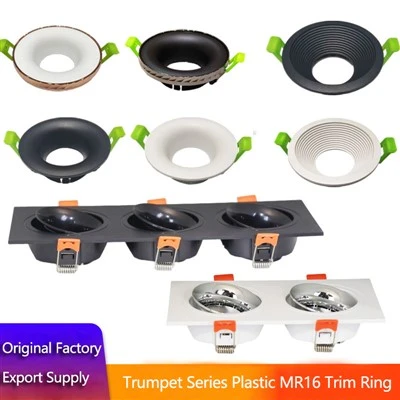
First, let’s knock the basics out real quick. A GU10 isn’t a brand, it’s a bulb type, named for two tiny metal prongs (the “GU” part) spaced 10 millimeters apart (that’s the “10” in the name). They fit snugly into that same GU10 socket you’ve probably got in your bathroom, kitchen, or living room—you know, the ones that don’t twist like old incandescents, they just push and click into place. Now, why should you care? Because they’re not just random prongs in a bulb—they’re built for specific jobs, and that’s where 90% of the confusion lies. Most people grab a GU10 because it fits the socket, but they have zero clue it’s actually designed to do way more than, say, light up a closet.
Let’s start with the most common use: highlighting spots in your home or commercial space. Yeah, accent lighting. Think about the last time you walked into a fancy restaurant and saw that perfect beam on a sculpture, a bottle of wine on a shelf, or a piece of wall art. That’s almost always a GU10. Why? It’s got a super narrow beam angle—usually between 15 and 60 degrees, way tighter than a standard light bulb that glows everywhere. So it doesn’t wash out the whole room; it just targets exactly what you want to stand out. I had a customer last year who owned a small coffee shop—she was using GU10s to light up her pastry display case, and she told me sales on croissants went up 20% because people could actually see the flaky layers through the glass. No more squinting at a blurry pastry! It’s not just cafes, either—art galleries, bookstores, even high-end closets use these to make their stuff pop.
Next up: task lighting in areas where you need focused, bright light. Let’s be real, overhead kitchen lights can be harsh and make cooking feel like a chore. That’s why GU10s are the go-to under-cabinet light. Mount a few on the bottom of your upper cabinets, and suddenly your counter is lit up like a workbench—perfect for chopping veggies, reading recipes, or assembling that IKEA bookshelf at 8 PM. I’ve sold so many of these to homeowners for their kitchen islands too; you put a row of GU10s above the island, and you’ve got focused light for prep, plus a nice warm glow for eating dinner there. It’s way better than a big, dim overhead that makes your entire kitchen feel like a cave. Don’t sleep on bathrooms, either—GU10s above a vanity give you shadow-free light that’s way easier for applying makeup or shaving than that overhead light that makes your face look weird. I’ve had gals tell me switching to GU10s for their vanity fixed their “why did I look like a gremlin in this mirror?” problem.
Wait, what about outdoor spaces? Can you use GU10s outside? Absolutely—if you get the right wet-rated ones, that is. They’re super popular for patio lights, step lights, and deck railings. The small size means you can tuck them into tiny slots on a patio cover, or mount them on the edge of a deck to light up steps so no one trips at night. I sold a ton of these last summer to a family that had a big backyard; they used them along their walkway to the fire pit, and they said no more late-night run-ins with garden hoses or patio furniture. Plus, LED GU10s use way less power than old halogen ones, so you don’t have to stress about leaving them on all night.
Now, let’s get into the tech stuff that makes GU10s actually work—because not all GU10s are created equal, and that’s where a lot of mistakes happen. The old halogen GU10s are basically dead now, right? They burn hot, use a ton of energy, and only last like a year if you leave them on a lot. Most people now go for LED GU10s, which are the ones I sell 95% of the time. They have a CRI (color rendering index) that’s usually 80 or higher—meaning colors look natural, not weird or washed out. If you’re buying a GU10 for an art gallery, you want a CRI of 90 or higher, so the painting’s colors look exactly how they’re supposed to. Also, LEDs don’t get hot, so you don’t have to worry about burning your hand if you yank one out after it’s been on for hours—huge win for families with kids or cafes that have employees changing bulbs all the time.
But here’s the thing: GU10s aren’t for every single light in your house. I had a guy come to me a few months back, super frustrated, because he tried to put a GU10 in his floor lamp and it was too bright and had that weird beam. I was like, “Dude, GU10s are accent light, not general room light.” If you’re trying to light up a whole living room, go for a standard A19 bulb. GU10s are designed to focus, not spread. That’s the biggest mistake people make—they see the socket, grab a GU10, and it’s not right for their space. So let’s spell out the hard limits: don’t use them as your only overhead light. They’re too directional, so parts of the room will be dark. Don’t put a low-CRI GU10 in a kitchen—you’ll accidentally overcook meat because you can’t see the color right. And if you need a wide beam, skip the GU10 and get a PAR30 or something similar.
Now, let’s talk about the commercial side, because that’s where GU10s really shine (pun intended). Retail stores use them everywhere—clothing boutiques use them to light up individual clothing racks, so customers can see the fabric’s texture without glare. Grocery stores use them for produce sections, to make apples look redder and lettuce look crispier. Even hotels use them in their lobbies and hallways—they’re durable, long-lasting, and easy to replace when they burn out. I work with a bunch of small boutique hotels, and they say switching to LED GU10s cut their bulb replacement costs by like 70% last year. Halogens would burn out every 10 months, LEDs last 25,000 hours—so that’s like 10 years if you leave them on 8 hours a day. No more climbing ladders to change bulbs every six months, which saves time and money.
Wait, what about smart GU10s? Yeah, those exist too. I sell dimmable GU10s, color-changing GU10s, even ones you can control with your phone. A lot of homeowners use color-changing ones in their game rooms or home theaters—switch to blue for a movie night, warm white for a dinner party. Smart GU10s are also great for rental properties; you can set them to turn on when someone pulls up, or dim them at night for security. But I always tell people: make sure your dimmer is compatible with LEDs. Regular dimmers for halogens will make LED GU10s flicker like crazy. It’s a tiny mistake, but it’s super annoying.
Let’s go over some real-world examples so you know exactly when to use a GU10. Scenario 1: You have a small apartment, want to highlight your record collection in the living room. Perfect—mount a few GU10 spotlights above your shelf, and each record stands out like it’s in a little spotlight. Scenario 2: You’re renovating your kitchen, need light under the upper cabinets. GU10s under cabinets are way better than those strip lights because they don’t glare on your phone while you’re scrolling a recipe. Scenario 3: You have a patio and want to light up the edge of your deck so your kids can play after dinner. Wet-rated LED GU10s in small fixtures along the rail are exactly what you need. Scenario 4: You own a bookstore and want to make the new releases section pop. GU10s focused on those shelves will draw customers right to them—trust me, that’s not a sales gimmick, it’s how retail works.
And let’s not forget the hidden uses. I had a customer who owned a tattoo shop—she used GU10s above her workstations, and she said the shadow-free light made it way easier to see fine lines without straining her eyes. Another guy uses them in his workshop for model building—super focused light for tiny details. Even holiday decor: people use GU10s to light up Christmas trees or outdoor wreaths, because the narrow beam lights individual branches without wasting light on the ground.
Now, if you’re here because you’re thinking about switching to GU10s, or you need to buy them for a project, let me give you a few pro tips. First, always check your socket—make sure it’s actually a GU10, not a different type that looks similar. (I’ve seen people mix them up with MR16s, which are smaller and use different voltage.) Second, pick the right beam angle: 15 degrees is for tiny, tight spots like art, 30 degrees is for most accent lighting, 60 degrees is a bit wider for larger displays. Third, if you’re using them outdoors or in damp areas, get wet-rated—don’t use indoor-only bulbs outside, they’ll short out. Fourth, if you want dimmable or smart, make sure the bulb says “dimmable” or “smart GU10” on the packaging.
I’ve been in this game long enough to know that buying the right bulb can make or break a space. A bad GU10 can make a kitchen feel dim, a gallery feel off, a coffee shop feel stale. But the right one? It turns a boring room into a space that feels intentional, that makes people stop and look, that makes tasks easier. That’s why I sell GU10s—not because they’re a fad, but because they actually solve specific problems that other bulbs can’t.

If you’re looking to stock up for a home project, a small business, or just need to replace that annoying bulb in your bathroom, I’ve got you covered. We offer all types of GU10s—LED, halogen (though I’d advise against them), dimmable, smart, wet-rated, different color temperatures (warm white for coziness, cool white for kitchens). Hit me up, tell me what you’re using it for, and I’ll help you pick exactly what you need. No pressure, no sales pitch that’s hard to understand, just real advice from someone who’s been selling these things for years.
MR16 LED References:
- U.S. Department of Energy. (2024). Lighting Technology Fact Sheet: LED Bulbs.
- Illuminating Engineering Society (IES). (2023). Lighting Handbook, 10th Edition: Accent Lighting Applications.
- National Electrical Manufacturers Association (NEMA). (2022). Standard for Lamp Bases and Caps for General Lighting.
- Outdoor Lighting Association. (2023). Guide to Wet-Rated Lighting Fixtures.
Ruiting Lighting
As one of the most professional gu10 manufacturers and suppliers in China, we’re featured by quality products and good service. Please rest assured to wholesale customized gu10 at competitive price from our factory. Contact us for quotation.
Address: 3rd Floor, Building A, Guansheng Industrial Park, No. 6 Hengxing Road, Guzhen Town, Zhongshan City, Guangdong Province
E-mail: ruitinglighting@126.com
WebSite: https://www.ruitinglighting.com/
