Hey everyone, it’s Alex from your go-to hanging roller supplier for wardrobes and cabinets – and today I’m talking about something I get asked at least 10 times a week: how to pick the right hanging roller for that long-travel track you’re installing. Let’s be real, long-travel tracks are those bad boys that stretch 2, 3, even 4 meters, right? They’re perfect for reach-in wardrobes, built-ins, or big utility cabinets, but if you pair ‘em with the wrong rollers? You’ll be fixing stuck doors, weird gaps, or even broken hardware before you know it. I’ve seen it all – customers grabbing the first roller off the shelf because it looks “similar” and calling me 2 weeks later panicking. So let’s break this down like we’re geeking out over hardware (which, let’s be honest, I kind of am – no shame here). Hanging Roller for Wardrobe & Cabinet
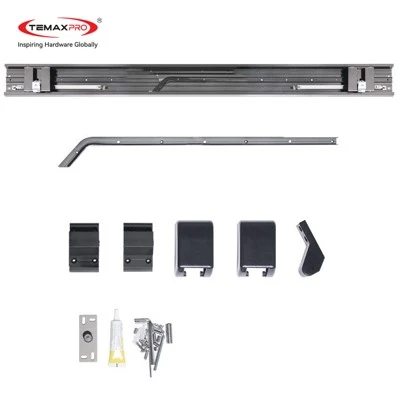
First off, let’s get what a long-travel track actually needs out of a roller. Normal short tracks (like under a 1m wardrobe) can get away with cheap rollers, but long stretches? The roller’s got to handle consistent weight, roll smoothly over that whole length, and not flex or wobble. I mean, imagine sliding a door 4 meters back and forth 10 times a day – that roller’s taking a beating. No one wants to replace rollers every 6 months, trust me.
Let’s start with the big one: load capacity. This is non-negotiable, and I’m gonna say it straight – don’t guess. Most people just eyeball their door weight, but let’s do the math quick. A standard 2m tall wooden wardrobe door is usually 15-25kg, but if it’s a solid wood door, that’s 30-40kg easy, and if you’ve got double doors? Now you’re looking at two rollers per door, so total load per roller is half that, but wait – long-travel tracks can have multiple rollers per door, right? So for a 3m track, I recommend 3 rollers per door (1 end, 1 middle, 1 other end) vs. 2 for a short track. That distributes the weight way better.
Here’s the mistake I see: a customer has a 3m track, grabs rollers rated for 10kg each, and then wonders why the middle roller is sagging after a month. C’mon, that’s basic math. So rule #1: calculate total door weight, divide by number of rollers you’re using on that long track, and make sure each roller’s max load is at least 1.5x that number. Why 1.5x? Because tracks flex a tiny bit over long lengths – that extra factor of safety keeps you from dealing with mid-track sag or roller failure from unexpected weight shifts (like when you pile clothes on one side of the wardrobe, duh). I carry rollers that range from 20kg to 80kg per unit, so I can hook you up no matter what your door’s made of.
Next up: wheel material. This is where the smooth roll vs. noise vs. durability battle happens. For long tracks, you can’t use that cheap plastic wheel you find on particleboard wardrobes – that’s gonna squeal like a stuck pig after a week, and it wears down fast on long runs. Let’s go through the options I sell, straight from the shop floor:
-
Nylon wheels: These are the budget pick, but wait – not all nylon is the same. I have customers use these for lightweight cabinet doors that only slide a few times a day. But here’s the catch: hard nylon can groove into metal tracks over time, especially on long stretches, because there’s more friction across that length. So if you’re gonna go nylon, get the ones with a slight rubber coating (called “nylon with rubber tread”) – cuts down on noise and track wear. Good for linen closets where the door is light and infrequently used.
-
Steel wheels: These are heavy-duty, no questions asked. For solid wood double doors on a 4m track? Steel is the way to go. They handle way more weight, and since they’re metal, they don’t groove into steel tracks at all. The downside? They’re noisier if they’re not lubricated, and if you get a low-quality steel wheel, it can rust. My steel wheels are zinc-plated, so no rust issues, and I throw a tiny lubricant packet in every bulk order just to be helpful. The only thing to watch with steel on long tracks: make sure your track is properly aligned. If the track bends even a little over 4 meters, steel wheels will jingle like a set of keys. Worth it for the durability, though.
-
Polyurethane wheels: This is my top pick for most long-travel wardrobe doors, and 90% of my repeat customers go for these. Why? They’re softer than steel, so they glide super smoothly on long tracks – no squeaks, no rough spots from minor track alignment issues. They grip the track better than nylon, so less chance of the door drifting to one side when you slide it back and forth. And they’re way more durable than nylon – I’ve had customers tell me these have lasted 5+ years on a 3.5m track with no issues. The only downside? They’re a tiny bit pricier, but trust me, you’re saving money in the long run by not having to replace rollers every year.
Now, roller housing and mounting – this is another part that people sleep on, especially for long tracks. The housing is the plastic or metal frame that holds the wheel, right? For long stretches, you need a rigid housing, not a flimsy plastic one that bends. If the housing bends, even a little, that makes the wheel wobble, which leads to sticking and uneven wear. I sell both plastic (reinforced) and metal housings, but for tracks over 2.5m? Go metal. Reinforced plastic is okay for lighter loads, but metal just stands up better to the constant rolling and weight shifts on long runs.
Also, how does the roller mount to your door? There are two main types: top-mount (most common for wardrobes) and under-mount (for cabinets where you don’t want to see the hardware). For long tracks, top-mount is easier to adjust, which is crucial. Over time, tracks can sag a tiny bit, so being able to tweak the roller height or alignment will keep your door sliding smoothly. If you go under-mount, make sure the roller has adjustment slots – don’t get a fixed mount, because you’ll never get that 3m track aligned perfectly without it.
Wait, let’s talk about track compatibility, because that’s a big one. Not all long tracks are the same, and not all rollers fit ‘em. I can’t tell you how many times a customer has sent me a photo of their track, said “these should work” and been wrong. The key is the wheel’s inner diameter and how it sits in the track. Long tracks are usually either single-track or double-track, right? Single-track is for a single door, double-track is for sliding two doors next to each other. Make sure your roller is rated for the track type. I have rollers specifically made for both, so just send me your track specs (or a photo) and I’ll hook you up – no guesswork needed.
Another thing I learned after 7 years in this business: flexibility. Long tracks can have small dips or bends, especially if they’re installed in an older home where the ceiling isn’t perfectly level. So get rollers with a little “float” or swivel, not fixed axles. Fixed axle rollers will get stuck on even a tiny bump in a 3m track, but swivel rollers can adjust and keep rolling smoothly. It’s a small feature, but it makes a huge difference in how the door operates. I swear by swivel rollers for any track over 2m – my customers who skip this always come back complaining about sticking doors.
Let’s also talk about maintenance, because even the best rollers need a little TLC, especially on long tracks. I tell every customer this: wipe down the track and rollers every 6 months, and lubricate with a silicone-based lubricant (not WD-40 – that attracts dust and gunk). For nylon rollers, that’s even more important, because they can wear out faster if they’re dry. For polyurethane or steel, lubrication is optional but helps keep noise down. On a long track, even a little bit of dust can build up and make the door slide rough, so a quick wipe is all it takes.
Wait, let’s throw in a real example, because that always helps. Last month, I had a customer named Mike who was installing a 3.8m track for his master bedroom double wardrobe. Solid wood doors, each 28kg, so total door weight per side was 28kg, with 3 rollers per door. He initially ordered cheap plastic nylon rollers, rated for 15kg each. He texted me 10 days later saying the door was sagging, and it got stuck halfway down the track. I had him return them, sent him my 60kg polyurethane swivel rollers, and a week later he sent me a video of the door sliding smooth as butter the whole 3.8m length. He told me he’s now ordering 2 more sets for his kids’ rooms. That’s exactly why I love this job – seeing a customer go from frustrated to stoked just by picking the right roller.
Now, let’s recap this so you don’t have to scribble notes, okay? Here’s your quick cheat sheet for choosing a hanging roller for long-travel tracks (2m+):
- Do the load math: Total door weight, divide by number of rollers, pick rollers rated for at least 1.5x that number. No exceptions.
- Pick your wheel material: Polyurethane (best all-around), steel (heavy-duty), nylon with rubber tread (light, infrequent use only).
- Housing matters: Reinforced plastic for <2.5m tracks, metal for longer – and always get adjustable mounts.
- Look for swivel rollers: They handle minor track bends and keep things rolling smooth.
- Double-check track compatibility: Measure inner wheel size or send a photo of your track before ordering.
One last thing – don’t skimp here. I know long tracks mean you’re already spending more on hardware, but cutting corners on rollers is a false economy. You’ll end up paying for a service call or replacement doors way more than you would for quality rollers.
If you’re working on a project right now and not sure what you need, just reach out. I can help you calculate load, match the right wheel material to your door, and even give you installation tips to make sure your long-travel track works perfectly with your rollers. No salesy BS, just honest advice from someone who’s dealt with more stuck wardrobe doors than I care to count.
Got questions? Hit me up anytime. Let’s get those doors sliding smooth for good.
Barn Door References
- International Home Builders Association. (2021). Hardware Guidelines for Sliding Wardrobe Systems: Load Distribution and Component Compatibility.
- National Kitchen & Bath Association. (2022). Sliding Door Roller Performance Standards for Long-Track Installations.
- Furniture Hardware Industry Association. (2020). Material Durability Testing for Sliding Door Wheels in Residential and Commercial Cabinets.
- Construction Tech Review. (2023). Common Fail Points in Long-Travel Sliding Track Systems and Mitigation Strategies.
Shanghai Temax Hardware Co., Ltd.
As one of the most professional hanging roller for wardrobe & cabinet manufacturers and suppliers in China, we’re featured by quality products and good service. Please rest assured to buy bulk customized hanging roller for wardrobe & cabinet at competitive price from our factory. Welcome to contact us for quotation.
Address: Room 411, Building A, No.508 Chundong Rd.,Shanghai,China
E-mail: info2@cabinetaccessory.com
WebSite: https://www.shtemax.com/
