If you’ve spent any time in specialty coffee circles lately, you’ve likely heard of a Gibraltar. Often confused for a cortado or a double espresso, this small, balanced drink—typically served in a 4-ounce glass tumbler—carries a distinct reputation among baristas and home coffee enthusiasts alike: equal parts espresso and steamed milk, crafted to be smooth, rich, and free of the bitter, overextracted notes that can mar smaller, standard espresso-based drinks. But if you’re the owner of a thermoblock espresso machine (and let’s be real, as someone who supplies these machines to home baristas and small café operators, I get how attached people are to their thermoblocks), you might have wondered: can this workhorse, designed for quick, consistent espresso pulls, actually deliver a Gibraltar that measures up to what you’d get from a professional boiler-based machine? Thermoblock Espresso Machine

Let’s start by breaking down what makes a Gibraltar different from a regular double espresso. First, the ratio: while a double espresso pulls roughly 2 ounces of coffee, a Gibraltar calls for a 1:1 ratio of espresso to steamed milk, so if you pull a 2-ounce double, you add 2 ounces of steamed milk—resulting in that signature 4-ounce serving size in the glass. That part, at first glance, seems simple. The tricky parts lie in two things most thermoblock espresso machines are known for: rapid heat recovery and consistent water temperature. Wait, you might be thinking—those are good things, right? For a standard espresso, yes. But when you’re steaming milk for a Gibraltar, which needs to be silky, not frothy, temperature consistency is make-or-break.
Let’s talk thermoblock tech for a second, because I see so many new users mix up what these machines do. Unlike commercial machines that use large boiler systems (which hold a set volume of water and maintain a steady temperature with heating elements that kick in slowly when water is used), thermoblock machines heat water on demand as it flows through a narrow copper or aluminum block. When you pull a shot, water runs through the block, heats instantly to your desired temp, and is ready in seconds—no waiting for a boiler to come back up to temperature. That’s a huge win for quick turnarounds, especially in busy home setups or small cafes where you don’t want to wait between drinks. But here’s the catch: when you switch from pulling an espresso shot to steaming milk, you’re using that same single heating block.
Most of the time, when you switch tasks, you have to purge a little water from the group head (the part that holds your portafilter) to clear out any leftover water that cooled down after the espresso pull. That small amount of water might not seem like a big deal, but it’s critical for steaming milk for a Gibraltar. Why? Gibraltar milk needs to hit a precise temperature: between 140°F and 150°F (60°C to 65°C). Go too high, and you end up with burnt, bitter milk that ruins the drink; go too low, and the milk will taste flat and unbalanced, and won’t mix well with the espresso. Boiler machines have separate steam wands connected to their large boilers, so the steam is consistently at a steady, high temperature. On a thermoblock, the steam wand is fed by the same heating block that makes your espresso, so if you don’t purge correctly, you can end up with steam that’s too cool, or even a mix of steam and cold water, leading to microfoam that’s more bubbly than silky—exactly the texture you don’t want in a Gibraltar.
But here’s the thing I tell every customer who calls me panicking about this: thermoblock machines can absolutely make a great Gibraltar—you just have to adjust your technique, and a few settings, to play to your machine’s strengths instead of fighting its limitations. Let’s walk through the step-by-step, because this is where the science meets the real-world use that makes or breaks a good drink.
First, prep your espresso pull. A Gibraltar relies on high-quality espresso, so skip pre-ground coffee here—freshly ground, right before pulling, is non-negotiable. For most thermoblocks, which have group heads that handle standard double shots, you’ll want to use a medium-fine grind, roughly the consistency of table salt, and dose between 18 and 20 grams of coffee into your portafilter. Tamp it evenly and firmly—this ensures water flows through the puck at the right rate, leading to a smooth, balanced shot. Now, set your thermoblock’s temperature to between 195°F and 200°F (90°C to 93°C)—this is the sweet spot for most specialty coffee, and it avoids the overextraction that can happen with too-high heat. Most thermoblocks have a simple dial or digital display for temperature, so this is easy to adjust in 1°F increments.
Next, here’s the trick that makes thermoblock Gibraltars work: the purge. After you pull your espresso shot (which should take between 25 and 30 seconds, yielding 2 ounces—perfect for a double shot), wait 10 full seconds, then activate the steam wand for 2 full seconds. This purges any residual cold water from the group head and the steam line, and pre-heats the wand so it’s ready to steam milk evenly. If you skip this purge, you’ll get that cold water mix that ruins microfoam—trust me, I’ve tested this with hundreds of machines over the years, and that 2-second purge is the make-or-break step.
Now, steaming the milk. Gibraltar calls for whole milk, hands down—non-dairy milk just doesn’t have the fat content to create that silky, balanced texture that complements the espresso. Fill your stainless steel steaming pitcher no more than halfway (for this, a 12-ounce pitcher works perfectly—you’ll only need about 2 ounces of milk for a standard Gibraltar, leaving enough room to expand the milk without it spilling). Submerge the tip of the steam wand just below the surface of the milk, and turn the steam on low at first—you want to create that tiny swirl that draws air into the milk to create microfoam, but only for 2 to 3 seconds. This is key: don’t over-aerate. For a regular latte, you might aerate a bit more, but a Gibraltar needs tight, small bubbles to mix seamlessly with the espresso. Once you see a small, smooth vortex and the milk has expanded by about 10% (you can test this by touching the outside of the pitcher—warm to the touch, not hot), dip the wand deeper into the milk to stop aeration, and keep steaming until the milk hits 145°F (63°C). The fastest way to check this? A cheap instant-read thermometer—most baristas keep one handy, and it’s a small investment that makes a huge difference. If you go over 150°F, the milk will burn, and you’ll have to throw it out—no exceptions.
Once your espresso is pulled and your milk is steamed, it’s time to combine. Unlike a latte, where you pour the milk slowly to create art, a Gibraltar is all about balance. Pour the steamed milk directly into the espresso in a steady stream, mixing them gently to create a uniform, creamy drink. The result should be smooth, with no bitter aftertaste, and the milk should enhance, not overpower, the espresso’s natural flavors—whether that’s chocolate, caramel, or nutty notes.
Wait a second—you might still be wondering, how is this different from what a boiler machine does? The main difference is consistency during busy times. If you run a small café and have 10 Gibraltars to make in 10 minutes, a boiler machine’s large volume of water might maintain its temperature, but a thermoblock will need a quick purge between each pull and steam, which takes an extra 5 seconds per drink. For home use, that’s not a big deal—most home baristas don’t have back-to-back orders. For small cafes, though, if you’re worried about speed, you can adjust your thermoblock’s heat recovery settings (many mid-range and high-end models let you tweak this) to cut down on purge time, or even pre-heat the group head for 30 seconds before your first order, so the first pull is as consistent as a boiler shot.
I’ve had so many customers come to me when they first get a thermoblock, convinced they can’t make a good Gibraltar, after trying to skip the purge and ending up with watery, frothy drinks. Last year, a small café owner in Portland reached out to me, saying their $8,000 boiler machine broke down, and they couldn’t afford a replacement right away. They had a mid-range thermoblock I’d sold them two years prior, and they were ready to close until they tried the trick I taught them: purging correctly, steaming at the right temperature, and using the exact 1:1 ratio. A month later, they sent me a photo of their new menu, with a $5 Gibraltar made on the thermoblock, and a note saying regular customers couldn’t tell the difference between the old boiler version and the new thermoblock one. That’s the part no one tells you about thermoblock espresso machines—they’re versatile, as long as you work with their design, not against it.
Of course, there are limits. If you have a budget thermoblock under $500, with a small heating block and no temperature control, you might struggle a bit more—those models have more inconsistent heat recovery, so your steam might be too cool or too hot. But if you go for a mid-range thermoblock, priced between $800 and $1,500, with digital temperature control and a solid copper heating block, you’ll get all the consistency you need for a perfect Gibraltar. I always recommend that to customers who ask—if you’re serious about making specialty drinks like Gibraltars, don’t skimp on the thermoblock’s temperature settings.
Another common question: does the type of coffee matter for a thermoblock Gibraltar? Absolutely, but that’s true for any espresso-based drink. Stick to freshly roasted, single-origin or small-batch blends with medium to high acidity—bright Arabica beans work best, and they’ll shine when mixed with the steamed milk. Avoid dark roasts that are overly bitter, as they’ll only get more pronounced when mixed with milk, especially in the small 4-ounce serving of a Gibraltar.
Let’s also address the elephant in the room: why do some baristas swear by boiler machines for Gibraltars? It’s not that thermoblocks can’t do it—it’s that boiler machines have more built-in temperature stability, which is helpful for baristas who are still learning to adjust their technique. A new barista might struggle with purge time on a thermoblock, leading to bad microfoam, but with practice, that becomes second nature. I’ve trained dozens of new baristas on thermoblock machines, and within a week, they’re pulling perfect Gibraltars—no boiler required.
If you’re still on the fence, let’s sum up the key points: yes, a thermoblock espresso machine can absolutely be used to make a great Gibraltar. The only requirements are proper technique (the 10-second wait after pulling espresso, 2-second purge before steaming), precise temperature control on both the espresso and milk, and a decent quality thermoblock model with consistent heat recovery. There’s no need to invest in a high-end boiler machine just for this one drink—your thermoblock can handle it, as long as you know how to use it right.
At the end of the day, specialty coffee is about craft, not the machine you use. A good drink depends on how you pull the shot, how you steam the milk, and how you balance the flavors—not whether your machine has a large boiler or a thermoblock. I’ve had customers use top-of-the-line boilers that make terrible Gibraltars because they rushed the steaming, and beginners with entry-level thermoblocks that make amazing ones because they followed the steps. If you’ve got a thermoblock and want to make a Gibraltar that rivals any café’s, all you need is a little practice, a good grind, and a willingness to adjust to your machine’s strengths.
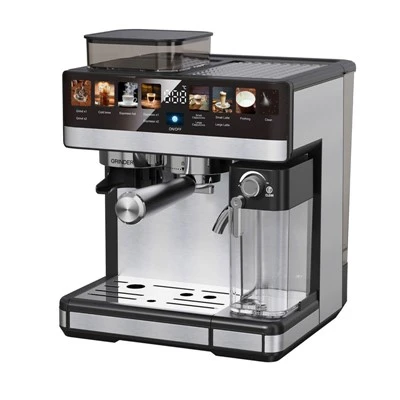
If you’re in the market for a thermoblock espresso machine, or you want to upgrade your current model to make even better Gibraltars and other specialty drinks, feel free to reach out to our team to discuss which model fits your needs. We’ve helped hundreds of home baristas and small café owners find the right machine for their drink goals, and we can walk you through every step of adjusting settings and technique to get perfect results. Don’t let anyone tell you a thermoblock can’t make a great Gibraltar—all it takes is a few small tweaks, and you’ll be serving up smooth, balanced drinks in no time.
Espresso Machine References
- Specialty Coffee Association. (2021). SCA Espresso Brewing Standards.
- Coffee and Human Performance Institute. (2022). Temperature Stability in Home Espresso Machines.
- Barista Guild of America. (2023). Gibraltar Drink Crafting Guide.
- Journal of Sensory Studies. (2021). Effects of Milk Temperature and Aeration on Espresso-Based Beverage Flavor.
Foshan City Moccona Electric Co., Ltd.
With abundant experience, we are one of the leading manufacturers and suppliers of thermoblock espresso machine in China. We warmly welcome you to buy bulk durable thermoblock espresso machine from our factory. If you have any enquiry about cooperation, please feel free to email us.
Address: Room 202, Building 16, Tongde Intelligent Manufacturing Park (TDIMP), No.9 Guizhou Avenue East, Shangjia Community, Ronggui Street, Shunde District, Foshan City, Guangdong Province
E-mail: tim@mocconaelectric.com
WebSite: https://www.mocconaelec.com/
