If you’ve ever worked in pharma packaging, you know that rolling out a new drug cartoning machine isn’t just plugging it in and hitting start—It’s a whole process, and I get that you’re probably stressing over timelines if you’re planning a new line, upgrading, or replacing a broken unit. As a drug cartoning machine supplier, I talk to site engineers and production leads every week who ask the exact same question: How long does this actually take? And the truth is, there’s no one-size-fits-all answer, but I’ll break down what goes into every step, so you can plan ahead and avoid those last-minute panic texts to our service team. Drug Cartoning Machine
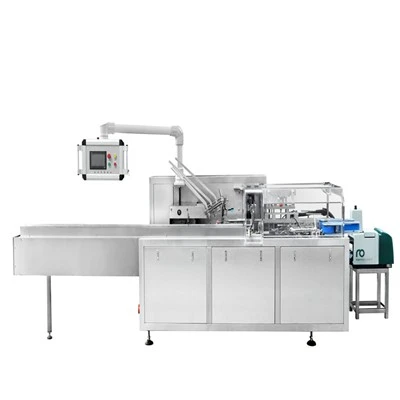
First, let’s start with the basics: I’m not talking about a tiny, standalone semi-automatic cartoner you can fit in a closet. We deal with machines that are part of full packaging lines—think units that work with blister packs, vials, or syringes, linking to fillers or labelers. That’s where the timeline shifts. Let’s split this into two main scenarios: installing a new machine from scratch and replacing an existing one. I’ll also cover little things most people forget that throw off timelines.
First, pre-installation prep. This is the part that makes or breaks the timeline, and 90% of the delays I see aren’t from bad machines—they’re from sites skipping this step. When you order a cartoner from us, we don’t just ship it and show up the next day. First, our sales team works with your site to map out specs: does your existing floor hold the weight? Those cartoners can hit 2,000 lbs or more, so we need to confirm the concrete is rated for that. Do you have enough power, compressed air, and line voltage? Most sites forget that if your old machine ran on 120v and the new one is 240v, you’ll need an electrician to rewire, which can take 1-3 days depending on how big your facility is. Also, we have to check the clearance: the average cartoner is 10-15ft long, so you need to make sure the doorway, elevator, or loading dock can fit it. I once had a client who ordered a machine and didn’t measure their service elevator—took an extra 2 days to rent a crane to hoist it in through a window, oops. That’s the kind of thing that kills timelines.
Then, shipping. If you’re local to our warehouse, we can deliver in 1-2 days. If you’re cross-country or international, that’s 3-7 days, maybe more if customs is involved (and let’s be real, customs is a wild card for pharma because of FDA/ GMP documentation, so we usually plan for an extra day there, no exceptions).
Now, the actual installation on site. Let’s split this between semi-automatic and fully automatic machines, because that’s a huge difference. Semi-automatic cartoners are the smaller ones, where an operator loads products by hand, and the machine seals cartons. For a standalone semi-automatic, the physical install—moving it off the truck, leveling it, hooking up power, air, and product lines—takes 4-8 hours. Then we do the basic setup. Fully automatic machines are the big boys: those run 60+ cartons a minute, link to upstream lines, have servo motors for precision, and are all about GMP compliance. For a fully automatic line machine, the physical setup is 1-2 days. We have to level it with laser levels (no more shimming with old cardboard, that’s 90s stuff), bolt it to the floor so it doesn’t shift during high-speed runs, and run all the utility lines. I always tease our techs that this is where they earn their pay—those lines have to be perfectly aligned, or you get jams that cost thousands in downtime.
Next, calibration and testing. This is the part no one skips (well, no one should skip it) and it’s where most of the timeline lives. Let’s be clear: calibration isn’t just “making it run.” For pharma, that’s about meeting FDA, cGMP, and your own quality standards. For a semi-automatic machine, calibration takes 1-2 days. We test different carton sizes, adjust the leaflet inserter (super important for drug packaging—you don’t want the patient insert getting crumpled), test the glue or tuck seals, and run small batches to make sure no cartons are misprinted or empty. For a fully automatic machine, this is 3-5 days. We have to sync it with upstream and downstream equipment—like if your machine links to a blister pack line, we have to make sure they talk to each other so the cartoner doesn’t try to pull a blister that’s not there. We test at different speeds, run 10,000+ cartons to check for jams, misfeeds, or seal failures. We also test reject mechanisms—if a bad carton comes down the line, it has to get pulled automatically, no exceptions, because you can’t send out defective drugs.
Then, validation. Wait, did I mention validation? A lot of sites mix up calibration and validation, but they’re not the same. Calibration is making the machine work, validation is proving to you and regulators that it works consistently, exactly how it’s supposed to. For pharma, validation is non-negotiable, and it adds 2-3 days for semi-automatic, 4-7 days for fully automatic machines. We do IQ (Installation Qualification) first—checking every part is installed correctly, meets specs. Then OQ (Operational Qualification)—testing every function at different speeds, with different products and cartons. Then PQ (Performance Qualification)—running full production batches for you, so you see it working in real conditions. I always tell clients that if you cut corners here, you’ll be stuck with a machine that works for a week then breaks, and regulators will flag your line during an audit, so don’t rush this.
Now, what if you’re replacing an old cartoner instead of installing a new one from scratch? That timeline’s shorter, usually 5-10 days, instead of 12-20 for a new line. Why? Because you already have the power, clearance, and utility lines in place. You just have to remove the old machine (1-2 days), move the new one into that same spot, connect the lines, calibrate, validate. But even here, I see delays: if your old cartoner is a weird size, the new one might not fit the same footprint, so you have to rearrange some parts of the line. That’s why we always tell clients to send us photos of their current line before ordering.
Wait, but what about custom machines? We do a lot of custom builds for sites that package specialty drugs, like syringes or vials with child-resistant cartons. If it’s not a standard off-the-shelf model, add 5-7 days. We have to build custom tooling, test it specifically for your product, so that extra time makes sense.
Now, let’s talk about the average real-world timeline. For a standard off-the-shelf semi-automatic cartoner: total time, from shipping to production-ready, is 7-12 days. For a standard fully automatic cartoner (no custom parts, linking to existing lines): total time is 14-21 days. For a custom fully automatic line, that jumps to 25-35 days. But wait, that’s just the time on site. Pre-install prep is 3-7 days, as I said, so you should plan to start the process 2-4 weeks before you want the machine running.
But here’s the thing: most delays aren’t from the machine or our team. I once had a client who waited 5 days to get their electrician to show up after we delivered the machine—turns out they had a whole plant shutdown scheduled and the electrician was on another job. Another client forgot to get their validation paperwork prepped, so our techs had to wait for their QA team to sign off before starting, which added 3 days. Those are the avoidable delays, and that’s why we send a pre-install checklist as soon as you order—we make you confirm power, clearance, electrician availability, validation prep, all that stuff, so we don’t get stuck waiting around.
Also, what about during installation? Our service techs are on site for the whole process, but you can make it easier by having your own production or QA team there, right? We can train your people on basic troubleshooting during the install, so once we leave, you don’t have to call us every time there’s a small jam. That’s part of the service we include, no extra cost. I always bring up that training because it saves clients so much time long-term.
Wait, let’s address a common myth: “I can install it myself to save time.” No, you really can’t. Pharma equipment is regulated, and if you don’t have a certified tech install and validate it, you’ll fail an audit. We’ve had clients try this before, and they ended up having to call us in anyway, and it cost them twice as much and took longer. Our techs are FDA-trained, know all the GMP rules, and have installed hundreds of these machines, so they work fast and correctly.
Another thing: location. If you’re in a remote area, like a small rural pharma plant, you might have to plan for travel time for our techs—add 1-2 days if they have to fly in instead of driving. That’s why we work with local service partners in most regions now, so we can get someone on site faster, but even then, it’s a factor.
Let me wrap this up with a real example, so you can see how it works. Last quarter, we installed a standard fully automatic cartoner for a generic drug maker in Ohio. Here’s the timeline: pre-install prep (checked power, floor weight, clearance) = 4 days. Shipping = 2 days. On site: physical install = 2 days. Calibration = 3 days. Validation (IQ, OQ, PQ) = 5 days. Total time from order to production-ready = 16 days, which was right on track. No delays, because the client used our pre-install checklist, had their electrician ready, and their QA team had all validation docs signed off before we arrived.
Compare that to a client in Texas who ordered the same machine a month later. They skipped the pre-install check, didn’t confirm their power was compatible, so we had to send an electrician (theirs, not ours) which took 5 days. Their service elevator was too small, so we had to rent a crane for 2 days. Total time for their install = 28 days. That’s the difference between planning ahead and cutting corners.
If you’re wondering, the short answer to the original question is: for a standard, off-the-shelf drug cartoning machine installed at a facility that’s prepped, it takes 1-3 weeks from delivery to being production-ready. If it’s custom or you need to prep your site, that goes up, but most delays are avoidable with a little planning.
Now, if you’re in the market for a new cartoner, or you’re upgrading an old one, don’t guess at timelines. Our team can give you a custom breakdown based on your specific line, your site, and your products. We’ve installed everything from small semi-automatic units for clinical trial packaging to full high-speed lines for large-scale production, so we know exactly what goes into each step. Reach out to us, tell us a bit about your current setup, your product, and when you want to be up and running, and we’ll give you a clear timeline with no hidden surprises. No sales pitches, just real info that helps you plan.
Food Bagging Machine References
- FDA. (2023). General Principles of Process Validation. U.S. Food and Drug Administration.
- Pharmaceutical Engineering Society. (2022). Best Practices for Packaging Line Installation and Qualification. PES Publishing.
- International Society for Pharmaceutical Engineering. (2021). cGMP Requirements for Drug Cartoning Equipment. ISPE Press.
Zhejiang Tuoyu Packaging Machinery Co., Ltd.
Zhejiang Tuoyu Packaging Machinery Co., Ltd. is one of the most professional drug cartoning machine manufacturers and suppliers in China. With abundant experience, we warmly welcome you to wholesale durable drug cartoning machine made in China here from our factory. Good service and quality products are available.
Address: Workshop No.12, No.11-19, Xinbin Road, Binhai New Area, Pingyang County, Wenzhou City
E-mail: 15868789201@163.com
WebSite: https://www.tuoyupack.com/
