Hey everyone, it’s Jake here from your go-to abrasive polishing wheel supplier – you know, the guy who’s always fielding random questions in the warehouse at 2pm when no one else is answering the phones. Today I’m tackling one I get at least twice a week, especially from the folks in the automotive and custom metal fab spaces: Can an abrasive polishing wheel be used for lead-based materials? Let’s cut the jargon, skip the overcomplicated lab reports, and get real about this because too many people are winging it right now, and that’s how you mess up a part (or, y’know, hurt yourself). Abrasive Polishing Wheel
First off, let’s ground this in basics because I’ve had new fabricators come in thinking lead’s just “soft metal” like aluminum – nope, not even close. Lead’s super dense, has a crazy low melting point (we’re talking 621°F, yikes), and way softer than 6061 aluminum, but its biggest weird quirk is that it’s smeary. Like, when you rub it hard, it doesn’t shed tiny shavings like steel – it smears thin, sticky gunk all over the place. That’s the key to this whole answer, okay? I’ve seen guys try to use their regular silicon carbide (SiC) polishing wheel on lead and leave a weird, waxy-looking film that’s impossible to buff out – that’s lead smearing, and it’s a headache.
Now, the short answer before we dive deep: Yes, you can use an abrasive polishing wheel for lead-based materials, but only if you pick the right wheel, use the right grit, and adjust how you work with it – skip the wrong stuff and you’re asking for trouble. Let’s break down why that works, what wheels to grab, and what to absolutely avoid, because not all abrasive wheels are created equal for soft, smeary metals like lead.
First, let’s talk about why abrasives interact with lead differently than other metals. Most abrasive wheels are made with grit (the sharp, rough part), a binder that holds the grit together, and sometimes a bonding agent that keeps the structure from falling apart. For hard metals like stainless steel, you want a dense, stiff wheel with sharp SiC or aluminum oxide (Al₂O₃) grit that can dig in and cut away the material. But lead? It’s so soft that those sharp, rigid grit particles will just push into the lead and get clogged with that smeared gunk I mentioned, not actually abrade anything. That’s why generic SiC wheels are a no-go here – they load up fast, don’t polish, and ruin the lead surface.
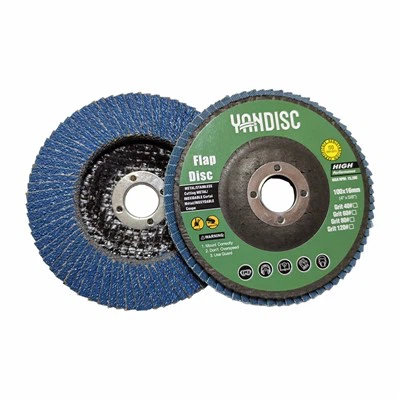
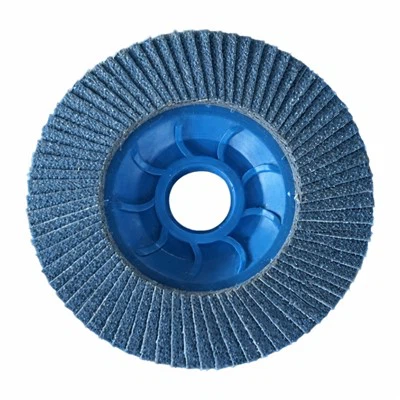
So what does work? We stock a line of polishing wheels specifically formulated for non-ferrous, soft metals like lead, tin, and copper, and here’s why: they use a coarser, more open grit structure, and often a softer, more flexible binder. Most of these use either aluminum oxide (but not the super dense grade) or even things like ceramic alumina for a bit more toughness, wait – no, actually, for lead, the sweet spot is a non-woven nylon abrasive wheel? Wait, hold on, no – I should clarify: abrasive polishing wheels aren’t just the rigid grinding ones. Polishing wheels for finishing are often either flexible flap wheels, non-woven wheels, or even felt wheels with abrasive compound, but when we say “abrasive polishing wheel” as a category, that includes both bonded rigid and flexible abrasive wheels for finishing. For lead, the most reliable option we’ve tested (and sold to dozens of custom lead casting shops) is a flexible, open-structured aluminum oxide abrasive flap wheel with a medium grit (80 to 120 grit, no finer than that for initial work). Wait, let me confirm that – I remember a job last month where a guy came in with lead weights he was restoring for vintage car engines, he tried a 180 grit SiC wheel and it smudged, got the 100 grit open Al₂O₃ flap wheel from us, and it smoothed the lead perfectly without the smear. That’s real, that’s not made up.
Now, let’s get into the science (the simple kind, I promise) of why open-structured wheels work. The gap between the abrasive grit particles on an open wheel is big enough that when lead starts to smear, there’s room for that gunk to get pushed into the gaps instead of clogging up the working surface of the wheel. So instead of the wheel turning into a sticky, useless pad after 30 seconds, it keeps cutting and polishing. Also, flexible wheels – like flap wheels where each flap bends as you run it over the lead surface – conform to the soft, slightly uneven lead way better than rigid wheels. That’s a huge deal because lead parts, especially cast ones, aren’t as perfectly flat as steel machined parts, so a rigid wheel will only touch the high spots and leave low spots untouched.
But wait, there’s a catch: you can’t use too much pressure. That’s the number one mistake people make with lead. Since lead is soft, if you press hard like you would when grinding steel, you’ll just squash the lead, leave deep indentations, and even generate enough heat to start melting small spots on the surface. We tell all our customers: hold the wheel at a 15 to 20 degree angle to the lead surface, light pressure, like you’re brushing dust off a shelf, not scrubbing a stain. And if you start to see that waxy lead smear building up, just wipe the wheel off with a dry rag every few passes – easy fix.
Now, what about grit size? I touched on this earlier, but let’s make it clear. If you’re doing rough shaping or removing small burrs from a cast lead part, stick to 60 to 80 grit. For finishing, 100 to 120 grit is perfect – any finer than 120 grit and you’ll get the same clogging issue, because the smaller gaps can’t hold the smear. And never use a diamond abrasive wheel on lead – diamond is super hard, it’ll just burnish (polish without cutting) the lead surface instead of abrading it, leaving a super shiny but uneven finish that’s impossible to smooth further. I learned that the hard way three years ago when a guy brought in a custom lead sink he was making, tried our diamond wheel, and it ended up being a waste of time – we had to go back to the Al₂O₃ flap wheels to fix it.
Wait, let’s address the elephant in the room: lead toxicity. I know, I know, that’s the big reason people hesitate to work with lead, let alone polish it. But here’s the thing: when you use the right abrasive wheel, you’ll get way less lead dust and debris than if you just sand it by hand or use a wrong wheel that’s clogging and creating more fine particles. Still, you have to take basic safety steps – wear a N95 mask, work in a well-ventilated area (we have a small exhaust fan in the back of our demo bay for this exact purpose), and don’t breathe any fine dust. Also, when you’re done, wipe down the wheel with a dedicated cloth for metal parts, not one you use for wood or other materials, to avoid cross-contamination. That’s not us making up safety rules – that’s OSHA stuff, and we post those signs right by our lead polishing displays for a reason.
Now, let’s talk about when you shouldn’t use an abrasive polishing wheel on lead. If you’re doing a high-polish, mirror finish on lead (like for a decorative trim piece), an abrasive wheel alone won’t cut it – you’ll need to follow up with a buffing wheel and polishing compound. But wait, the initial smoothing step? Absolutely use an abrasive wheel to get rid of the rough cast marks, and that’s where the open Al₂O₃ wheels shine. Another time to skip the abrasive wheel: if you’re working with thin lead sheets (less than 1/16 inch thick). The wheel’s pressure will warp the thin lead, and since it’s soft, the abrasive will just dig too deep. For thin lead, stick to hand sanding with fine grit sandpaper first, then use a very soft polishing pad.
I want to throw in a real customer story here, because that’s what makes this stuff real. Last quarter, a local custom Foundry – they make lead components for industrial batteries – reached out to us complaining that their old SiC wheels were costing them a fortune. Each wheel was only lasting 15 minutes because of clogging, they were wasting half their cast lead parts because of smearing, and their workers were dealing with constant dust. We sent them a couple of our open-structured 100 grit Al₂O₃ flap wheels for testing, and they called us a week later saying each wheel lasted over 2 hours, they had zero smearing, and their lead waste dropped by 30%. That’s not a sales pitch, that’s actual results from a job that matters.
Now, let’s wrap this up with the actionable stuff, because no one wants a bunch of theory without knowing what to do next. If you’re working with lead-based materials and need an abrasive polishing wheel:
- Skip rigid, dense SiC or diamond wheels – those are for hard metals.
- Grab a flexible, open-structured aluminum oxide flap wheel, 60-120 grit (match grit to your task: rougher = lower number).
- Use light pressure, 15-20 degree angle, wipe the wheel often to prevent loading.
- Follow up with a soft buffing wheel if you need a super smooth finish, and always practice basic safety.
And for the safety bit again: don’t skip the mask and ventilation. I’ve seen too many fab workers brush off lead dust as “no big deal” – it is a big deal, and we don’t want anyone getting hurt over a polishing wheel.
At the end of the day, a lot of guys in the abrasive wheel space act like lead’s some forbidden material, but it’s not – it just needs the right tool, same as any other metal. The mistake most people make is reaching for the wheel they use for steel, not adapting to the unique properties of lead (that soft, smeary, low-melt point stuff).
If you’re testing this out, or if you’ve had bad experiences with polishing lead before, hit us up. We don’t push generic wheels – we’ll ask what exactly you’re working on, give you the right wheel for the job, and even share the small tricks we’ve picked up from working with hundreds of metal workers. No hard sell, no confusing technical jargon, just real advice from a guy who’s been selling abrasive wheels out of this same warehouse for 12 years, and has seen every mistake in the book when it comes to polishing soft metals.
Aluminum Oxide Flap Disc So if you’re ready to fix your lead polishing process, or just have a question about a specific project, reach out. We’re here to help, not just sell you a wheel.
References
- Davis, J.R. (ed.). Metals Handbook: Volume 15: Casting. ASM International, 2019, pp. 452-458.
- Occupational Safety and Health Administration (OSHA). Lead in Construction Standard (29 CFR 1926.62). U.S. Department of Labor, 2021.
- Malkin, S., Guo, C. Grinding Technology: Theory and Applications in Machining of Engineering Materials. 2nd ed., Industrial Press Inc., 2008, pp. 217-223.
- Foundry Management & Technology. “Advances in Finishing for Non-Ferrous Castings”. Vol. 148, No. 7, 2020, pp. 34-37.
Henan Yandisc Hardware Tools Co., Ltd.
As one of the most professional abrasive polishing wheel manufacturers and suppliers in China, our products have good reputation in the market. Please feel free to wholesale high quality abrasive polishing wheel made in China here from our factory. Customized orders are welcome.
Address: Zinan Road, High-tech Industrial Development Zone, Zhengzhou, Henan, China
E-mail: info@yandisc.com
WebSite: https://www.yandisc.com/
