Can agricultural implements be used in forestry? This is a question that has piqued my interest, especially as a supplier of agricultural implements. In my years of experience in the industry, I’ve often pondered the potential cross – applicability of the tools we provide. Agricultural Implements
Forestry and agriculture are two distinct yet related sectors. Both involve the management of land and natural resources, but they have different goals and requirements. Agriculture mainly focuses on growing crops and raising livestock, while forestry is centered around managing forests for timber production, wildlife habitat, and environmental conservation.
Let’s first take a look at some common agricultural implements and explore their possible uses in forestry.
One of the most widely used agricultural tools is the plow. Plows are used to turn over the soil, break up clods, and prepare the ground for planting. In forestry, there might be some scenarios where soil preparation is also necessary. For example, when establishing new tree plantations, the soil needs to be loosened to encourage root growth. A light – duty plow could be used in areas with relatively soft soil in forest margins or cleared patches. It can help mix organic matter into the soil and improve its aeration, which is beneficial for young tree seedlings. However, forest soils often contain a large amount of roots and debris, which can quickly clog a traditional plow. So, if a plow is to be used in forestry, it would need to be modified. A more robust plow with stronger tines and better debris – handling capabilities would be required.
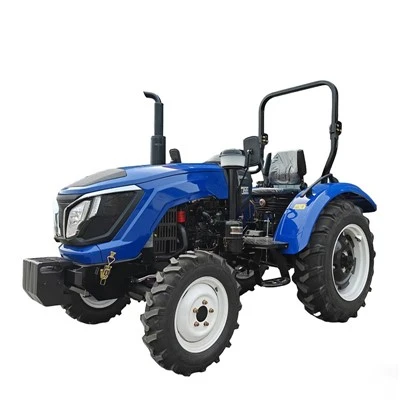
The tractor is another essential agricultural implement. Tractors are used for a variety of tasks in agriculture, such as pulling plows, harvesters, and trailers. In forestry, tractors can also play a significant role. They can be used to transport logs, pull skidders (machines used to drag logs from the cutting site to a loading area), and even power some forestry – specific equipment. For example, a tractor with a power take – off (PTO) can be used to drive a wood chipper. This is extremely useful for processing small branches and wood waste on – site, reducing the volume of debris and making it easier to manage. However, forestry operations often take place in rough and uneven terrain. Standard agricultural tractors may not have the necessary ground clearance or traction for such conditions. Therefore, tractors used in forestry usually need to be equipped with larger tires, heavy – duty suspensions, and four – wheel drive systems.
Harvesters are commonly used in agriculture to gather crops like wheat, corn, and soybeans. In forestry, similar concepts can be applied, although the scale and nature of the operations are different. There are specialized forest harvesters that can cut, delimb, and buck trees in one operation. However, some of the basic principles of harvesting technology from agriculture could potentially be adapted. For example, the sensors and automation technology used in modern agricultural harvesters to optimize the cutting process could be explored for forestry applications. It could help in more precise tree felling and better utilization of the timber.
Weeders and mowers are also typical agricultural implements. In forestry, controlling underbrush and weeds is crucial for tree growth. Weeds can compete with young trees for nutrients, water, and sunlight. Agricultural weeders and mowers can be used in forest clearings and along forest roads to keep the vegetation in check. However, the vegetation in forests is often more diverse and robust than in agricultural fields. Some plants in forests may have thick stems and tough roots, which require more powerful mowing and weeding equipment. Additionally, the terrain in forests is more variable, so the equipment needs to be maneuverable.
On the other hand, there are limitations to using agricultural implements in forestry. Forestry environments are much harsher and more challenging compared to agricultural fields. The presence of large trees, uneven terrain, and a high density of vegetation can pose significant problems for many agricultural implements. For instance, the delicate sensors and control systems of some modern agricultural equipment may be easily damaged by branches or rocks in the forest.
Another important aspect is the safety factor. Forestry operations involve more risks, such as falling trees and log handling. Agricultural implements may not be designed to meet the safety requirements of forestry work. For example, a tractor used in agriculture may not have the necessary guards and safety features when operating in a forest environment where there is a higher risk of collision with trees or other obstacles.
Despite the limitations, there are clear opportunities for the use of agricultural implements in forestry, with some adaptations. This is where my role as an agricultural implement supplier comes in. I understand the features and capabilities of the products we offer, and I’m constantly looking for ways to expand their applications.
If you’re in the forestry industry, you might be interested in how our agricultural implements can be customized for your needs. We can work with you to modify plows, tractors, and other equipment to make them more suitable for forestry operations. We have a team of experienced engineers who can design and implement the necessary changes, such as adding extra protection to the machinery, improving the traction, and enhancing the debris – handling capabilities.
Moreover, we can provide training and support to ensure that your staff can operate the adapted equipment safely and efficiently. We believe that by leveraging the technology and resources from the agricultural sector, we can bring innovation and cost – effectiveness to forestry operations.

I invite you to engage with us to discuss how our agricultural implements could be a valuable addition to your forestry operations. Whether you’re a small – scale forestry business or a large plantation owner, we’re eager to have a conversation about your specific needs and challenges. We can explore the feasibility of using our products in your forestry projects and work together to find the best solutions. Reach out to us for a consultation, and let’s start this exciting journey of cross – sector innovation together.
Agricultural Implements References
- Bullard, F. W. (2002). Forest engineering: principles and applications. John Wiley & Sons.
- Radford, R. (1994). Agricultural machinery and equipment. Blackwell Science.
- Ward, C. H. (1989). Forest harvesting systems. McGraw – Hill.
Sevol International Trade (Shandong) Co., Ltd.
As one of the most professional agricultural implements manufacturers and suppliers in China, we’re featured by quality products and good price. Please rest assured to buy advanced agricultural implements for sale here from our factory. We also accept customized orders.
Address: 1210, Building 13, No. 13129, Yingqian Street, Liyuan Street, Kuiwen District, Weifang City, Shandong Province
E-mail: Savotrak@163.com
WebSite: https://www.sevol-global.com/
