When it comes to air filtration, the G3 – F9 filter media plays a crucial role in a wide range of applications, from industrial settings to commercial buildings and even residential environments. As a supplier of G3 – F9 filter media, I often get asked about the minimum particle size that these filter media can effectively filter. In this blog post, I’ll delve into the details of the filtration capabilities of G3 – F9 filter media, exploring the factors that influence the minimum particle size and how it impacts different filtration needs. G3-F9 Filter Media

Understanding G3 – F9 Filter Media Classification
The G3 – F9 filter media classification is part of the European standard EN 779, which categorizes air filters based on their efficiency in removing particles from the air. The G – series (G1 – G4) represents coarse filters, while the F – series (F5 – F9) is for fine filters. Each class has a specific range of filtration efficiency, and as the class number increases, the filter becomes more efficient at capturing smaller particles.
- G3 Filter Media: G3 filters are considered coarse filters and are typically used for pre – filtration. They are designed to capture larger particles such as dust, pollen, and fibers. The minimum particle size that G3 filter media can effectively filter is around 10 micrometers. These filters are often used in applications where the air quality requirements are not extremely high, such as in some industrial ventilation systems or as a first stage in a multi – stage filtration process.
- G4 Filter Media: G4 filters are also coarse filters but offer a higher level of filtration efficiency compared to G3. They can capture particles as small as 5 micrometers. G4 filters are commonly used in commercial buildings, workshops, and HVAC systems to protect downstream filters from larger particles and extend their lifespan.
- F5 Filter Media: F5 filters mark the transition from coarse to fine filters. They can filter particles as small as 3 micrometers. F5 filters are often used in environments where a moderate level of air quality is required, such as in some office buildings or light industrial applications.
- F6 Filter Media: F6 filters have a higher efficiency than F5 filters and can capture particles down to 1 micrometer. These filters are suitable for applications where a cleaner air supply is needed, such as in hospitals, laboratories, and food processing facilities.
- F7 Filter Media: F7 filters are even more efficient, with the ability to filter particles as small as 0.5 micrometers. They are commonly used in environments where high – quality air is essential, such as in semiconductor manufacturing facilities, cleanrooms, and pharmaceutical production areas.
- F8 Filter Media: F8 filters offer a very high level of filtration efficiency and can capture particles down to 0.3 micrometers. These filters are used in critical applications where the air quality must be extremely clean, such as in advanced research laboratories and high – tech manufacturing processes.
- F9 Filter Media: F9 filters are the most efficient in the G3 – F9 range. They can filter particles as small as 0.1 micrometers. F9 filters are used in applications where the strictest air quality standards must be met, such as in some specialized medical facilities and high – precision manufacturing environments.
Factors Affecting the Minimum Particle Size Filtration
Several factors can influence the minimum particle size that G3 – F9 filter media can filter:
- Filter Media Material: The type of material used in the filter media plays a significant role in its filtration capabilities. Different materials have different pore sizes and surface properties, which affect how effectively they can capture particles. For example, synthetic fiber media may have smaller pores and better filtration efficiency compared to natural fiber media.
- Filter Construction: The way the filter is constructed, including the pleating design and the density of the media, can also impact the filtration performance. A well – designed filter with a high number of pleats and a dense media structure can capture smaller particles more effectively.
- Airflow Rate: The airflow rate through the filter can affect the filtration efficiency. Higher airflow rates may reduce the contact time between the particles and the filter media, making it more difficult to capture smaller particles. Therefore, it’s important to select the appropriate filter based on the airflow requirements of the system.
- Particle Characteristics: The shape, density, and electrostatic properties of the particles can also influence the filtration process. For example, spherical particles may be easier to capture than irregularly shaped particles, and particles with an electrostatic charge may be attracted to the filter media more effectively.
Applications of G3 – F9 Filter Media Based on Minimum Particle Size
The minimum particle size filtration capabilities of G3 – F9 filter media make them suitable for a wide range of applications:
- Industrial Applications: In industrial settings, G3 – G4 filters are often used as pre – filters to protect more expensive downstream filters from large particles. F5 – F9 filters are used in applications where high – quality air is required, such as in paint booths, metalworking shops, and chemical processing plants.
- Commercial Buildings: In commercial buildings, G3 – G4 filters are used in HVAC systems to improve indoor air quality and protect the equipment from dust and debris. F5 – F9 filters are used in areas where a higher level of air quality is needed, such as in conference rooms, offices, and retail stores.
- Residential Applications: In residential settings, G3 – G4 filters can be used in home HVAC systems to remove dust, pollen, and other large particles from the air. F5 – F9 filters can be used in bedrooms, nurseries, and other areas where a cleaner air supply is desired.
- Healthcare and Laboratory Settings: In healthcare facilities and laboratories, F6 – F9 filters are essential for maintaining a clean and sterile environment. These filters can remove bacteria, viruses, and other harmful particles from the air, protecting patients, staff, and sensitive equipment.
Choosing the Right G3 – F9 Filter Media
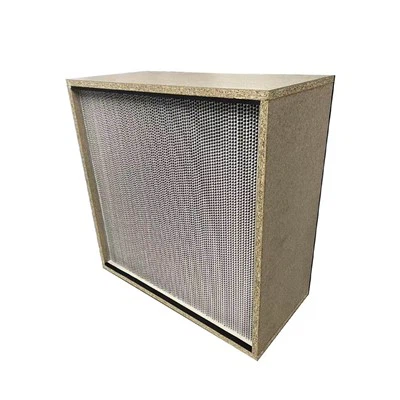
When selecting the right G3 – F9 filter media for your application, it’s important to consider the following factors:
- Filtration Efficiency: Determine the minimum particle size that needs to be filtered based on the specific requirements of your application. Choose a filter media with the appropriate class and efficiency to meet those needs.
- Airflow Requirements: Consider the airflow rate of your system and select a filter media that can handle the required airflow without causing excessive pressure drop.
- Cost and Lifespan: Evaluate the cost of the filter media and its expected lifespan. A more efficient filter may cost more upfront but can save money in the long run by reducing energy consumption and extending the lifespan of downstream filters.
- Environmental Conditions: Take into account the environmental conditions in which the filter will be used, such as temperature, humidity, and the presence of chemicals or contaminants. Some filter media may be more suitable for certain environmental conditions than others.
Ceiling Module HEPA Filters As a supplier of G3 – F9 filter media, I am committed to providing high – quality products that meet the diverse needs of our customers. Whether you need a coarse filter for pre – filtration or a fine filter for a critical application, we have the expertise and resources to help you choose the right filter media. If you’re interested in learning more about our G3 – F9 filter media or have any questions about filtration, please don’t hesitate to contact us for a procurement discussion. We look forward to working with you to ensure the best air quality for your specific needs.
References
- EN 779:2012, "Air filters for general ventilation — Determination of the filtration performance"
- ASHRAE Handbook: Fundamentals, American Society of Heating, Refrigerating and Air – Conditioning Engineers
- ISO 16890:2016, "Air filters for general ventilation — Determination of filtration performance"
Snyli Environmental Technology (Shandong) Co., Ltd.
Snyli Environmental Technology (Shandong) Co., Ltd. is well-known as one of the leading g3-f9 filter media manufacturers and suppliers in China. Please feel free to wholesale high quality g3-f9 filter media at competitive price from our factory. Contact us for more details.
Address: Room 907, Building 1, Qisheng Plaza, 1666 Xinluo Street, Jinan Area, China (Shandong) Pilot Free Trade Zone
E-mail: info@snyli.com
WebSite: https://www.snylifilter.com/
