If you’ve ever scrolled through battery tech forums or industry reports in the last few years, you’ve probably seen two competing headlines: one touting organic solvents as a “game-changer” for safer, longer-lasting batteries, and another warning that these volatile, flammable liquids have no place in next-generation energy storage. As an organic solvents supplier with 12 years in the game—working closely with battery manufacturers, material scientists, and even a few startup teams tinkering with lab-scale prototypes—I’ve sat through countless debates on this exact question. Let me cut through the hype and the fear: yes, organic solvents absolutely can be used in battery production, and in many cases, they’re already powering the batteries you rely on every day. Organic Solvents
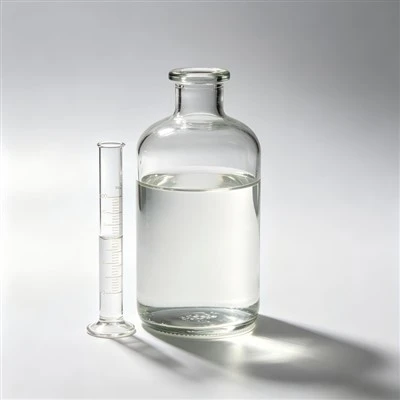
To start, let’s ground this in basic battery chemistry, because that’s where every use case for organic solvents lives. Modern lithium-ion batteries— the ones in your phone, laptop, and electric vehicle—are made up of four core components: a cathode (positive electrode), an anode (negative electrode), a separator, and an electrolyte. The electrolyte is the unsung hero here: it’s the liquid (or sometimes gel) that carries lithium ions back and forth between the cathode and anode every time you charge or discharge your battery. For decades, the standard electrolyte solvent was a mix of cyclic carbonates like ethylene carbonate (EC) and linear carbonates like dimethyl carbonate (DMC), both organic compounds.
Wait, I know what you’re thinking: “Aren’t organic solvents the dangerous ones that cause battery fires?” It’s a fair question. Back in 2016, a few Samsung Galaxy Note 7 units caught fire after faulty manufacturing, and a follow-up investigation linked the blasts to damage in the cathode that caused the flammable carbonate electrolyte to leak and ignite. That incident spurred a wave of backlash against organic solvents, and many manufacturers started shifting to aqueous (water-based) electrolytes as a “safer” alternative. But here’s the part most headlines miss: aqueous electrolytes have their own flaws. Water has a narrow electrochemical stability window—meaning it breaks down at lower voltages than organic solvents, which limits battery energy density. For EVs, where every extra mile of range matters, that’s a non-starter. A typical lithium-ion battery with an organic electrolyte hits around 3.7 volts; aqueous versions top out at around 1.23 volts, so you’d need twice as much battery volume to get the same range. That’s why organic solvents didn’t disappear—they evolved, and so did the way we use them.
Let’s get specific about how organic solvents are actually used in battery production, because it’s not just mixing them with salts and calling it a day. For cathode manufacturing, most manufacturers use a solvent-based slurry to coat the active material (like lithium iron phosphate or NMC) onto a metal foil current collector. Traditional solvents for this step included N-methyl-2-pyrrolidone (NMP), a polar organic solvent that’s prized for its ability to dissolve binder polymers like polyvinylidene fluoride (PVDF), creating a smooth, uniform slurry that adheres tightly to the aluminum foil. Aqueous binders have started to replace NMP in recent years for environmental reasons, but for high-energy-density cathodes used in EVs, NMP is still the gold standard—it produces a more consistent coating that reduces capacity fade over thousands of charge cycles.
On the anode side, the process is similar: graphite anodes are mixed with binder and conductive carbon to form a slurry, which is coated onto copper foil. Here again, organic solvents (specifically NMP) have been the go-to for years, though aqueous options are gaining traction for cost and safety. But even as we shift some slurry processing to water, organic solvents play a critical role in a newer anode technology: silicon anodes. Silicon has 10 times the energy capacity of graphite, but it expands up to 300% when lithiated, which can crack the electrode and shorten battery life. To mitigate that, manufacturers are using organic solvents with higher solvating power, like propylene carbonate (PC), to create electrolytes that form a stable solid-electrolyte interphase (SEI) on the silicon surface. The SEI is a thin layer that acts as a barrier, preventing further electrolyte decomposition while letting lithium ions pass through. Without the right organic solvent, that SEI doesn’t form properly, and silicon anodes die in just a few charge cycles.
Then there’s the emerging class of solid-state batteries, which are being hailed as the next big leap in battery tech, with the potential to eliminate fire risks entirely. Wait—if solid-state batteries use a solid electrolyte, do they still need organic solvents? The answer is yes, in two key ways. First, many solid electrolytes (like polymer-based solid electrolytes, which are a mix of a lithium salt and a polymer like polyethylene oxide) are processed using organic solvents to create a thin, flexible film. Second, even all-solid-state batteries often use small amounts of organic solvent as a plasticizer to improve the mechanical properties of the solid electrolyte, making it easier to manufacture and less prone to cracking. I’ve worked with a few solid-state startup teams that test lab-scale electrolytes using gamma-butyrolactone (GBL), an organic solvent that enhances ionic conductivity without the same flammability as traditional carbonate solvents. It’s a middle ground that balances safety and performance, and it’s only possible because we’ve refined how we use organic solvents in battery production.
Now, let’s address the elephant in the room: the safety concerns that have lingered since the Note 7 incident. It’s true that organic solvents are flammable, but modern manufacturing processes have drastically reduced that risk. For example, NMP is almost completely evaporated during the slurry drying step in cathode production, with advanced ventilation and回收 systems that capture 99% of the solvent for reuse. At my company, we don’t just supply organic solvents—we work with our battery clients to optimize their solvent usage: we provide tailored solvent blends that reduce volatility, add flame-retardant additives to electrolytes, and help them implement closed-loop solvent recovery systems that cut waste by 80% and lower operational costs too. It’s a win-win: manufacturers get the performance they need, and we get to reduce environmental impact at the same time.
Another point that’s often overlooked is cost. Aqueous slurries sound cheaper on paper, but they require more energy to dry (since water has a higher boiling point than many organic solvents) and they’re harder to process at high speeds, which slows down production lines. Organic solvents like DMC have lower boiling points, so they evaporate faster, allowing manufacturers to run their lines at full capacity and produce more batteries in less time. For large-scale EV factories, that translates to millions of dollars in annual savings—money that can be passed on to consumers to make electric vehicles more affordable.
I’ve had the chance to work with battery teams at every stage: from college students building prototype batteries in dorm rooms to global corporations expanding gigafactories in the U.S. and Europe. One of my favorite stories is about a startup based in Michigan that was struggling to get their silicon anode batteries to last more than 500 charge cycles. They were using a standard carbonate electrolyte, but I suggested they try a blend of PC and fluoroethylene carbonate (FEC), two organic solvents that are better at forming a stable SEI on silicon. Within three months, their battery life jumped to 2,000 cycles—enough to qualify for EV use. That’s the impact organic solvents can have, when you know how to pair the right solvent with the right battery chemistry.
Of course, this isn’t to say organic solvents are the only solution for every battery. For small, low-power batteries like those in a remote control or a smart watch, aqueous or even solid polymer batteries might work fine. But for the high-energy, long-cycle-life batteries that power our phones, laptops, and electric vehicles, organic solvents are still irreplaceable—and they’re only getting better. The key is moving past the outdated “organic solvents = bad” narrative and embracing the new, refined ways we use them, with a focus on safety, efficiency, and sustainability.
If you’re a battery manufacturer—whether you’re a small startup testing new chemistries or a large-scale gigafactory scaling production—and you’re looking for a reliable, sustainable organic solvents partner, I’m here to help. We don’t just ship drums of solvent; we work closely with you to understand your specific needs, whether that’s adjusting solvent blends for a new cathode design, optimizing slurry processing to improve electrode quality, or implementing a closed-loop recovery system to cut costs and waste. We’ve spent years refining our products and our expertise to support the future of battery technology, and we’d be honored to work with your team to bring your next generation of batteries to life.
Inorganic Powders & Inorganic Compounds References
- Tarascon, J. M., & Armand, M. (2001). Issues and challenges facing rechargeable lithium batteries. Nature, 414(6861), 359-367.
- Liu, J., et al. (2020). Organic solvents for advanced lithium-ion batteries: A review. Journal of Power Sources, 476, 228627.
- Chen, L., et al. (2022). Silicon anodes for lithium-ion batteries: Challenges and solutions. Nature Energy, 7(3), 208-220.
- Wang, Y., et al. (2019). Solid-state lithium-ion batteries: Progress, challenges, and perspectives. Advanced Energy Materials, 9(35), 1900893.
- U.S. Department of Energy. (2021). Lithium-ion battery manufacturing: Solvent use and reduction opportunities. Energy Efficiency and Renewable Energy Office.
Shanghai Dingwujin Chemical Co., Ltd.
Shanghai Dingwujin Chemical Co., Ltd. is one of the most professional organic solvents suppliers in China. We cooperate with qualified Chinese manufacturers and provide high quality customized service. With over a decade of experience in local chemical trade, we have long been deeply engaged in the markets of EU Central & Eastern Europe, the Western Balkans, Ukraine and Moldova. Welcome to buy bulk high quality organic solvents made in China here from our company.
Address: No. 12, Lane 199, Yefan Road, Yexie Town, Songjiang District, Shanghai, P.R.China
E-mail: dwjchem@dwjchem.com
WebSite: https://www.7dchem.com/
