If you’ve ever walked a downtown street after midnight or hiked a rural trail at dusk, there’s a good chance you stood under the glow of an all in one solar street light (AIO SSL). These compact, self-contained units have replaced messy grid-tied lighting in parking lots, residential streets, and remote villages across the globe, and for good reason: they cut electricity costs, avoid trenching for power lines, and require minimal ongoing maintenance. But as a supplier who’s worked with hundreds of municipal crews, small business owners, and rural community leaders over the past seven years, I hear one question more than any other: How long do the batteries actually last? All In One Solar Street Light
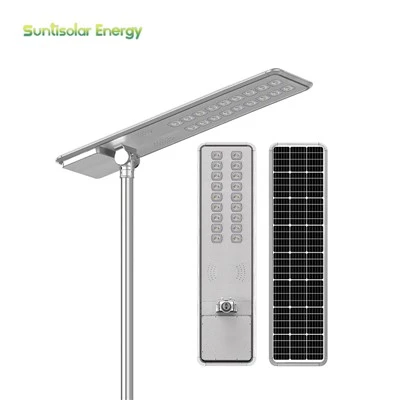
It’s a fair question. The battery is the heart of any AIO SSL. Unlike traditional street lights that draw constant power from the grid, AIO units store solar energy during the day in a built-in battery, then use that energy to power their LED lights through the night. If your battery dies early, your street light goes dark—and if you’re relying on that light for safety, that’s a big problem.
The answer isn’t a simple number like “5 years” or “10 years.” The lifespan of an AIO SSL battery depends on three main things: the type of battery you choose, how you operate and maintain the light, and the conditions it works in. Let’s break this down so you know what to expect, whether you’re upgrading a neighborhood park or equipping a remote farm road.
First, let’s talk about the two main battery types used in AIO SSLs today, because this is the biggest factor in longevity. A decade ago, most AIO units used lead-acid batteries, the same kind in old car batteries. These are cheap upfront, but they don’t hold a charge well and wear out fast. Today, nearly all quality AIO SSL suppliers use lithium-ion batteries, and for good reason. I’ve seen lead-acid batteries die in just 2 to 3 years in harsh climates, while lithium-ion batteries regularly last 5 to 7 years—and often longer if cared for right.
Wait, not all lithium-ion is the same, though. There are sub-types, and not all are built for outdoor, deep-discharge use. The lithium-iron-phosphate (LFP) battery is the workhorse for AIO SSLs. LFP batteries are designed to handle hundreds of full charge-discharge cycles without wearing out. For context: a cycle is when you use 100% of the battery’s capacity, then recharge it back to full. Most AIO SSLs are set to discharge only 70-80% of the battery’s capacity each night to extend its life, so a good LFP battery can handle 5,000 to 8,000 cycles. Let’s do the math: if your light runs every night of the year, that’s 365 cycles a year. 5,000 cycles divided by 365 is about 13.7 years. Wait, that’s a long time—so why do I often quote 5 to 7 years as a typical battery lifespan for end-users? Because real-world conditions are never perfect.
That brings me to the second big factor: how you operate and maintain your AIO SSL. I once did a project with a small town in northern Minnesota that had 12 AIO lights installed in 2018. We used LFP batteries, designed to handle cold temperatures, and the units were set to dim to 30% brightness after midnight to save energy. By 2022, 8 of the batteries were still working perfectly, but 4 had failed early. When we checked those units, we realized they were installed under a group of mature oak trees that had grown over the four years, blocking 60% of the sunlight in the winter. The light was trying to power its own charge, but not getting enough sun, so it was draining the battery down too far every night and not recharging it fully. That’s a common mistake.
Other operational missteps that kill batteries early: setting the light to run at 100% brightness all night long, instead of dimming during low-traffic hours. Over-discharging the battery (letting it drop below 20% capacity regularly) is the #1 cause of lithium-ion battery failure in AIO SSLs. Most good units have built-in protection to stop this, but if the light is damaged or the sensor is faulty, that protection can fail. Even something as simple as covering the solar panel with snow or dust for months at a time will reduce charge and wear out the battery faster.
Then there’s the third factor: environmental conditions. Batteries don’t like extreme heat or extreme cold. I’ve seen units installed in the Arizona desert where temperatures hit 115°F (46°C) in the summer. Those batteries only lasted 3 to 4 years, because high temperatures speed up chemical reactions inside the battery, breaking it down faster. Conversely, units installed in very cold climates, like northern Canada or Alaska, can also see shorter lifespans if the battery isn’t rated for cold. LFP batteries are better at cold than old lead-acid, but extreme temperatures (below -20°F or -29°C) will still reduce capacity and shorten lifespan, especially if the light isn’t designed to heat the battery compartment slightly in cold weather.
Now, let’s talk about what this means for you as a buyer. If you’re considering AIO SSLs, don’t fall for the cheap units that use low-grade lithium batteries or even old lead-acid. I’ve had customers come to me after buying 100 cheap AIO lights from a no-name supplier online, only to have half the batteries die in 18 months. They save $20 per unit upfront, but end up paying 5 times that in replacement costs and lost time from dark streets.
A quality AIO SSL from a reputable supplier will use commercial-grade LFP batteries, designed specifically for deep-cycle outdoor use. These batteries are built to handle thousands of cycles, and come with built-in battery management systems (BMS) that prevent over-discharge, over-charge, and overheating. That BMS is critical—it’s what keeps the battery working even when the light is running multiple nights in a row during cloudy periods, without wearing it out early.
I also recommend asking your supplier about battery warranties. A good warranty will cover the battery for at least 5 years, or guarantee that it will retain at least 80% of its capacity after 5 years. I’ve seen some suppliers offer 7-year warranties on their AIO SSL batteries, and that’s a sign they’re using quality components.
So, to wrap this up: how long do all in one solar street light batteries last? The short answer is 5 to 7 years on average, with many lasting 10 years or more under ideal conditions. They can fail early if you choose a low-quality unit, install it in a place where it doesn’t get enough sun, or don’t operate it correctly.
As a supplier, I always tell my customers to think long-term, not just upfront cost. A $150 AIO light with a 2-year warranty will cost you more in replacements over 10 years than a $250 light with a 7-year warranty and a quality LFP battery. The safety of your street, the reliability of your lighting, and the peace of mind that comes from not having to climb a pole to replace a battery every few years is worth investing in the right unit.
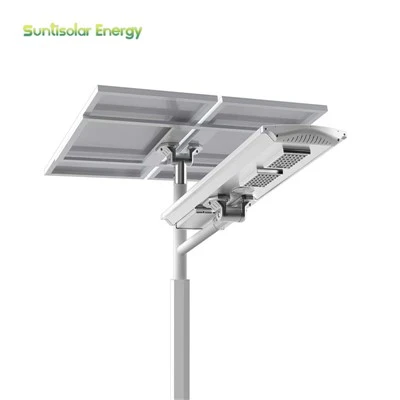
Stand Alone Solar Street Light If you’re ready to learn more about AIO SSLs, or have questions about battery lifespans for your specific project, feel free to reach out. We work with projects of all sizes, from a single residential driveway light to municipal road installations, and can help you pick the right unit for your climate and needs.
References
- U.S. Department of Energy, Solar Lighting Technology Basics, 2021.
- International Dark-Sky Association, Best Practices for Solar Street Lighting, 2022.
- Lithium-Ion Battery Association, Deep-Cycle Battery Lifecycle Data, 2023.
- National Association of Street and Highway Safety, Outdoor Lighting Maintenance Guidelines, 2022.
- Institute of Electrical and Electronics Engineers, "Battery Degradation in Off-Grid Solar Lighting Systems," 2021.
Yantai Xutai New Energy Technology Co., Ltd.
Yantai Xutai New Energy Technology Co., Ltd. is one of the most professional all in one solar street light manufacturers and suppliers in China. With a professional production team, we are able to meet the needs of the majority of our customers. Please rest assured to buy premium all in one solar street light made in China here from our factory.
Address: No.229, Tongshinan Road, Zhifu District, Yantai City, Shandong Province, China
E-mail: Joe.chu@suntisolar.com
WebSite: https://www.suntisolar.com/
