Hey everyone, let’s cut to the chase today – I’m here because I get so many DMs, calls, and even random warehouse drop-ins from folks asking, “How long do shock absorbers actually last?” As a shock absorber supplier, I’m not just here to sell you parts (though let’s be real, that’s why I’m in this biz), I’m here to tell you the unvarnished truth from 12 years of fixing, selling, and obsessing over these little workhorses under your car, truck, or whatever you’re hauling. Most of the time, people have this idea that shocks just … don’t break? Or they think they’ll last forever, like some kind of unkillable household appliance. Spoiler: they’re not. They’re metal and rubber and fluid that takes a beating every single time you hit a pothole, a speed bump, or even that random gravel stretch on your backroad. Let’s break this down like we would over a coffee in the shop – no textbook jargon, just real talk. Shock Absorber

First off, let’s get one thing straight: there’s no universal “shelf life” for a shock. If you Google this, you’ll get all kinds of numbers – 50k miles, 100k miles, even 150k if you “drive nicely.” Here’s the thing: that’s a range, not a rule. I’ve seen a shock on a 2018 sedan that blew out at 22k miles because the owner never took it easy on backroads with pot holes the size of dinner plates. I’ve also seen a set on a work truck that’s been hauling 2,000 lbs of construction tools every weekday since 2015, and they’re still going strong at 112k miles. So why such a big gap? Let’s talk about the real factors that kill shocks, not the marketing fluff.
First up: how you drive and what you haul. This is the big one, and it’s 100% under your control (well, mostly – construction crews will still haul 2,000 lbs in a half-ton truck, I get it). If you’re someone who flies over potholes like they don’t exist, or uses your car to tow a boat, a trailer, or even a bunch of yard waste that’s way over the payload limit, your shocks are working overtime. Think of it like doing bicep curls with a 50 lb weight every day – eventually your arm (or your shock) gives out. I had a guy come in last month with a pickup truck he uses to haul livestock, and he’s on his third set of shocks in 2 years. He was shocked (pun very intended) when I told him it wasn’t his driving – it’s that he’s 200 lbs over the payload rating every single trip. That’s the kind of thing that eats shocks alive. On the flip side, if you drive mostly city streets with smooth asphalt, never overload your vehicle, and take it easy on rough roads, you can easily get 100k to 150k miles out of a quality set. That’s not a sales pitch – that’s what we see every day when we pull old shocks out of cars for customers.
Next: climate and environment. You know that rusted-out shock you see on old farm trucks? That’s not age, that’s salt and moisture. If you live in a place where they salt the roads in winter (looking at you, Midwest and Northeast US), or near the coast where salt air is constant, that metal shock body is slowly corroding from the inside out, even if you can’t see it. The seals that keep the hydraulic fluid in? Those get eaten away by salt, and suddenly you’re leaking fluid, which means the shock is useless. I had a customer from Maine tell me his 2020 Subaru shocks went at 45k miles, and when I looked, the entire shock body was rusty on the bottom, where salt splashes up all winter. Compare that to a customer from Arizona, where it’s dry and warm year-round, and his 2019 F-150 shocks are still going at 130k miles. Environment isn’t everything, but it’s a huge variable that no one talks about.
Then there’s quality of the shock itself. Let’s be real – not all shocks are created equal. As a supplier, I’ve worked with both budget brands that use cheap seals and thin metal, and premium brands that use high-grade steel and precision seals. You get what you pay for, and that goes double for shocks. A $50 budget shock might last 30k miles if you’re lucky, while a $150 premium shock is built to handle more load, resist rust, and last longer. I’m not here to bash budget options – if you drive a beater that you only need to get to work, a budget set might be fine for a few years – but if you care about your vehicle’s handling, safety, and not having to replace shocks every other year, splurge a little. I’ve seen way too many people try to save $100 on shocks, only to have them fail on a road trip and end up paying way more in towing and repairs.
Wait, but hold on – what about signs that your shocks are dying, before they actually fail? Because waiting for them to die completely is a bad idea. You’ll notice things like your car bouncing way more than usual after hitting a bump – like, if you go over a speed bump and your car keeps bouncing up and down three times before settling, that’s a dead giveaway. Or your braking feels off, like it takes longer to stop, because worn shocks don’t keep your tires pressed to the road. Another common one: uneven tire wear. If your tires are wearing down faster on the edges, that’s often from shocks that can’t keep the wheels aligned properly. And if you see fluid leaking from the bottom of the shock – that’s not normal, that’s the hydraulic fluid escaping, and your shock is already done for. If you notice any of these, don’t wait. Driving with bad shocks is not just uncomfortable, it’s unsafe – you’re way more likely to hydroplane in the rain, or lose control on a wet road.
Now, let’s talk about a common myth I hear all the time: “I can just replace one shock, right?” No, you really shouldn’t. Shocks work in pairs – front left and front right, or rear left and rear right. If one is worn out, the other is almost certainly close behind it, especially if they’re the same age. Replacing just one will mess up your vehicle’s handling, and you’ll end up going back to the shop a few months later to replace the other one anyway. We always suggest replacing shocks in pairs, and if you’re already at 80k miles, it’s a good idea to do all four while you’re at it – you’ll save money on labor in the long run, and your vehicle will feel like new again.
Wait, what about electric vehicles (EVs)? That’s a new question I get a lot now, as more people switch to EVs. EVs are heavier than gas cars, right? All that battery weight puts extra strain on shocks, so their lifespan is usually a little shorter – maybe 70k to 100k miles, depending on the model. But that’s not a given – if you drive nicely, don’t overload, and live in a dry climate, you can still get a good run out of them. We’ve been supplying shocks for EVs for the past few years, and we’ve seen that range hold up pretty well, as long as you match the shock to the vehicle’s weight and payload capacity.
Let’s circle back to the original question: so what’s the actual lifespan? If you want a rough number for average driving (smooth streets, no overload, mild climate), it’s 80k to 100k miles. If you’re a city driver with some rough roads, maybe 50k to 70k. If you’re a work truck driver or live in a salty climate, 30k to 50k. And if you drive like you’re in a rally race, well, all bets are off – I’ve seen shocks die at 10k miles in those cases. That’s not to say quality doesn’t matter, but even a premium shock won’t last forever if you’re abusing it.
Now, I know some of you are thinking, “Okay, that’s helpful, but what do I do if I’m due for a replacement?” As someone who’s been in this business long enough to know what works, my advice is: don’t just go for the cheapest set you can find. Do your research, check reviews, and talk to someone who knows their stuff. We don’t just sell shocks – we help people pick the right ones for their specific vehicle, driving style, and budget. If you’re not sure if your shocks need replacing, bring your vehicle by, or send us some details, and we can help you figure that out too.
Look, I get it – car maintenance feels like a hassle, and no one wants to spend money on parts they don’t “see” under the car. But shocks are one of the most important safety parts on your vehicle. They keep you in control, they make braking work, and they keep your tires from wearing out too fast. Replacing them when they need to saves you money on towing, tire replacements, and even more serious repairs down the line. If you’re asking, “What’s the lifespan of a shock absorber?” that means you’re already paying attention, which is a good thing. Don’t ignore those little signs – a quick check now can save you a huge headache later.
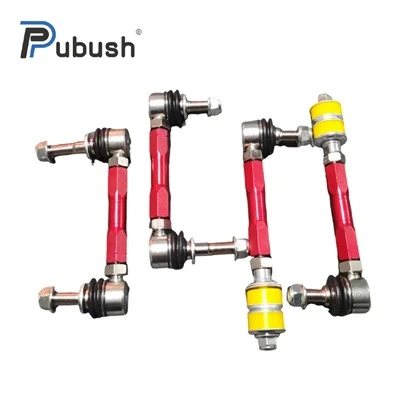
If you’re ready to replace your shocks, or just have questions about what’s right for your ride, hit us up to connect for a supply and procurement chat. We’re here to make this simple, no pressure, no confusing jargon, just parts that work when you need them.
Sway Bar Link References:
- National Highway Traffic Safety Administration (NHTSA). Vehicle Maintenance Guidelines: Shock Absorber Inspection and Replacement.
- Automotive Aftermarket Suppliers Association (AASA). 2024 Shock Absorber Performance and Lifespan Study.
- Society of Automotive Engineers (SAE). Effects of Operating Environment on Hydraulic Suspension Component Durability.
- Consumer Reports. 2023 Automotive Maintenance Guide: Suspension System Recommendations.
Xingtai Refined Machinery and Auto Accessory Co., Ltd.
Xingtai Refined Machinery and Auto Accessory Co., Ltd. is one of the most professional shock absorber manufacturers and suppliers in China, featured by quality products and low price. Please rest assured to wholesale durable shock absorber made in China here from our factory. Customized orders are welcome.
Address: XINGTAI REFINED MACHINERY AND AUTO ACCESSORY CO., LTD507 NORTH TAIHANG ROAD, XINGTAI CITY, HEBEI PROVINCE, PR.
E-mail: lindy@rfauto.biz
WebSite: https://www.pubush-suspension.com/
